
Last updated November 15, 2026
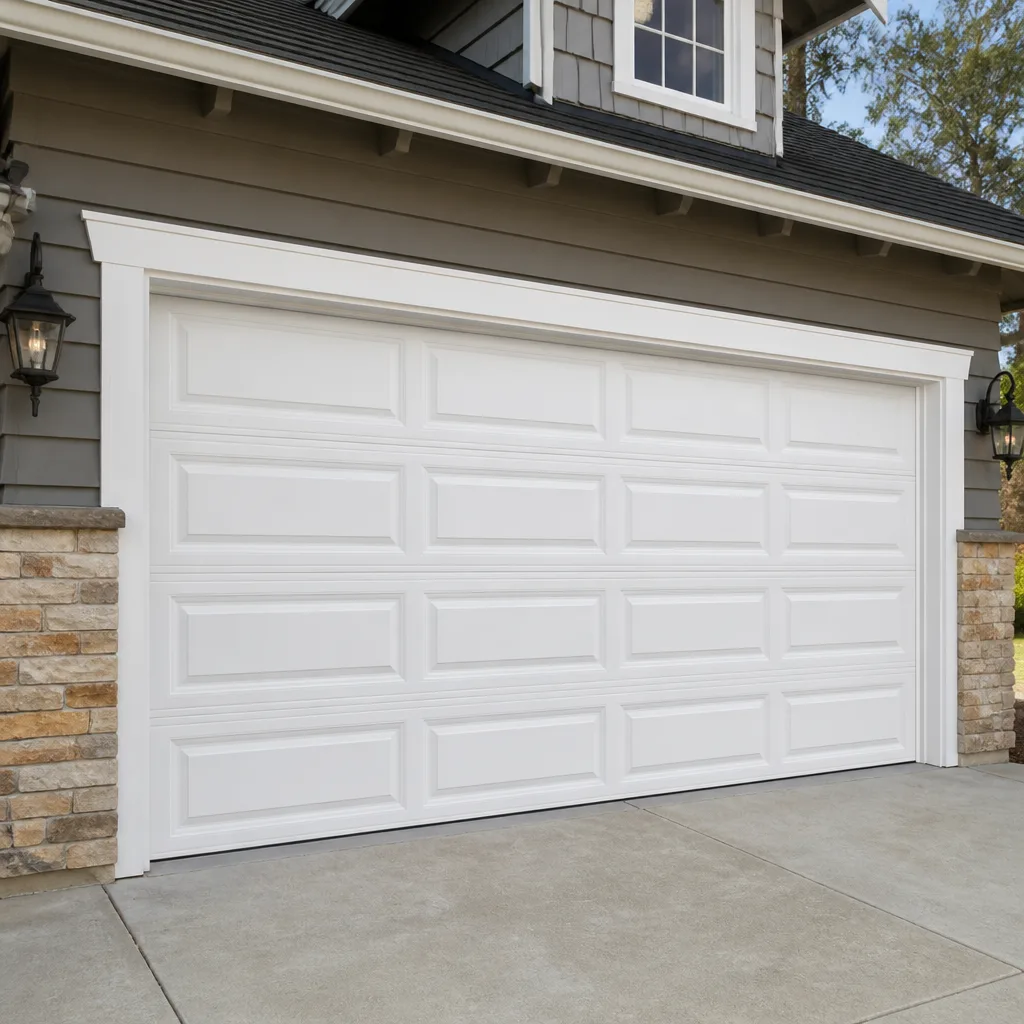 Raised-panel steel
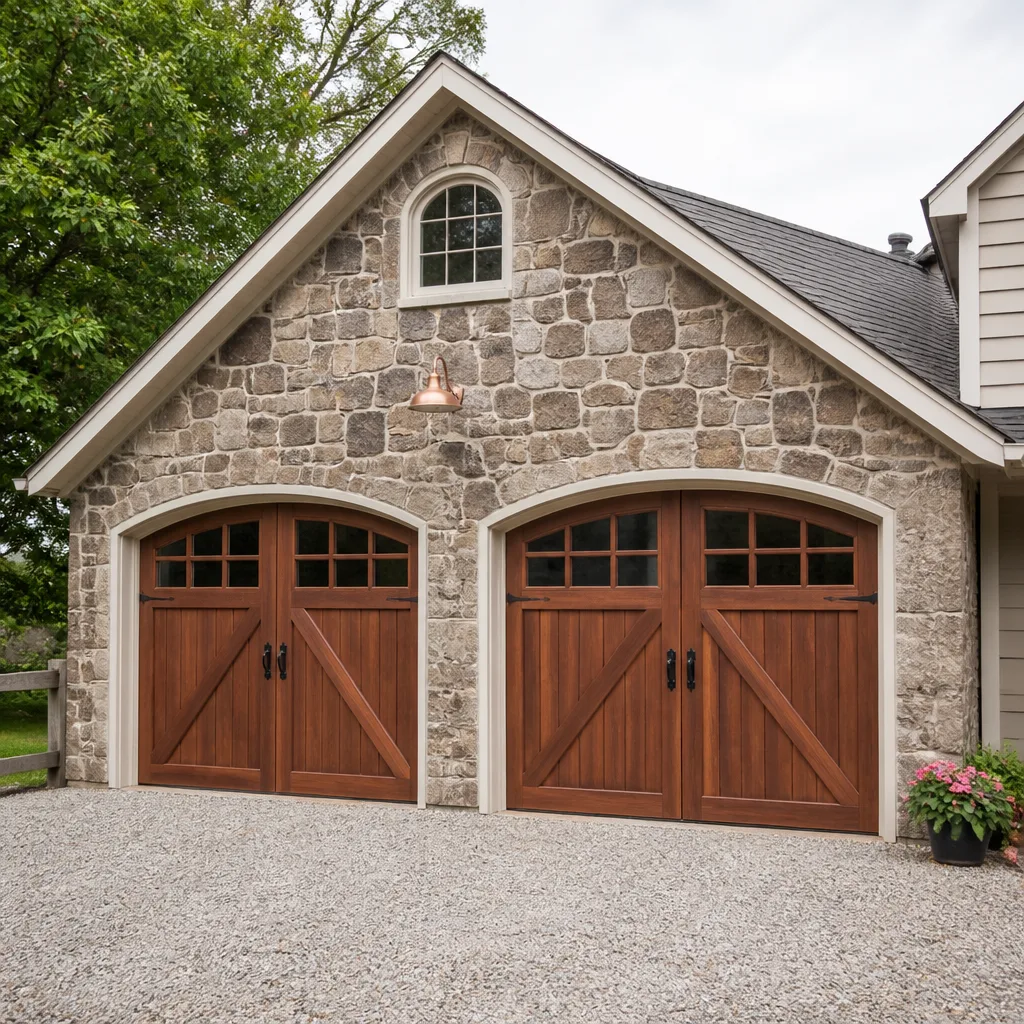 Carriage house
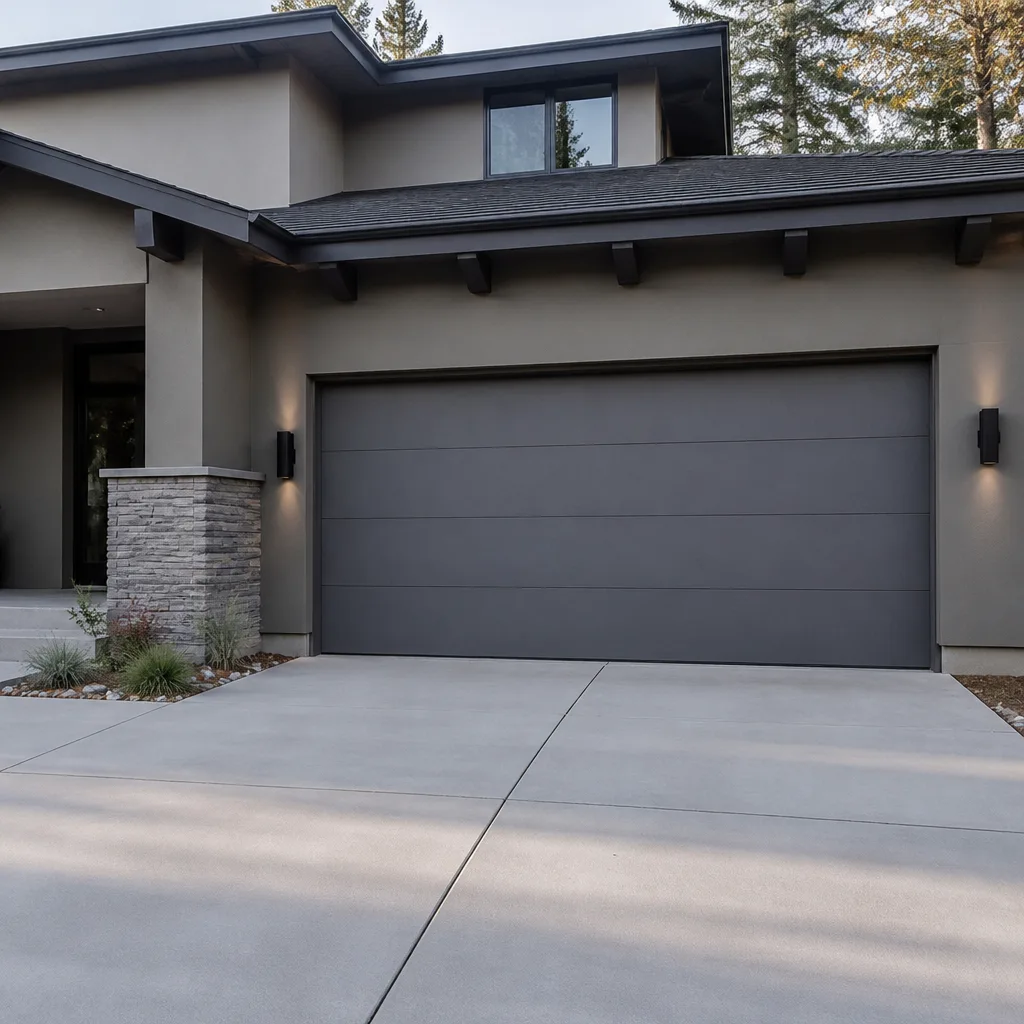 Modern flush
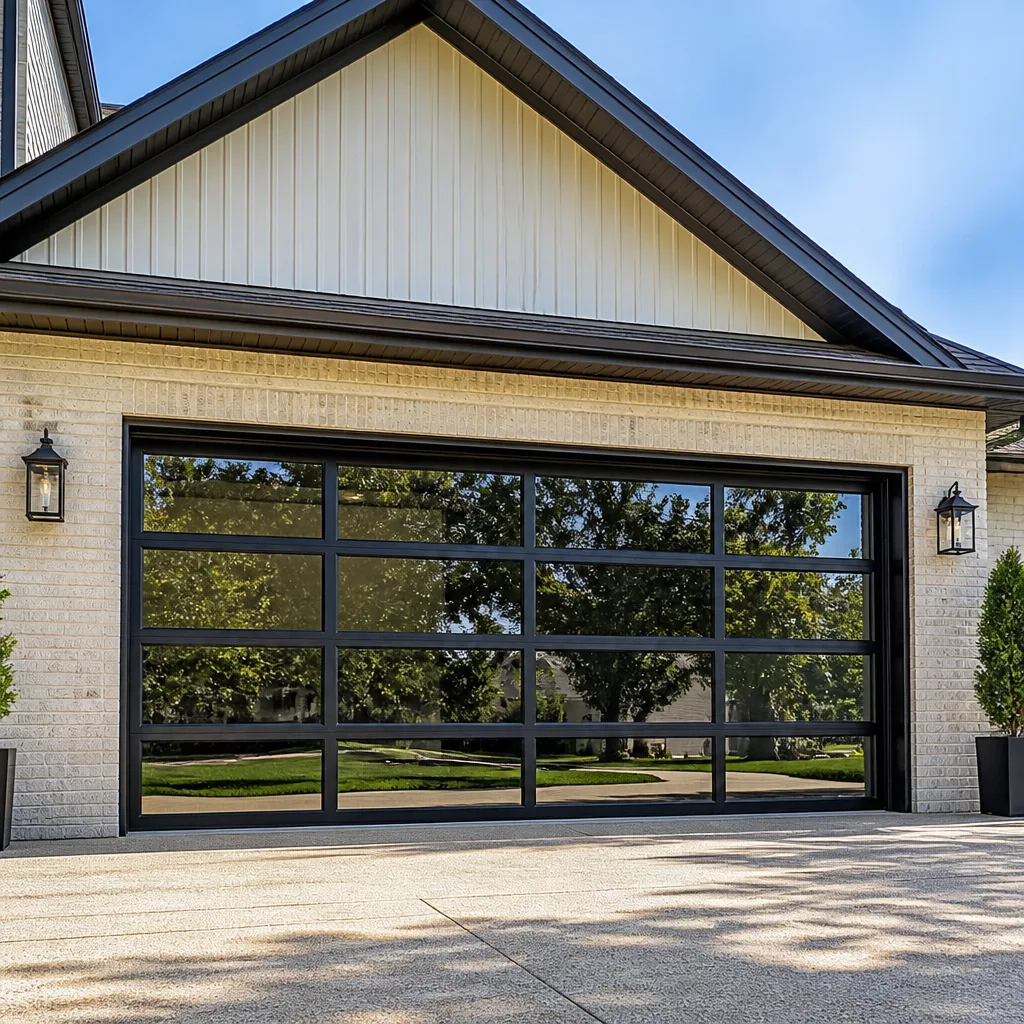 Full-view glass
 LiftMaster openers
 Chamberlain openers
Full 25-point door and opener safety check with every visit - springs, cables, rollers, tracks, and your LiftMaster or Chamberlain opener included
You get a price before we start. It does not change when the pro arrives.
Get your free estimateGarage Door Repair Troubleshooting in South Bend: Common Problems and How to Fix Them
A garage door that reverses before it closes isn’t broken. It’s following instructions. The safety sensors told it something was in the way, and the door obeyed. That single misunderstanding sends plenty of South Bend homeowners to the phone for a service call they may not need. Likewise, a door that suddenly feels heavy when you lift it by hand isn’t an opener problem at all. The motor is doing its best while a tired spring quietly gives out behind it. This guide teaches you to read what the door is actually telling you, so you fix the real cause the first time instead of chasing the symptom.
Quick Answer
Most garage door problems in South Bend fall into two groups: simple fixes you can safely handle yourself and mechanical failures that need a trained technician. Misaligned safety sensors, dead opener batteries, and limit switch adjustments are genuinely DIY-safe. Broken springs, cables off their drums, and bent tracks are not. The trick is mapping the symptom to the right component before you touch anything.
Styles & brands we work with
- Raised-panel steel
- Carriage house
- Modern flush
- Full-view glass
- LiftMaster openers
- Chamberlain openers
Table of Contents
- Symptom-to-Cause: Reading What Your Door Is Telling You
- What’s DIY-Safe vs. What Needs a Pro
- How South Bend’s Freeze-Thaw Cycles Wreck Seals and Tracks
- The Two Monthly Tests Every Homeowner Should Run
- When a Dead Opener Isn’t Really the Opener
- Noisy Doors, Grinding Doors, and What the Sound Means
- Springs and Cables: Why We Won’t Tell You to DIY These
- Repair or Replace? Deciding on an Older Door
Symptom-to-Cause: Reading What Your Door Is Telling You
Here’s the core idea behind all door troubleshooting: the same component failing produces a different symptom every time. Learn the mapping and you can usually figure out what’s wrong before anyone arrives. When we run garage door repair calls around South Bend, this is the first thing our technicians do, and it’s the fastest way to avoid replacing parts that are fine.
- Reverses before closing: Safety sensor obstruction or misalignment. Occasionally a logic-board fault on the opener. Almost never the springs.
- Won’t open at all, opener hums: The motor is turning but the door isn’t lifting. This usually means the torsion spring has failed or the door is out of balance.
- Loud grinding or screeching: Worn rollers, dry hinges, or a failing bearing plate. Grinding that comes from above the door often points at the torsion assembly.
- Door sags on one side: One extension spring has stretched or snapped on a two-spring setup, or a cable has come loose on that side.
- Door closes then jumps back up repeatedly: Limit switch set too far, or a photo-eye that’s drifting toward the sun.
- Remote works sometimes, not others: Dead battery, weak signal, or interference from something nearby. Rarely a motor issue.
Read the symptom, name the component, then decide whether you can touch it. That sequence keeps small problems small.
What’s DIY-Safe vs. What Needs a Pro
Not every garage door fix requires a technician, and treating them all like emergencies wastes money. But treating a broken spring like a sensor wipe can hurt you. Here’s a straight division of labor.
Safe to handle yourself
- Sensor alignment. Wipe each lens, check that both LEDs are solid, and nudge the bracket until the door closes smoothly. If the door has a wall-mounted button, you’re done.
- Remote batteries. A dead battery is the single most common “my door won’t open” call we get. Swap it before anything else.
- Limit switch adjustment. On most openers there’s an up and down limit screw. A quarter-turn at a time, testing between adjustments, often fixes a door that stops short of the ground.
- Track debris. A leaf, a small rock, or a toy wedged against a track will stall the door. Clear it and check the door rolls freely.
- Lubrication. A light coat on hinges and rollers quiets a lot of doors.
Not safe to handle yourself
- Torsion and extension springs. These are under extreme tension. A spring that lets go while you’re near it can cause serious injury. Do not touch them.
- Cables off the drum. Same story, and worse. Cables are under enough load to cut.
- Track replacement. A bent track needs to come off and go back with the right alignment, or the door binds and the opener burns out.
- Opener motor or logic board. Now you’re working with line voltage.
If you’re not sure which side of the line a job sits on, that’s your answer. Call us and we’ll tell you honestly whether it can wait or needs a visit.
How South Bend’s Freeze-Thaw Cycles Wreck Seals and Tracks
One thing door companies outside our region don’t appreciate enough: South Bend’s real problem isn’t the cold itself, it’s the up-and-down. Nighttime temperatures swing below freezing through much of the winter, then warm back up during the day. Water gets into small spaces as liquid, then freezes and expands. Repeat that twice a week for three months and things that were flush no longer are.
Two systems take the hit hardest.
Bottom seals
The rubber or vinyl seal along the bottom of the door is meant to sit flush against a level floor. Freeze-thaw heaves the concrete slab a fraction of an inch up here and there. The seal compresses unevenly, then cracks along the line of movement. Once it cracks, moisture creeps in, the seal tears further, and suddenly the door is letting cold air, snow, and the occasional mouse under it. Homeowners usually blame the opener when the door “won’t close tight.” It’s almost always the seal, not the motor.
Track alignment
The vertical and horizontal tracks have to stay plumb within a small tolerance. Frost heave in the concrete floor – especially on older driveways around River Park and the Near West Side where slabs have been repoured or patched over the years – moves the floor slightly under the track base. Two or three winters of that and the rollers start binding in one spot. The door looks fine until it doesn’t close all the way, or it grinds at the same point every cycle. A technician resets the brackets and re-plumbs the tracks; that’s a fifteen-minute adjustment if it’s caught early.
The Two Monthly Tests Every Homeowner Should Run
Two minutes a month tells you whether the door system is healthy or quietly drifting out of spec. Run both with the door closed, then watch what it does.
1. The balance test
- Disconnect the opener by pulling the red emergency release handle (usually a short cord hanging from the trolley).
- Lift the door by hand to about waist height, slowly, and let go.
- A healthy door will hold roughly where you let go. It might drift a few inches, but it shouldn’t drop or rise.
- If the door slams back down, the springs are weak. If it springs up on its own, they’re too tight.
A door that fails the balance test is straining the opener every single time it opens. Running a heavy door on tired springs is one of the fastest ways to burn out a motor.
2. The force test
- Reconnect the door and close it fully.
- Place a two-by-four flat on the ground in the door’s path.
- Run the door down. The safety reverse should send it back up as soon as it touches the board.
- If the door presses down on the board before reversing, the opener’s force setting is too high and needs to come down.
That reverse function is the door’s most important safety feature. If it fails this test, don’t wait. Turn the opener off at the wall and call someone. For the mechaincal side of these failures, garage door opener repair covers force settings, limit switches, and board faults in detail.
When a Dead Opener Isn’t Really the Opener
This is the misdiagnosis we see most often, and it’s a costly one. A homeowner presses the remote, hears a hum, and concludes the opener is dead. They call for a motor replacement. What’s actually happening is that the torsion spring above the door has broken. The motor spins, the belt or chain turns, but the door doesn’t budge because there’s nothing holding its weight against gravity anymore. The opener isn’t broken – it’s working against a load it was never designed to lift alone.
Two ways to tell the difference:
- Pull the emergency release and try lifting the door by hand. If it’s heavy as a car hood, the springs are gone. If it lifts easily, the motor or the drive is the problem.
- Look up at the horizontal torsion bar above the door. A snapped spring leaves a visible gap in the coil. Never poke at it – just look.
On the opener side, there’s the opposite case too: a motor that runs but never moves the door, sometimes paired with a wall light that stays on constantly. That’s usually a stripped drive gear or a worn belt, both of which are repair jobs, not replacements. Modern openers from brands like LiftMaster and Chamberlain have self-diagnostics that flash a specific number of times to indicate a fault. Counting those flashes before you call saves a technician a step and often saves you a diagnostic fee.
Noisy Doors, Grinding Doors, and What the Sound Means
Sound is a door’s alarm system. A door that was near-silent three years ago and rattles the whole house today is telling you something specific. Match the noise to the component.
Squealing or high-pitched screech
Dry hinges and rollers, or a failing bearing plate at one end of the torsion bar. Lubrication fixes the first. The second needs a technician, because the torsion bar has to come down to replace the bearing.
Rumbling or grinding
Worn nylon rollers (common on doors over a decade old) or a roller that’s jumped out of the track. If the door grinds in the same spot each time, check for a dented or kinked section of track – our South Bend winters make this a seasonal favorite.
Popping or snapping
Spring coils binding against each other as they wind. If the pop happens once and then the door won’t open, the spring just broke. Stop trying the opener and call.
Slamming on the way down
The opener’s down limit is set too far, or the door is out of balance. A slammed door cracks panels over time – one of the reasons a door that “works fine” suddenly needs panel replacement two years later.
Our technicians have up to 15 years of experience listening for these, and after enough cycles it becomes automatic. If you’re not sure which sound you’re hearing, record it on your phone and describe it when you call. That detail alone often gets us to the right part on the first visit.
Springs and Cables: Why We Won’t Tell You to DIY These
A torsion spring is a coil of steel wire wound tight enough to lift hundreds of pounds. When it’s holding, it stores that energy permanently. When it releases – and it does that suddenly, unpredictably, at the moment it decides to – the result is a violent snap with enough force to break bones and leave a hole in drywall. Cables carry the same tension. Someone who hasn’t been trained on them shouldn’t be within arm’s length of a loaded assembly.
We get it. You’re handy. You’ve replaced a water heater. But this is one of the few jobs where the difference between a pro and a homeowner isn’t speed or quality – it’s that one of them knows where to stand.
What you can safely do:
- Look for gaps in the spring coils from a distance.
- Listen for a loud snap followed by a door that won’t lift.
- Check that both cables are seated on their drums (visually, without poking).
- Keep the door fully closed and stop using the opener if you suspect a failure.
What a trained technician does on a spring call: measures the wire gauge and coil dimensions, orders the exact replacement, safely winds the new spring with proper winding bars, tests balance, resets the opener’s force and limits, and confirms the door cycles ten or so times cleanly. The whole job usually takes about an hour for a standard residential door. If your door is a Clopay or Wayne Dalton model with a specific spring spec, we source the matching part rather than forcing a generic spring onto a system it wasn’t designed for.
Repair or Replace? Deciding on an Older Door
There’s no universal answer, but there is a helpful way to think about it. Add up what the door needs today, then ask what you’d spend over the next five years keeping it running. If the cost of repairs starts approaching half the cost of a new door, replacement usually wins – not just on money, but on insulation, safety, and how much noise the door makes.
Signs that repair still makes sense:
- One spring, one roller, or one seal is the only thing wrong.
- The panels are straight and the finish is intact.
- The opener is under a decade old and hasn’t faulted before.
Signs that replacement is the smarter call:
- Multiple panels are dented, cracked, or bowed.
- The door is out of balance after a spring replacement (the panel weights aren’t right).
- You’re doing a kitchen remodel or siding job and the door is the obvious weak point.
- The door was installed before 1993 and has no functioning safety reverse.
At Harmon Garage Door Repair, we handle repair, opener repair, and full replacement as separate services, so you don’t get pushed toward new when a fix is more sensible. We’ll tell you which one fits, and mean it.
Common Mistakes to Avoid
- Adjusting the force setting up to make a heavy door open. This masks a failing spring and burns out the opener. A balanced door needs very little force. Fix the door first.
- Spraying WD-40 on every hinge and roller in sight. It attracts grit. Use a proper lubricant designed for the parts you’re lubricating, and skip the plastic rollers.
- Ignoring a bottom seal that’s started to crack. What looks like a cosmetic problem in October turns into a snowy, wet garage and a heaving floor by January across South Bend.
- Replacing the opener when the door is the problem. We’ve replaced openers that were fine. Run the balance test before you spend money on a motor.
- Backing into the door and bending a track, then trying to fix it with a hammer. Track bends are easier for a technician to reset cleanly than to un-hammer.
- Running the door when you see a gap in a spring. Stop the opener, keep the door shut, and call. Continuing to cycle the door can drop it or damage the opener.
- Buying a “universal” spring. Springs are matched to door weight, track radius, and winding configuration. A wrong spring wears out early or fails outright.
See the difference
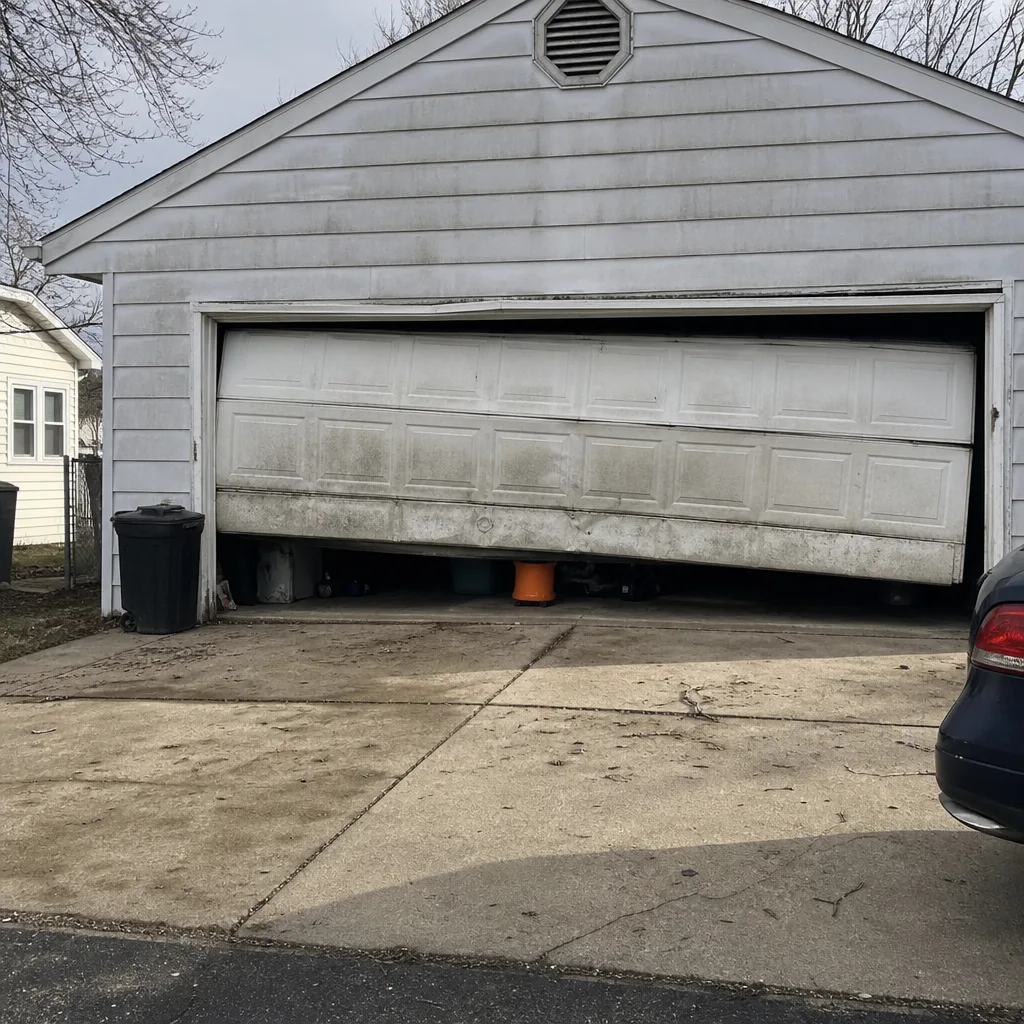 Before
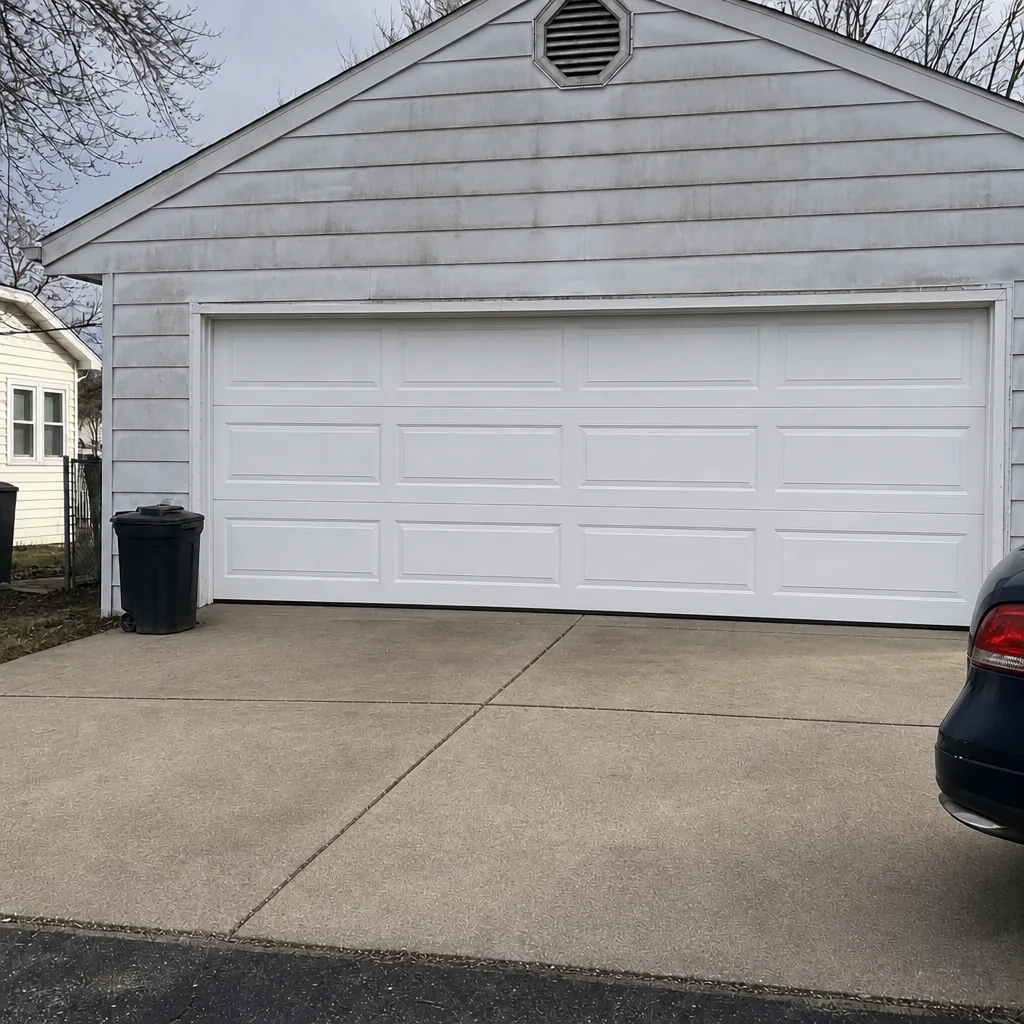 After
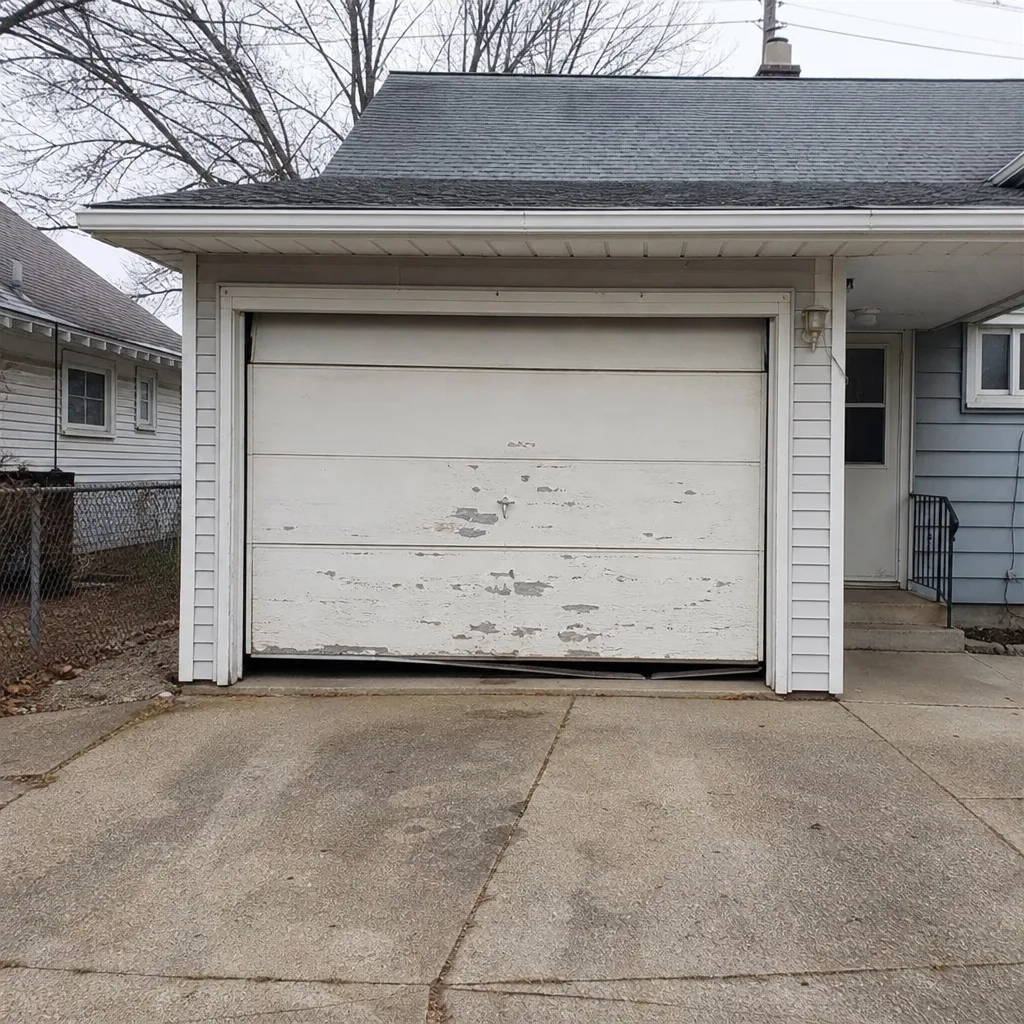 Before
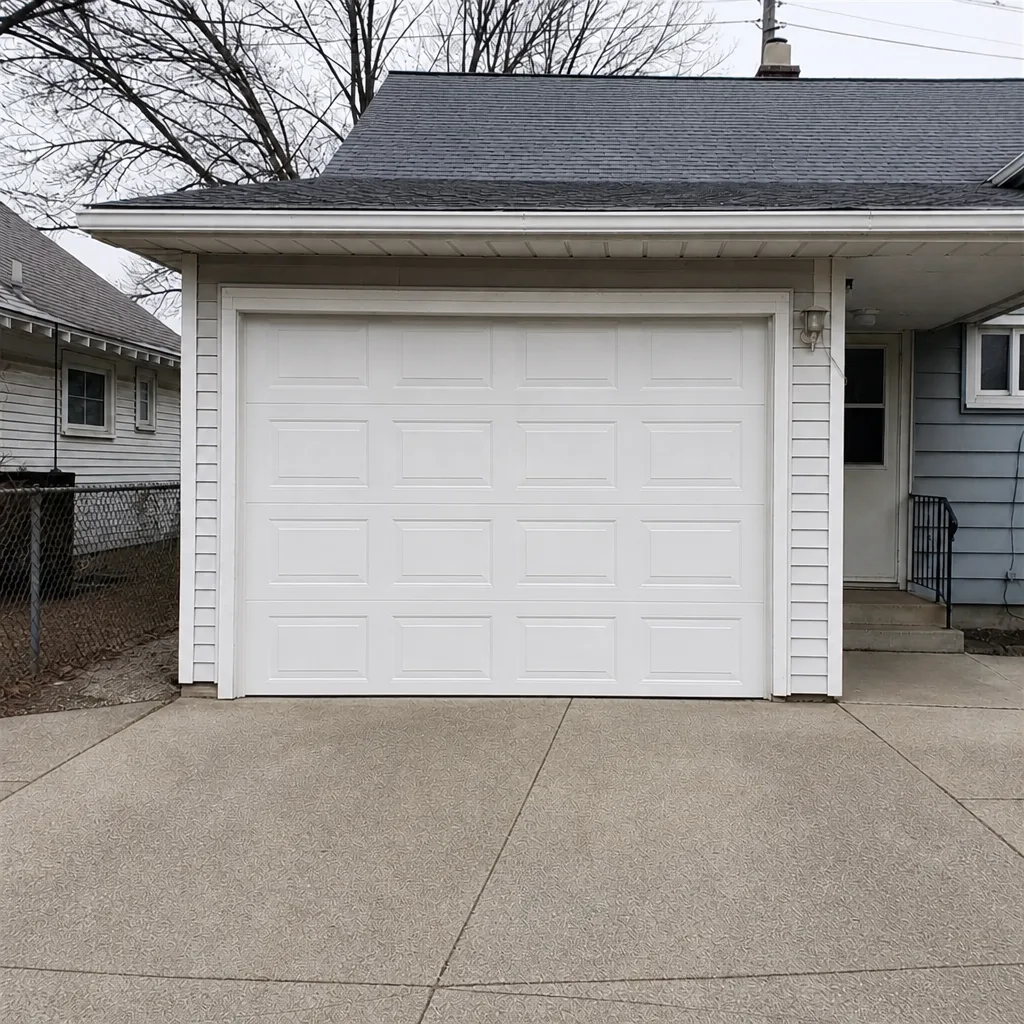 After
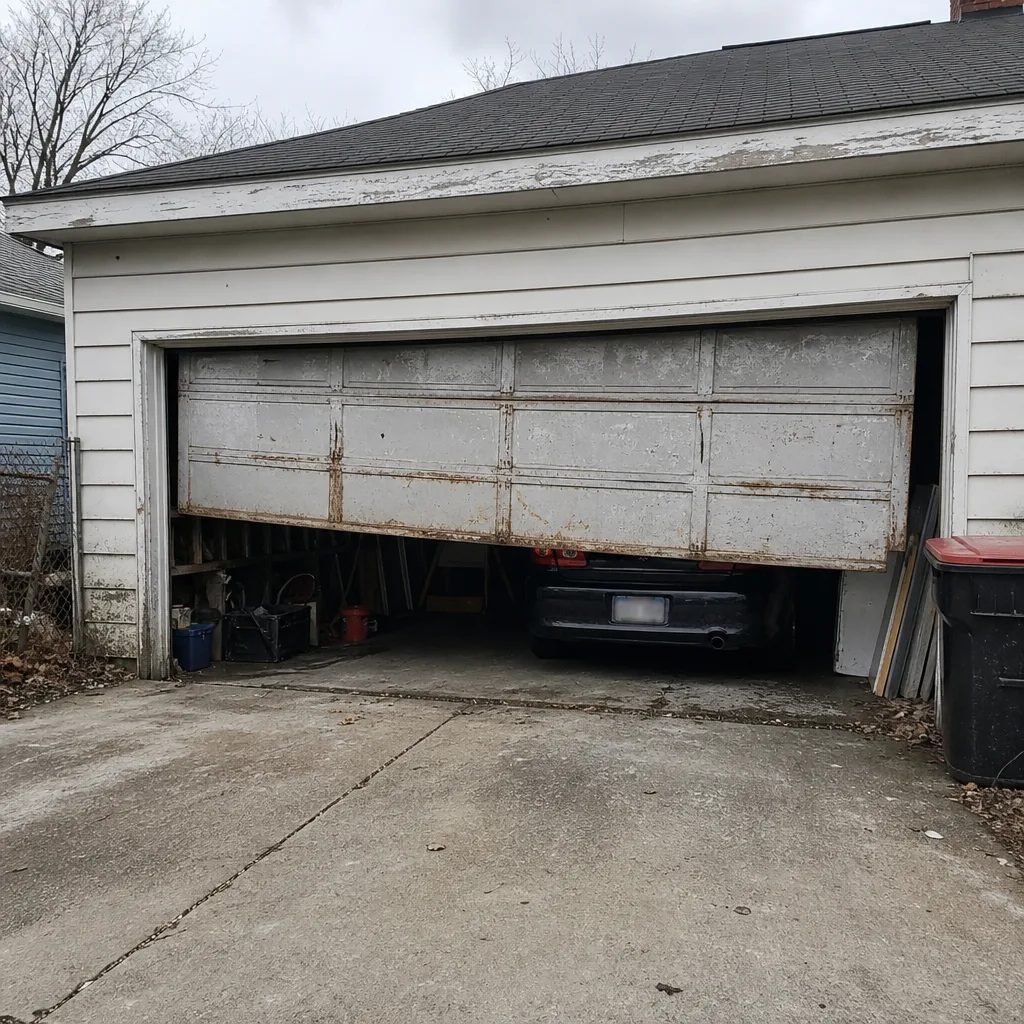 Before
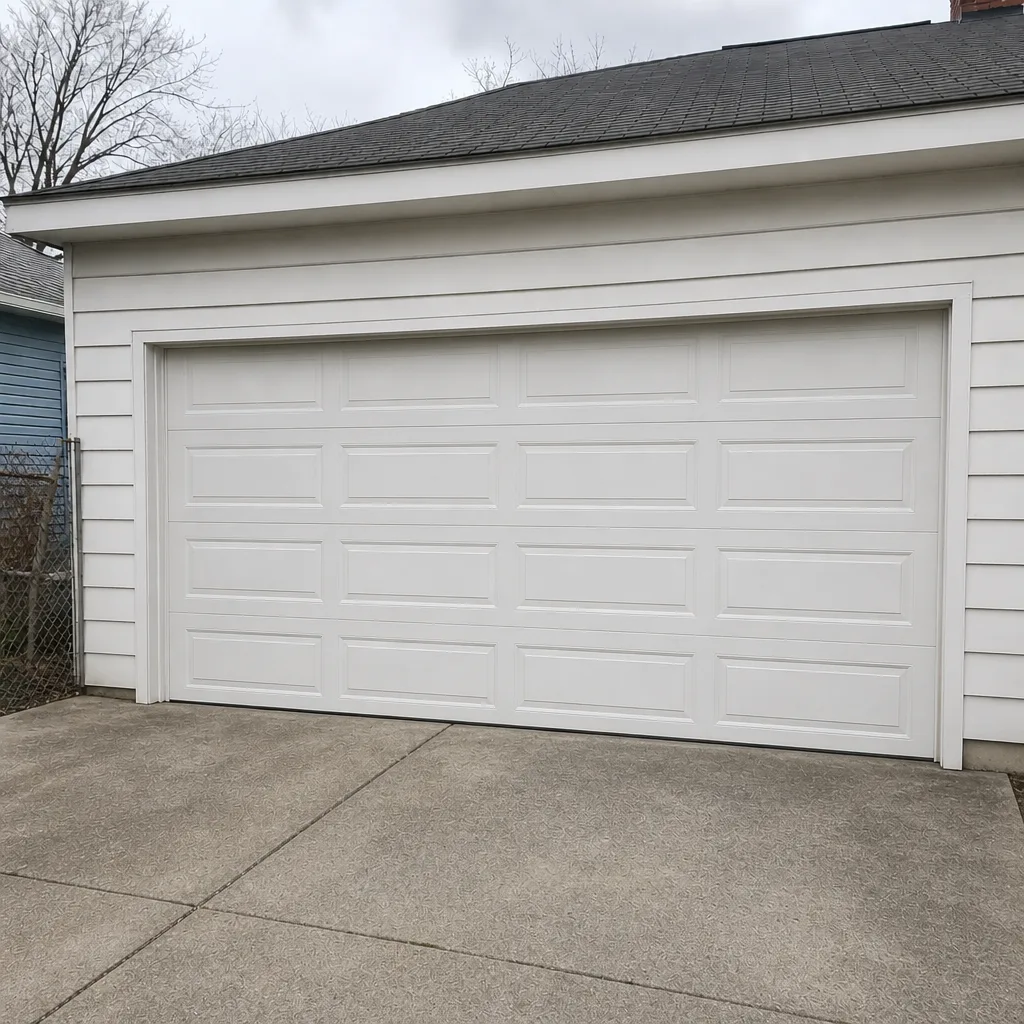 After
When to Call a Professional
Call for help any time the door won’t pass the balance test, a spring is visibly broken or sagging, a cable has come loose, the door runs loud enough to wake the house, or the safety reverse doesn’t trip on an obstruction. Also call if fixing one problem pushed you into territory you don’t fully understand – a partially adjusted limit switch that isn’t quite right is worse than one that’s clearly off, because now the symptoms are mixed. Our team works on South Bend doors and the eight major brands most commonly installed in them, and we’ll be straight with you if what you’re describing doesn’t need a visit. Harmon Garage Door Repair offers free estimates in South Bend – call (844) 834-4569 to talk it through. We answer 24/7, and fast dispatch runs from 7am to 7pm, Sunday through Friday.
Frequently Asked Questions
The most common reason is a misaligned or dirty safety sensor on either side of the door opening. Wipe both lenses and check that each LED is solid, then try again. If that doesn’t fix it, the opener’s down limit or logic board may need adjustment, and a technician can diagnose it in a few minutes. Call (844) 834-4569 if it keeps reversing after a sensor wipe – estimates are free.
No. Torsion and extension springs are under extreme tension and can cause serious injury if they release unexpectedly. Even experienced DIY homeowners should not attempt this job. Keep the door closed, stop using the opener, and call a professional. We’ll get the right spring for your door and have it wound and tested the same day in most cases around South Bend.
Most repairs land in a modest range, but the exact cost depends on the part and the door. A sensor adjustment or limit switch fix is at the low end; a spring replacement or cable repair is higher because of labor and part matching. We quote every job in writing before we start, so you know the number before any work begins. Call (844) 834-4569 for a free estimate.
This usually means the torsion spring has failed, not the opener. The motor is turning, but the door’s weight isn’t being carried anymore. Pull the emergency release and try lifting the door by hand – if it feels very heavy, the springs are the problem. Check for a visible gap in the spring coils above the door, then call us.
Once or twice a year, with a proper lubricant for hinges, rollers, and the torsion assembly. Skip the plastic rollers (they don’t need it) and don’t spray the track – debris collects there. A lubricated door runs quieter and lasts longer through South Bend’s freeze-thaw swings, which are hard on metal fasteners.
Yes, if it’s one of the eight major brands. We service LiftMaster, Chamberlain, Genie, Clopay, Amarr, Wayne Dalton, Craftsman, and Raynor systems. If you’re not sure what brand you have, look at the opener’s serial plate or the door’s edge for a stamp. If it’s still unclear, describe it to us and we’ll figure it out.
The Bottom Line
A garage door rarely fails without warning. It grinds, it hesitates, it bounces at the bottom, it reverses when the sensor sees a shadow. Each of those is a message about a specific component, and reading those messages saves you money. Run the monthly balance and force tests, re-lubricate twice a year, keep an eye on the bottom seal through South Bend winters, and stop using the door the moment a spring snaps or a cable pops off. DIY the sensors and batteries. Leave the springs, cables, tracks, and motors to a trained technician. Diagnosed right, fixed once – that’s the whole point. If you’re not sure what your door is telling you, we’re happy to take a look. Call (844) 834-4569 for a free estimate on any South Bend repair, and get a straight answer before you spend a dime.
Written by the team at Harmon Garage Door Repair.