
Last updated November 15, 2026
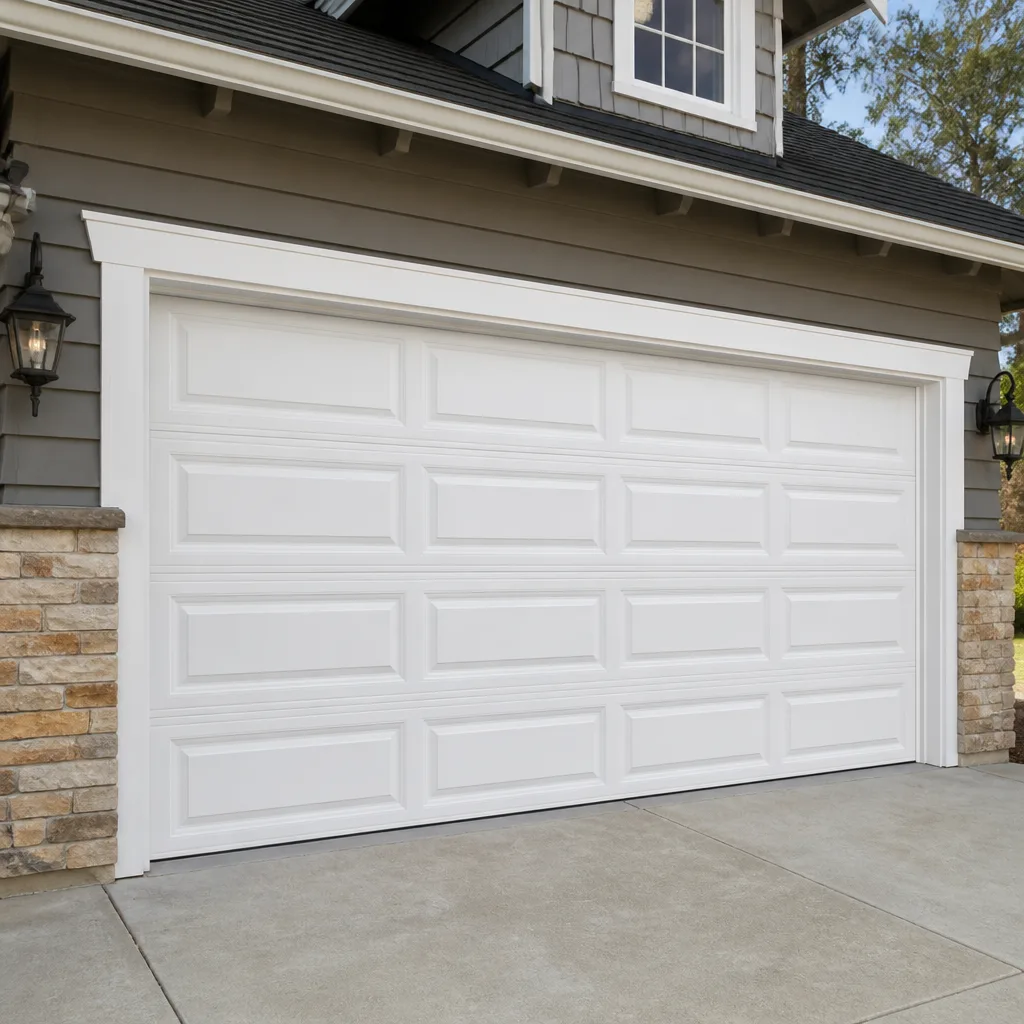 Raised-panel steel
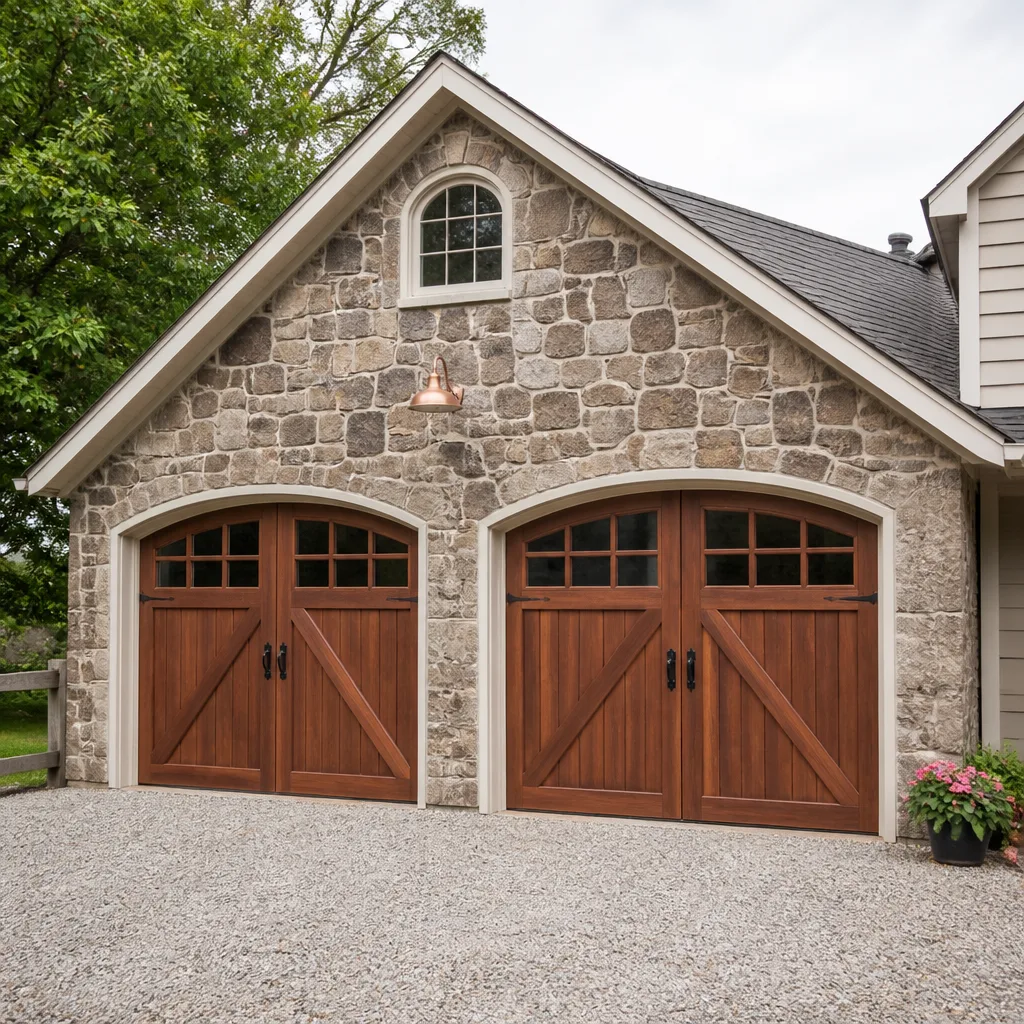 Carriage house
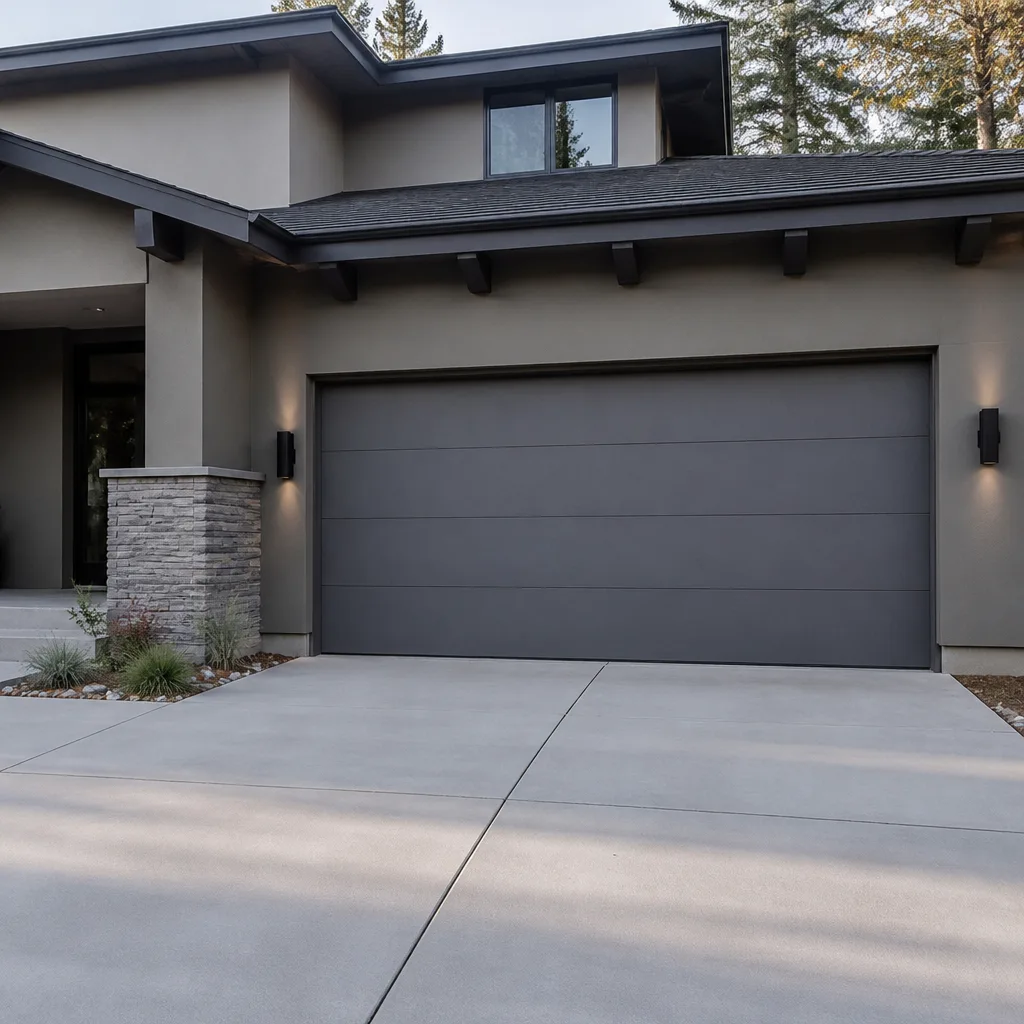 Modern flush
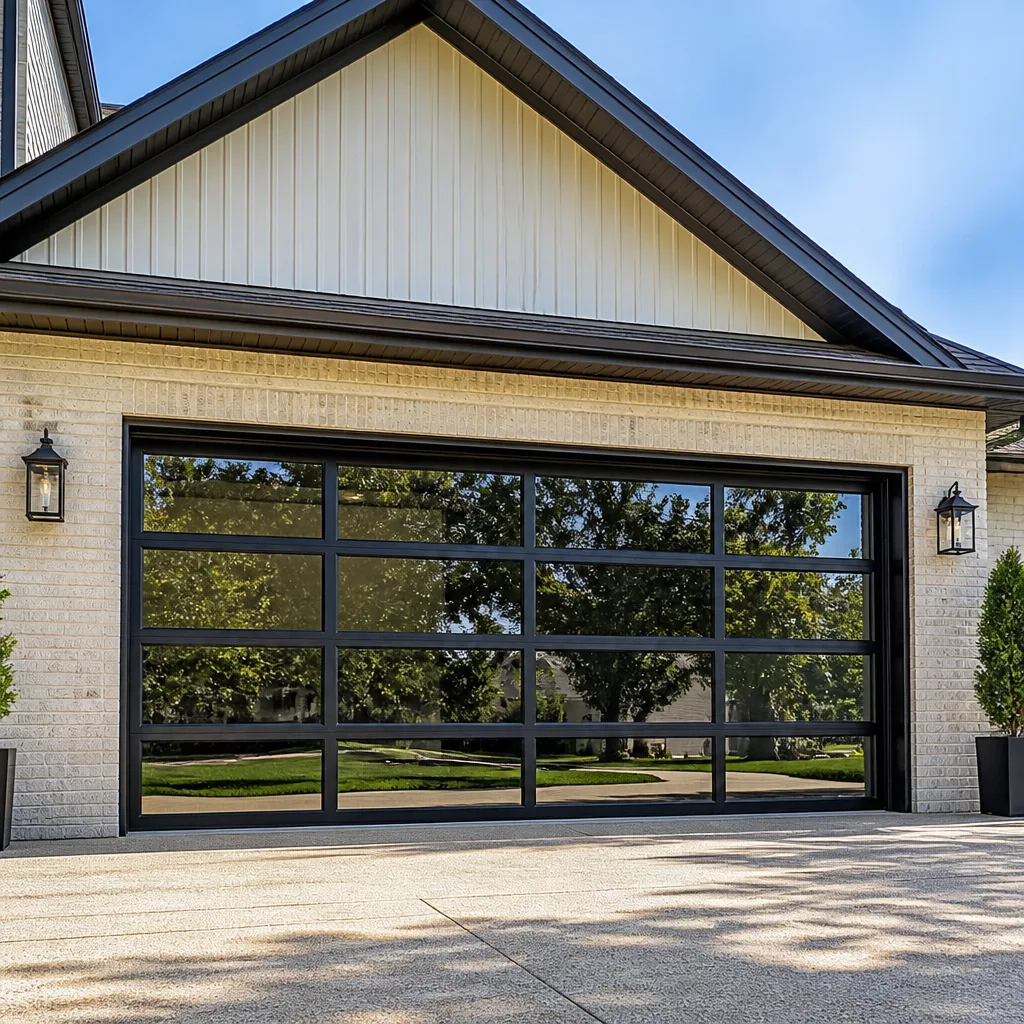 Full-view glass
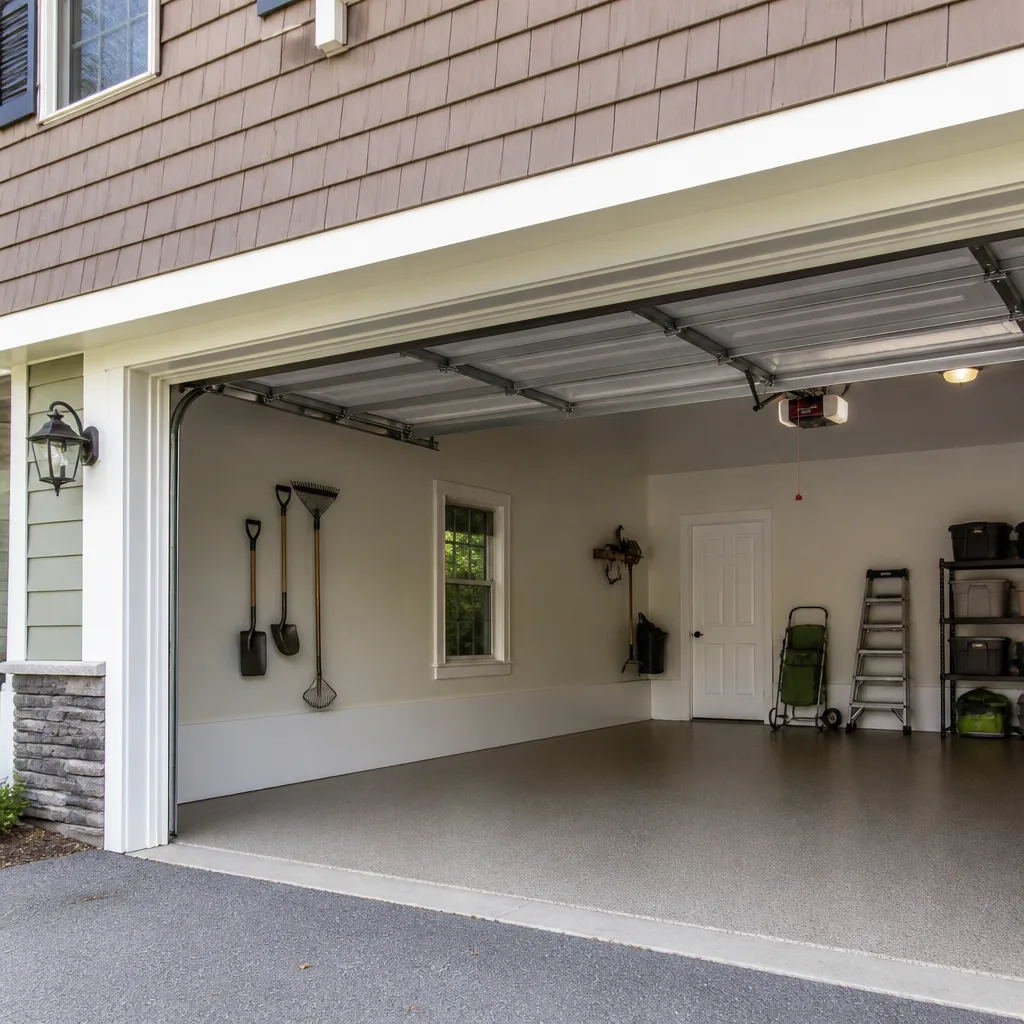 LiftMaster openers
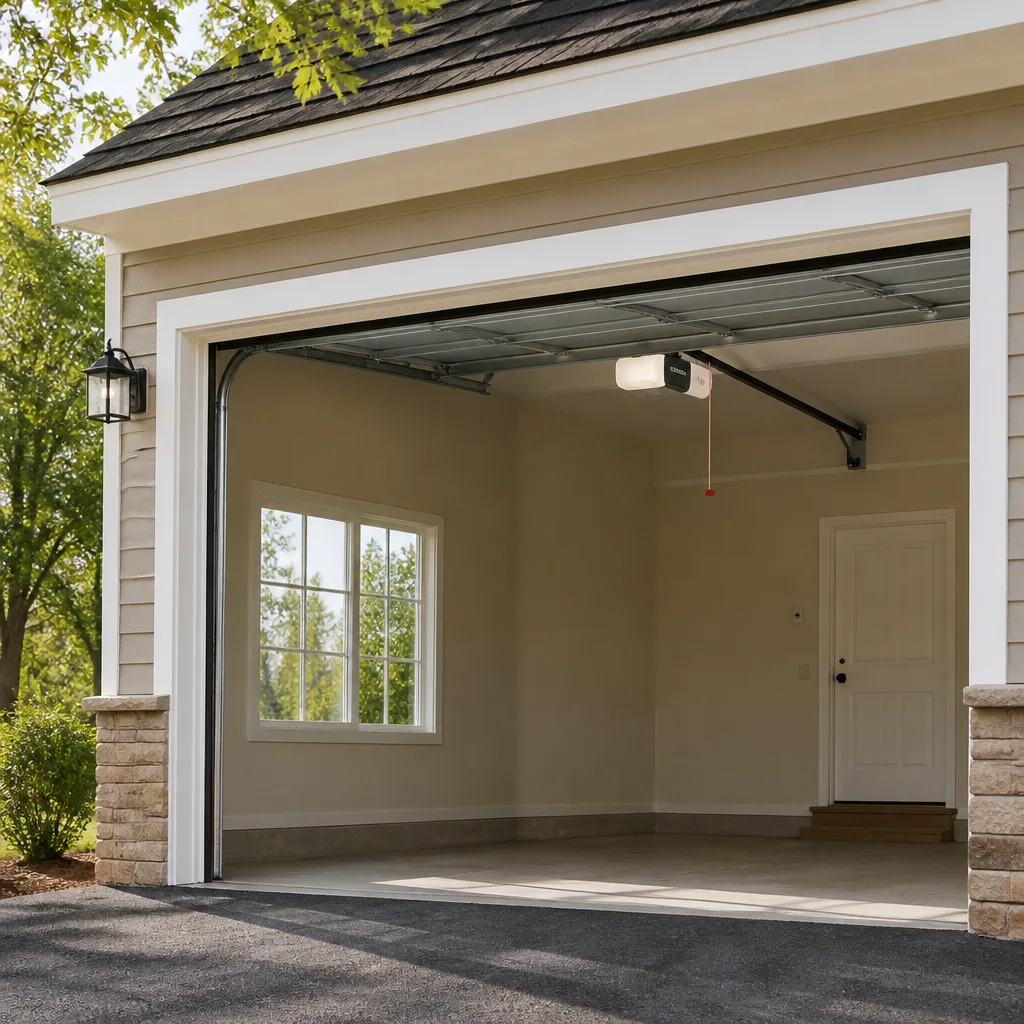 Chamberlain openers
Full 25-point door and opener safety check with every visit - springs, cables, rollers, tracks, and your LiftMaster or Chamberlain opener included
You get a price before we start. It does not change when the pro arrives.
Get your free estimateGarage Door Warning Signs: A South Bend Homeowner’s Reference Guide
The loudest warning sign a garage door gives you isn’t a bang or a screech. It’s a slight hesitation at the bottom of travel, a half-second pause that wasn’t there last winter, that most homeowners tune out for two years before a spring snaps on a January morning. Doors rarely fail without notice. They fail after months of telling you something in a language of sounds, timings, and patterns that nobody taught you to read. This guide teaches you to interpret your door’s behavior rather than just look at it, from the sounds underneath the noise to the rust patterns that mean spring fatigue. Everything here applies directly to the doors and openers we see across South Bend.
Quick Answer
A garage door gives warning before it fails through four channels: new or changing sounds (grinding, squealing, popping, rattling), movement problems (uneven travel, slow descent, bouncing at close), opener behavior (lights on but motor won’t engage, inconsistent remotes, wall button working while remotes don’t), and visual signs (rust patterns, cable fraying, sagging panels). Treat any grinding, popping, or visible cable damage as stop-using-the-door-today. Treat squeaks, minor rust, and remote quirks as watch-and-schedule items. The difference between the two categories is the whole point of this guide.
Styles & brands we work with
- Raised-panel steel
- Carriage house
- Modern flush
- Full-view glass
- LiftMaster openers
- Chamberlain openers
Table of Contents
- Sound-Based Diagnostics: What Your Door Is Telling You
- Movement Pattern Warnings: Hesitation, Uneven Travel, and Bouncing
- Opener Behavior Flags: When the Motor and the Door Disagree
- Visual Signs South Bend Homeowners Miss
- How South Bend Weather Accelerates Wear
- The Triage Framework: Watch It vs. Stop Using the Door
- A Seasonal Inspection Checklist for South Bend Homes
Sound-Based Diagnostics: What Your Door Is Telling You
Garage doors are mechanical systems with a small number of moving parts, and each part fails with a recognizable sound. Once you learn to separate the sounds, you can tell a worn roller from a failing spring from a loose track without opening a panel. The key is to stop hearing “the garage door is loud” and start hearing which part is loud, and when.
Here’s what each common sound typically indicates:
- Grinding: Metal-on-metal contact. Most often a dry or seized roller, a worn hinge pin, or a torsion tube rubbing where it shouldn’t. Grinding gets worse under load, so it’s usually loudest on the way up.
- Squealing or high-pitched whining: Usually friction in the rollers, hinges, or torsion tube bearings. Sometimes it’s the opener’s internal gears, especially on older chain-drive units.
- Popping: A sharp pop or bang during travel is the most serious sound on this list. It usually means a torsion spring has slipped, a cable has jumped its drum, or a hinge has pulled loose from a panel. A single loud pop followed by a door that won’t lift or drops slightly means stop using it now.
- Rattling: Loose hardware, a worn opener rail, or panels that have worked their way loose from their hinges. Rattling on a Clopay or Amarr steel door often traces to hinge screws that have backed out after years of thermal expansion.
- Buzzing from the opener: On a LiftMaster or Chamberlain unit, a buzz with no movement usually means the motor is trying to run but the door is stuck or the capacitor has failed. Stop pressing the button and have the opener checked.
- Clicking: Often the opener’s relay or the safety sensor circuit. A click with no movement points toward the opener; a click with partial movement points toward something binding in the door.
Timing matters as much as timbre. A sound that only happens at one point in the travel points to a specific track or roller problem at that spot. A sound that follows the door the whole way points to springs, cables, or the opener itself. And a sound that started small and has slowly gotten louder over months is the pattern that precedes most spring failures. If any single sound on this list has been present for more than a couple of weeks, it deserves a look from someone who works on the brand you already have rather than a general handyman.
Movement Pattern Warnings: Hesitation, Uneven Travel, and Bouncing
Movement is the channel homeowners tune out most reliably. A door that hesitates at the bottom of travel, slows before it closes, or bounces once it hits the floor is doing one of the most reliable things a failing system does: showing you that the balance is off. Springs do most of the lifting on a well-balanced door. When they weaken, the opener takes on more of the load, and the strain shows up as hesitation, sluggishness, or a door that seems to think about it before it moves.
Watch for these movement patterns and what they mean mechanically:
- Hesitation at the bottom of travel: The door pauses just before fully closing, then drops the last few inches. This often signals weakening springs or a binding panel. Left alone, it usually progresses.
- Slow descent: If the door has gotten noticeably slower on the way down versus the way up, or the opener sounds strained throughout the cycle, the spring tension is likely unbalanced or the rollers are dragging.
- Uneven travel (one side higher than the other): A door that climbs crooked means the cables or drums on one side have slipped or stretched. This is a stop-using-the-door condition because a cable can come off the drum suddenly and the door can drop.
- Bouncing at close: A door that bounces or reverses once it contacts the floor is usually a limit-setting or sensor issue on the opener, or a floor seal that’s gone stiff. On a Genie unit, the travel limits can drift over time and need resetting.
- Door doesn’t stay fully open: A door that creeps down after opening means the opener or the springs are not holding the load. This is dangerous because the door can fall without warning.
- Jerky or stuttering travel: Usually a worn roller, a track that’s out of alignment, or a hinge that’s seized at one panel point.
In South Bend, this category matters more than most because of the temperature swings between seasons. A door that’s marginal in July often becomes a spring failure in January, when the metal contracts and the grease stiffens. If you notice any of the movement patterns above, the time to have it looked at is before the first hard freeze, not after.
Opener Behavior Flags: When the Motor and the Door Disagree
Openers fail in ways that mimic other problems. A light that works but a motor that won’t engage isn’t a door problem; it’s an opener problem with a specific set of causes. Likewise, a remote that works inconsistently while the wall button works fine is telling you something completely different than a remote and wall button that both fail at once. Learning to separate these is the difference between paying for the wrong repair and paying for the right one.
Here are the opener flags worth knowing, and what each points to:
- Light works, motor doesn’t engage: The opener has power but the motor or its starting circuit isn’t running. On a Chamberlain, this often traces to the logic board or a failed capacitor. Stop pressing the button; repeated attempts can damage the motor.
- Remote inconsistent (works from some angles or distances, not others): Usually a battery, a weak antenna connection, or interference from LED bulbs in the garage. Also worth checking: a smart-drive opener from LiftMaster paired to an older remote that needs re-pairing.
- Wall button works, remote doesn’t: Almost always the remote itself or its pairing. This is a good sign because the opener’s receiver and logic are fine.
- Remote works, wall button doesn’t: Usually a wiring issue at the wall button or a bad button. The opener itself is generally fine.
- Door reverses before hitting the floor or immediately after starting up: The safety sensors or the travel limits. Nothing about this is a spring or cable problem. On a Genie or Chamberlain, verify the sensors are aligned and clear of cobwebs before anything else.
- Opener runs but door doesn’t move: A broken torsion spring, a stripped gear in the opener, or a disengaged manual release. If the spring is broken, this is a stop-using-the-door condition.
- Grinding noise from the opener itself: Usually a stripped gear in a chain-drive or screw-drive unit. If the door worked fine before and the opener suddenly sounds like a coffee grinder, the opener is the problem.
One pattern South Bend homeowners frequently miss is the slow degradation of a wall button’s wiring over years. The wires run through the garage wall, and if they chafe, the button starts to work intermittently before failing entirely. If the opener is otherwise fine and only the wall button is unreliable, the fix is often smaller than the customer expects. That’s the kind of thing a proper diagnostic catches, and it’s why we treat garage door opener repair as its own service rather than a sidelight to door work.
Visual Signs South Bend Homeowners Miss
The visual warning signs that matter most are the ones that look like something else. Rust is the clearest example. Surface rust on a door’s panels is cosmetic and common in South Bend’s lake-effect humidity. But rust along the torsion spring, along the cable, or directly around the brackets at the top of the door is a different story: that pattern often signals moisture getting into the spring assembly or a spring that’s already under uneven tension. Learning to tell those two kinds of rust apart is worth more than any general inspection advice.
Here’s what we look for, and what each pattern suggests:
- Uniform surface rust on panels: Cosmetic. Typically from humidity. Clean and repaint if it bothers you. Nothing to do mechanically.
- Rust on the torsion spring or the brackets holding it: Spring fatigue. The spring is nearing the end of its working life, and the rust is the visible sign of the cycles adding up.
- Rust concentrated at the bottom of the door or along the bottom seal: Usually moisture from the floor. Worth replacing the seal because it’s cheap and it protects the panel edge.
- Cable fraying near the drum (top of the door): Strand fraying where the cable winds onto the drum is the most serious visual warning on the whole door. It means the cable is about to fail. Stop using the door.
- Cable fraying mid-cable: Less urgent than at the drum but still a replacement item. Often caused by a cable rubbing on a track or a sheave that’s out of alignment.
- Track dents or bending: Usually impact from a vehicle, a bicycle, or a storage item. If the track is bent, the rollers can’t run true and the door will bind.
- Panel sagging or separating at the hinges: On a Wayne Dalton or Raynor door, this often starts with hinge screws backing out. Left alone, the panel will separate and the door will sag.
- Daylight visible around the closed door: Usually a worn bottom seal, or a door that’s become slightly out of square. Worth checking because it affects energy loss and moisture entry.
The biggest mistake we see here is treating all rust as the same. A little cosmetic rust is not a reason to panic. Rust on the spring or the drum end of the cable is a reason to schedule a look. If you’re not sure which you’re looking at, a quick in-person check settles it.
How South Bend Weather Accelerates Wear
Garage doors in South Bend live through a specific and demanding set of conditions: cold winters with repeated freeze-thaw cycles, humid summers from the nearby lakes, and enough seasonal temperature swing to work metal and wood doors differently than in milder climates. All of that shows up as wear on springs, cables, rollers, and seals, and it means a garage door here tends to give warning signs earlier in its service life than one in a warmer climate.
The cycle math is what matters. A torsion spring is rated in cycles, meaning one open and one close. A household that comes and goes several times a day wears a spring out in a predictable number of years. Add temperature swings that make the spring work harder in cold weather, and the timeline shortens further. The result is that a door in South Bend doesn’t always fail at the cycle count the manufacturer publishes; it often fails a little sooner, and the warning signs a homeowner noticed in September become a snap in January.
Other South Bend-specific wear patterns:
- Cold-stiffened grease: Rollers and hinges that run quietly in July can squeal in February because the lubricant thickens. This isn’t a failure yet, but it’s a reason to inspect before each winter.
- Frozen bottom seals: A seal that’s bonded to the floor in a hard freeze will tear or pull loose when the door lifts. A stiff or torn seal should be replaced before winter.
- Ice on the floor beneath the door: Meltwater that refreezes under the door can block it from closing fully. Usually a drainage or seal issue, not a door failure, but worth clearing before it stresses the opener.
- Summer humidity and wood doors: Wood panels swell in humid months and contract in dry ones. On an older wood door, this can loosen hinges and cause panel separation that shows up as a rattle or a slight sag.
- Snow clearance around the door opening: Shoveled snow piled against the bottom of the door pushes on the bottom panel. Over time this bends the bottom section and misaligns the bottom seal.
If you’ve got an older door that lives through South Bend winters and hasn’t been looked at recently, the seasonal pattern is a smarter thing to reason about than a hard calendar. The door will tell you when it’s stressed; the job is to listen before a failure.
The Triage Framework: Watch It vs. Stop Using the Door
The single most useful thing this guide can do is give you a simple decision rule for the moment you notice a warning sign. Not every symptom warrants a same-day call, and treating every squeak as an emergency is its own kind of mistake. But treating a popping spring or a frayed cable as a “we’ll get to it” item is how a manageable repair becomes a much bigger problem.
Here’s the split:
Stop Using the Door Today (Call Right Away)
- A loud pop followed by a door that won’t lift or falls slightly. Typically a broken torsion spring. The door is now unsafe to use.
- Visible cable fraying at or near the drum. The cable is close to failing. A cable failure can drop the door.
- Uneven travel, one side higher than the other. One side has lost support. Operating it risks a panel drop.
- Door that won’t stay fully open. The system isn’t holding the load.
- Grinding that got suddenly much louder, or any metal-on-metal noise accompanied by smell or heat. Stop and have it assessed.
- Opener runs but the door doesn’t move at all, and the manual release was not pulled. Something has failed inside the lifting system.
Watch It and Schedule a Look
- Squealing or squeaking during travel. Lubrication or worn rollers, not an emergency, but it will progress.
- Minor surface rust on panels. Cosmetic. Schedule when convenient.
- Remote inconsistency or a wall button that works while remotes don’t. Usually battery or pairing. Schedule an opener diagnostic.
- Slow descent or hesitation that hasn’t gotten worse. Worth watching, then scheduling before cold weather.
- A worn or torn bottom seal. Not a mechanical risk, but worth replacing for sealing and energy loss.
- Rattling that stops when you press on a hinge area. Usually a screw or hinge. Schedule a tune-up.
The dividing line is straightforward: if the door’s ability to stay in place and not fall is in question, stop. If the door still operates predictably and the symptom is friction or electronics, watch and book it in. The three things that are never “watch it” items are a broken spring, a frayed cable, and an unbalanced door. Everything else can be scheduled. If you’re not sure which category your symptom sits in, that’s a phone call worth making rather than a DIY guess.
A Seasonal Inspection Checklist for South Bend Homes
A short visual and auditory check before each season catches almost everything on this list before it turns into a failure. None of what follows is a repair; it’s a look-and-listen, done with the door closed and the opener disengaged from the wall if you’re not comfortable running it. Anything that requires touching springs, cables, or the torsion assembly should go to a technician.
- Run the door once and listen. Note any new sound versus the last time you ran it. If any of the four sounds (grinding, squealing, popping, rattling) is present, mark it down.
- Watch the travel. Does it move evenly? Does it hesitate or slow at any point? Does it bounce on close?
- Test the safety sensors. Wave something through the beam while the door closes. It should reverse. If not, don’t use the door until it’s fixed.
- Look at the spring and the drum end of both cables. Any rust on the spring, or any fraying at the drum, is stop-and-schedule.
- Look at the bottom seal. Is it attached, pliable, and free of tearing? Replace if not.
- Test both remotes and the wall button separately. If one works and the other doesn’t, that’s your opener diagnostic. If both are unreliable, check the opener’s power and its logic board.
- Clear the tracks visually. Any dents, bends, or debris in the track should be addressed. A bent track is a stop-and-schedule item because the rollers can’t run true.
- Before winter, lubricate the rollers and hinges. Use a garage-door lubricant, not WD-40, which attracts dust and thins existing grease. This is the one maintenance step most homeowners skip and the one that most reliably extends roller life.
Run this check in early fall, before the first freeze, and again in early spring when the seals and the greases have been through a hard season. A door that passes all eight items is unlikely to surprise you. A door that fails any one of them is telling you something specific about which component to look at. If you want a professional set of eyes on any of it, our garage door repair service covers exactly this kind of diagnostic and includes a written recommendation of what to fix now and what to defer.
Common Mistakes to Avoid
- Treating “it’s just a little loud” as normal noise. Loudness that’s new is diagnostic. If you can’t remember the door being this loud a year ago, it wasn’t.
- Turning up the opener’s force setting to compensate for a stiff door. All this does is force the opener to drag a struggling door until something in the opener fails too. The force setting is a symptom, not a fix.
- Greasing the tracks. Tracks should not be greased. Greasing them attracts grit and dust, and the rollers start to slide rather than roll. Lubricate rollers, hinges, and the torsion tube (at the bearings), not the tracks.
- Assuming a wall button that stopped working means the opener is dead. A dead wall button with working remotes is often a wiring problem, not an opener problem. Replace the button before the opener.
- Replacing a remote when the door’s movement is uneven. Uneven travel is a door problem. A new remote won’t fix it and will mask the warning sign.
- Operating a door with a broken spring “just this once.” The spring is what holds the door up. An opener cannot lift a door with a broken spring, and forcing it will damage the opener.
- Assuming all rust is the same. Uniform panel rust is cosmetic. Rust on the spring or the cable near the drum is a warning. In South Bend’s humidity, homeowners see a lot of the first kind and stop looking for the second.
See the difference
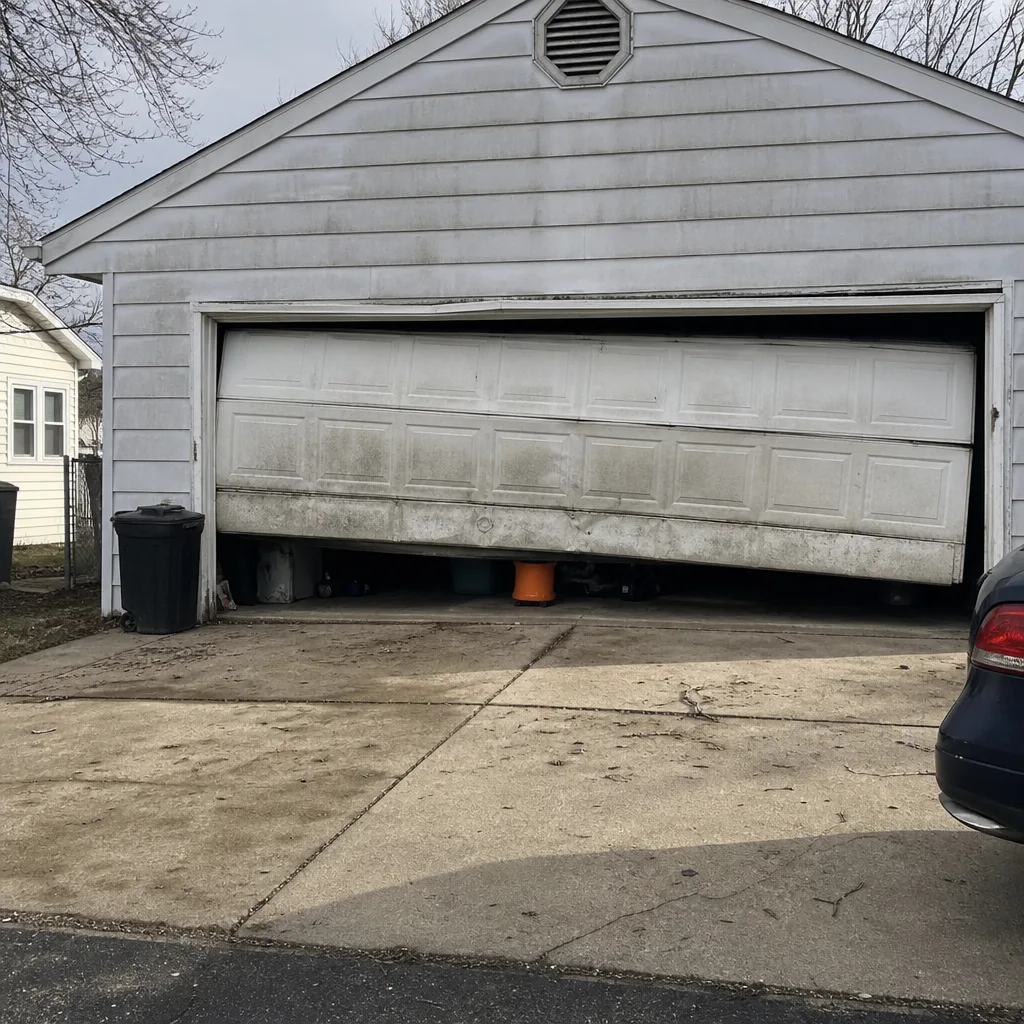 Before
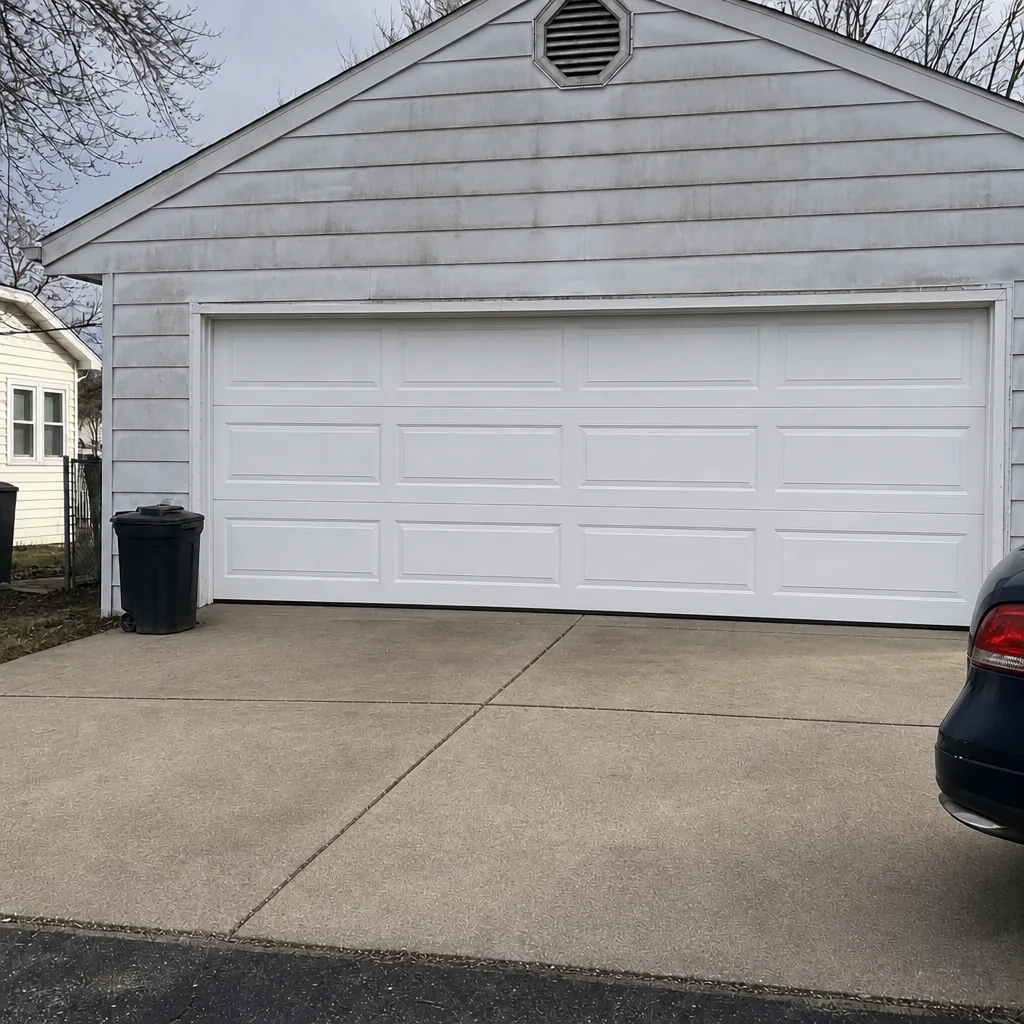 After
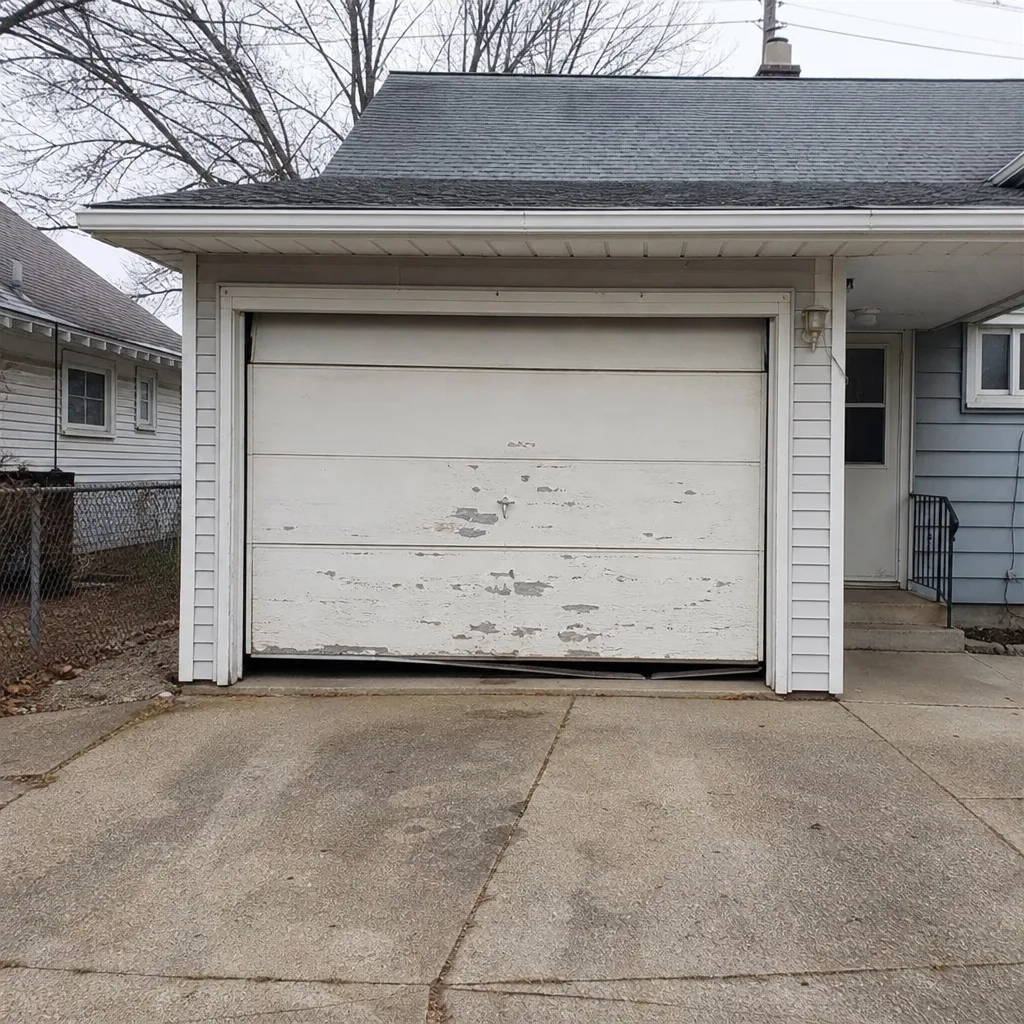 Before
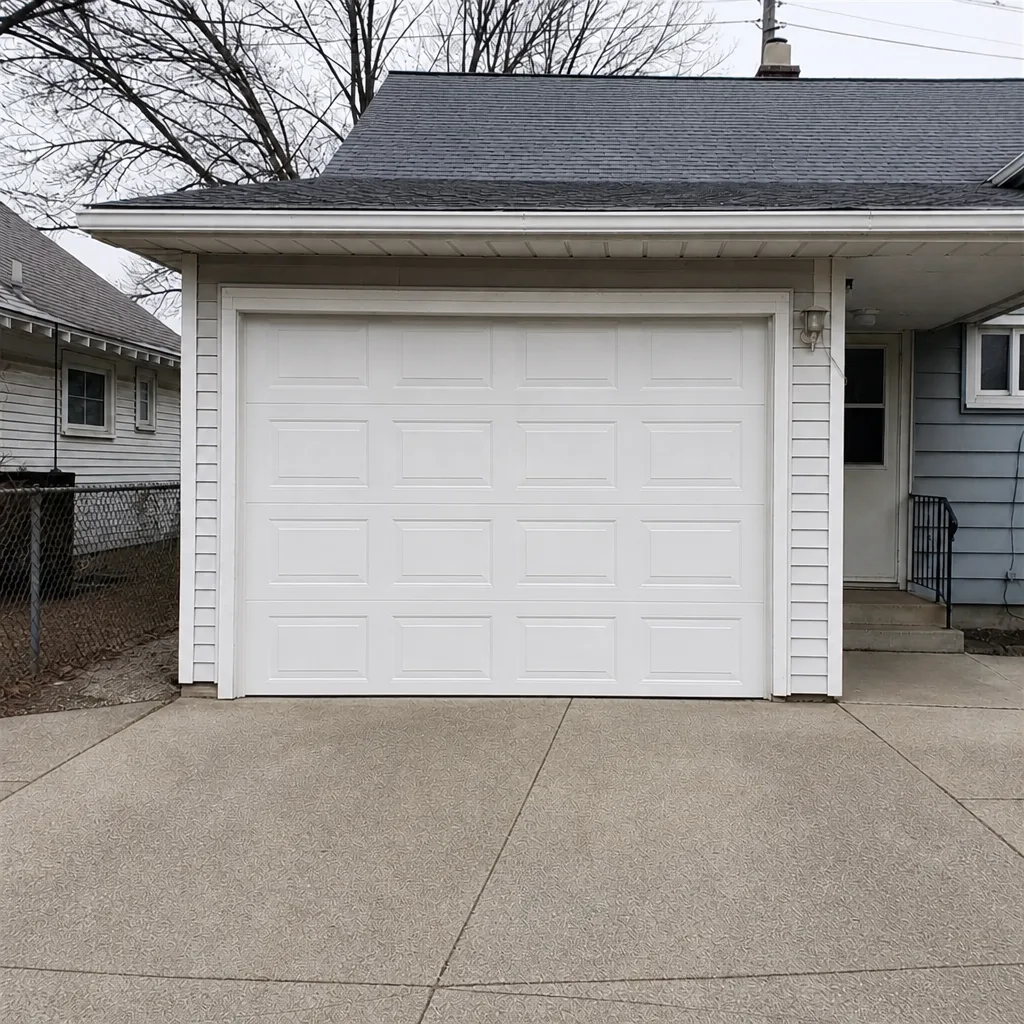 After
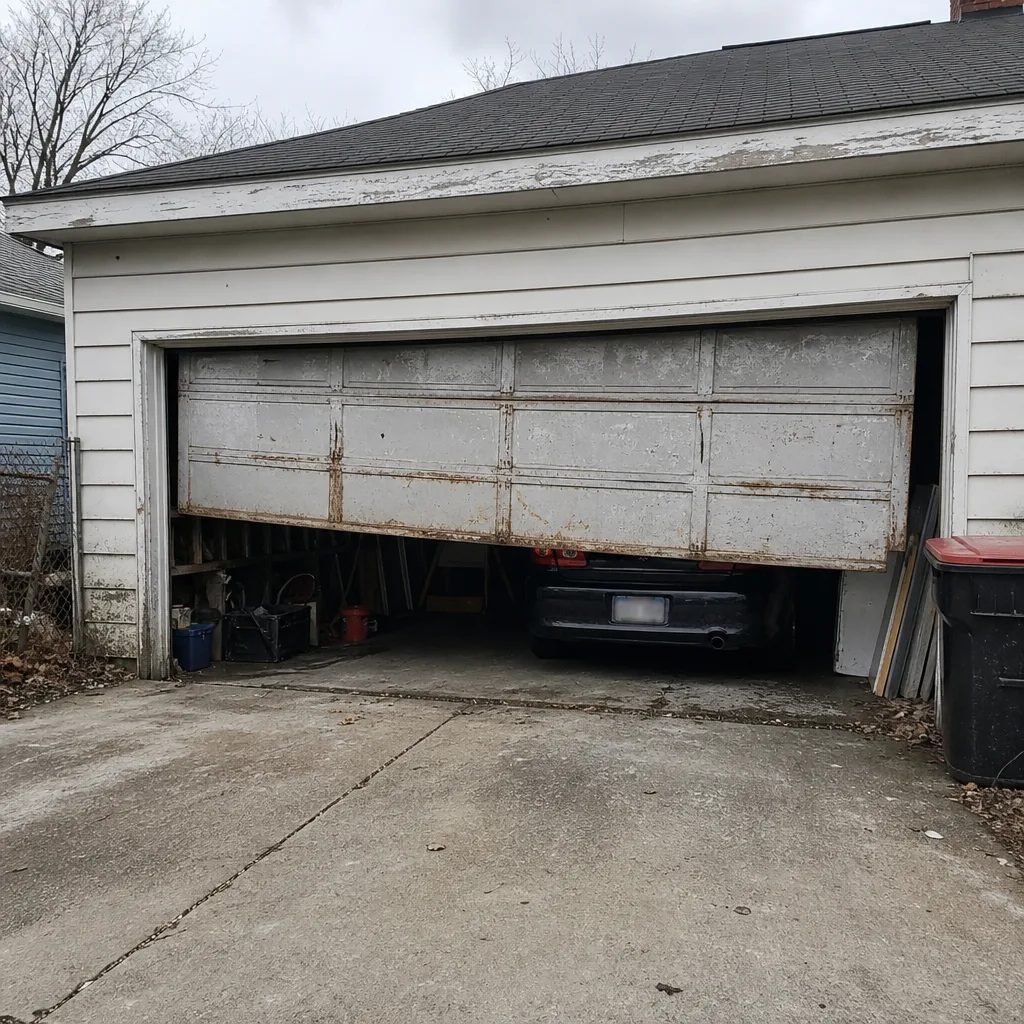 Before
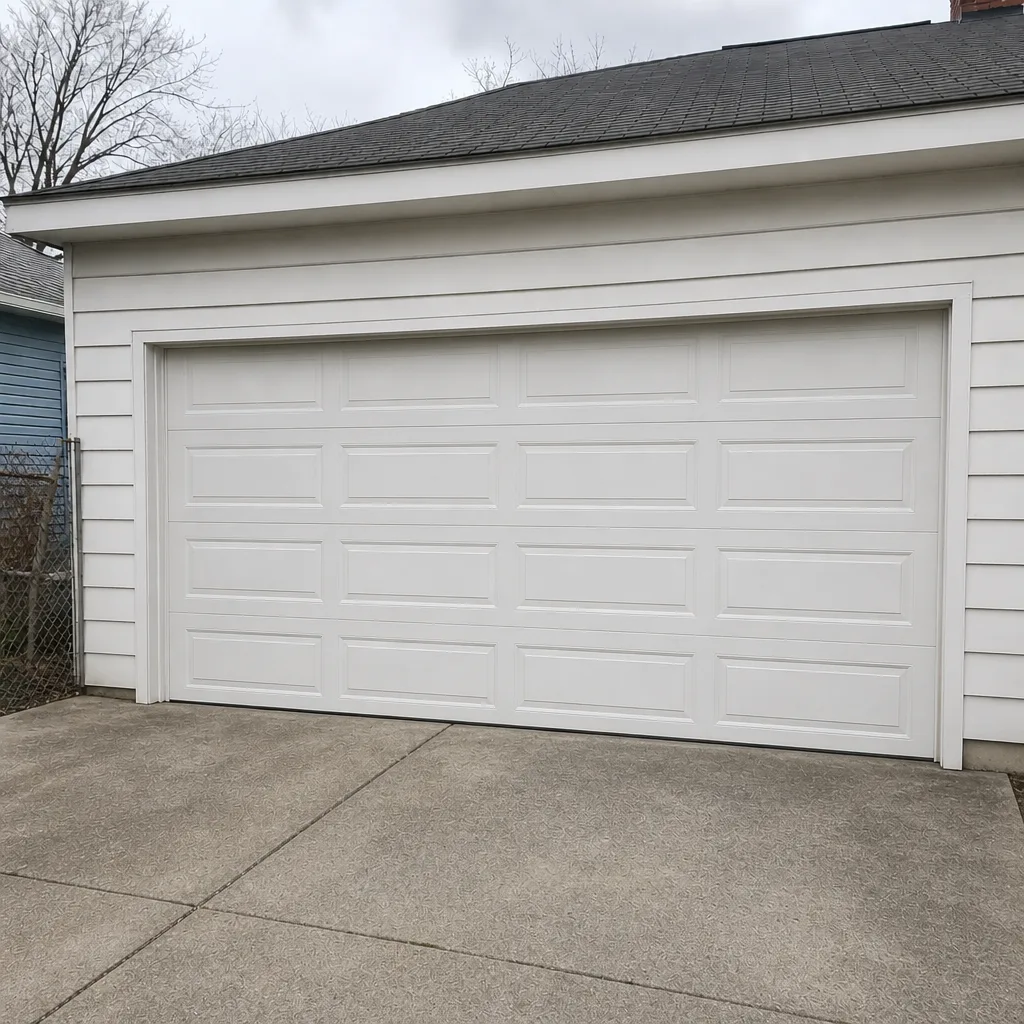 After
When to Call a Professional
Call a professional the moment any of the following is true: a spring has popped or broken, a cable is frayed at the drum or hanging loose, the door travels unevenly, the door won’t stay fully open, a panel is sagging or separating, or the opener runs without the door moving. These are the cases where continuing to operate the door can cause a panel drop or a spring failure with injury risk. Also call if the door has been giving the same warning for more than a couple of weeks, even a low-priority one, because the South Bend freeze will convert a marginal door into a broken one. Our technicians have up to 15 years of experience, are trained on brands like LiftMaster, Chamberlain, Genie, and Clopay, and are equipped to service the door structure, the opener, or both in a single visit. Harmon Garage Door Repair offers free estimates in South Bend: call (844) 834-4569. We answer 24/7. Fast dispatch from 7am to 7pm, Sunday through Friday.
Frequently Asked Questions
A hesitation at the bottom of travel, followed by a slight drop to close the last few inches. It’s more reliable than any single sound because it’s the direct sign that the springs are losing tension and the opener is taking on load. A door that does this in summer is much more likely to break a spring in winter, and South Bend winters are exactly when this shows up. Call (844) 834-4569 for an exact quote; estimates are free.
Most spring repairs land in the low hundreds per spring, and a matched pair is usually replaced together because a pair of springs fails as a unit. The written estimate sets the final price, and that price is agreed before any work starts. For a specific number, call (844) 834-4569 because a quote depends on the door’s size and the spring it uses. Estimates are free.
Usually the door. If the manual release has not been pulled and the opener’s motor is spinning without moving the door, the most common cause is a broken torsion spring or a disengaged drive. Either way, stop using the door because the opener is not holding it. When the motor runs and the door doesn’t move, the fix is usually a spring repair; when the motor doesn’t even engage, it’s usually the opener. Call (844) 834-4569 to have both checked in one visit.
Not meaningfully. The warning signs a homeowner needs to read are on the door and the opener’s behavior, and all three brands fail in the same four channels: sound, movement, opener engagement, and remote consistency. What differs is the diagnostics a technician runs once the door is looked at. Our technicians are trained on all three brands, so the same visit covers the door and the opener together.
No. A frayed cable is one of the clearest stop-using-the-door conditions in this guide, along with a broken spring and an uneven door. A cable under load can fail suddenly, and the door can drop. If you’re seeing fraying at the drum or a loose cable on one side, do not run the door. Call (844) 834-4569 and we’ll schedule a repair. Estimates are free.
Twice a year: once in early fall before the first freeze, and once in early spring after the winter season. The seasonal temperature swings here work the springs harder than in milder climates, and a door that’s marginal in the fall is much more likely to fail in January. If your door has any warning sign from this guide, get it inspected sooner than the seasonal schedule. Call (844) 834-4569 to book an inspection or a free estimate.
The Bottom Line
Your garage door is telling you what it needs, in sounds, in movement, and in the visual patterns most people walk past. Learn the four channels (sound, movement, opener behavior, and visuals), separate the watch-it signals from the stop-using-it signals, and check the door twice a year before the season turns. The three never-watch signals are a broken spring, a frayed cable, and an uneven door. Everything else can be scheduled. Our technicians work on the brand you already have, whether that’s a LiftMaster opener, a Clopay door, or something older. The Harmon name is on every job, and that’s the point. If you’ve spotted a warning sign and you’re not sure whether it’s a watch-it or a stop-using-it, call (844) 834-4569 for a free estimate. We answer 24/7. Fast dispatch from 7am to 7pm, Sunday through Friday, and we don’t work on Saturdays.
Written by the team at Harmon Garage Door Repair.