
Last updated November 15, 2026
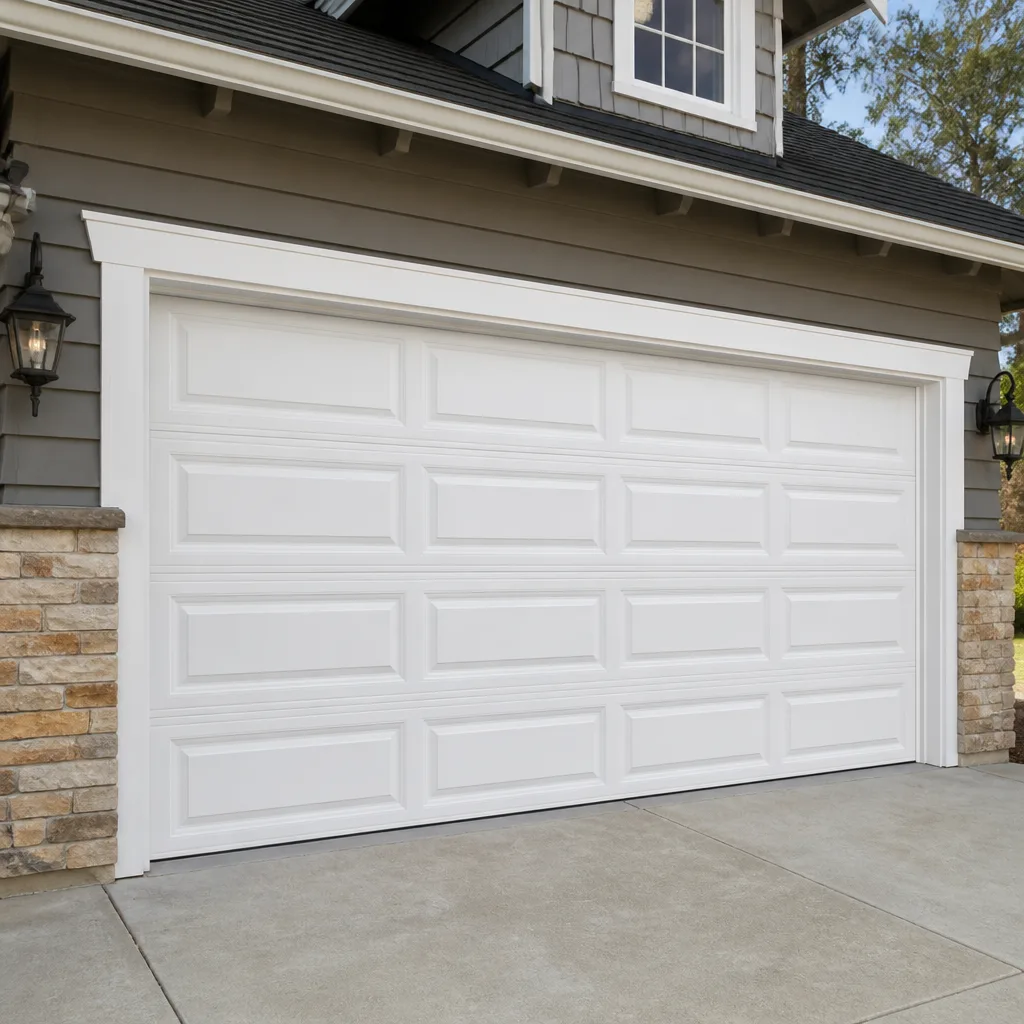 Raised-panel steel
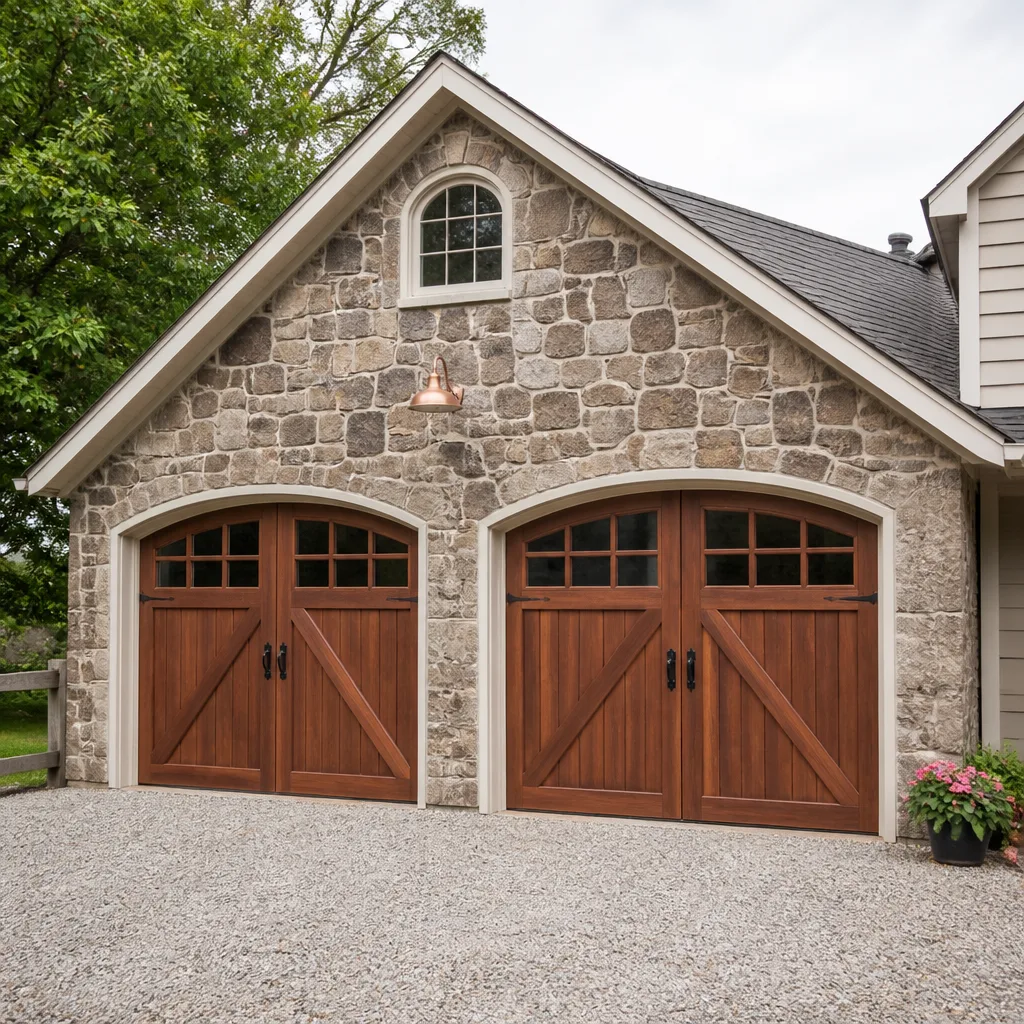 Carriage house
 Modern flush
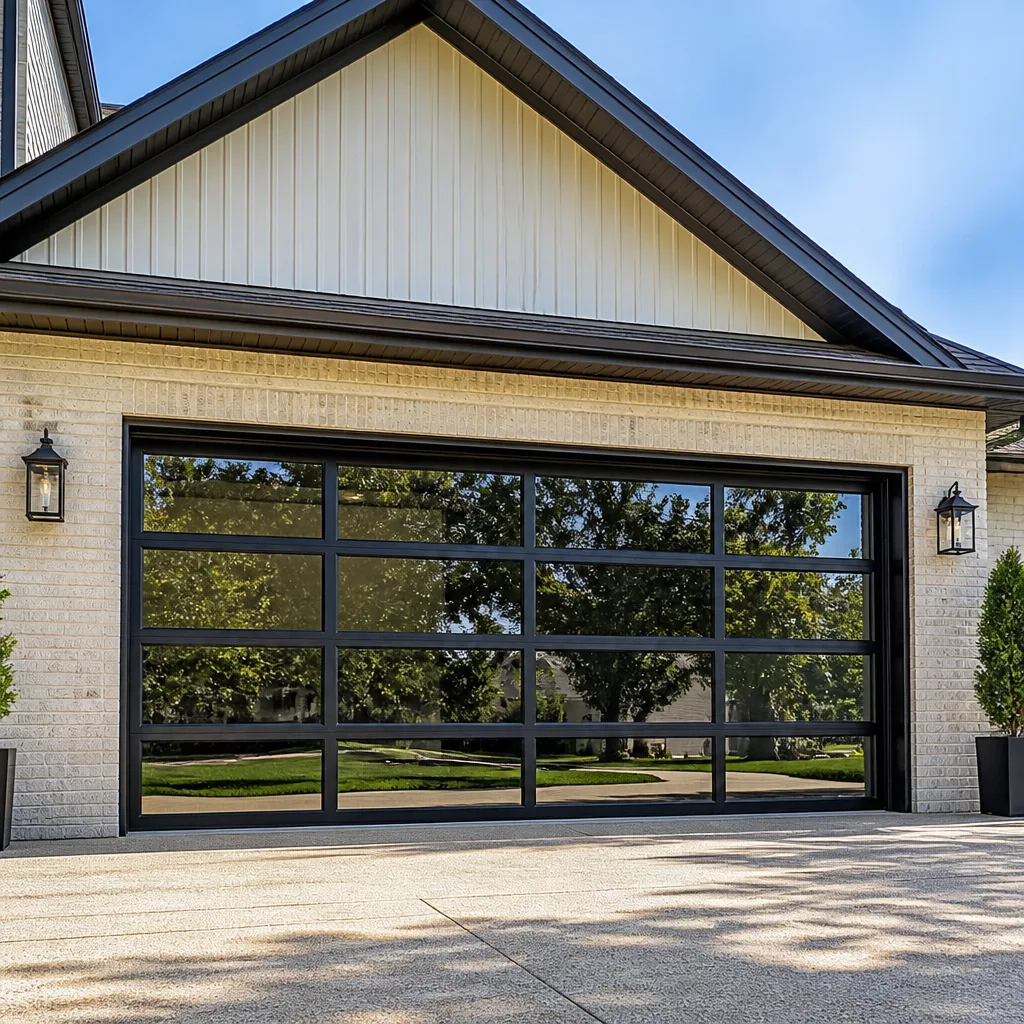 Full-view glass
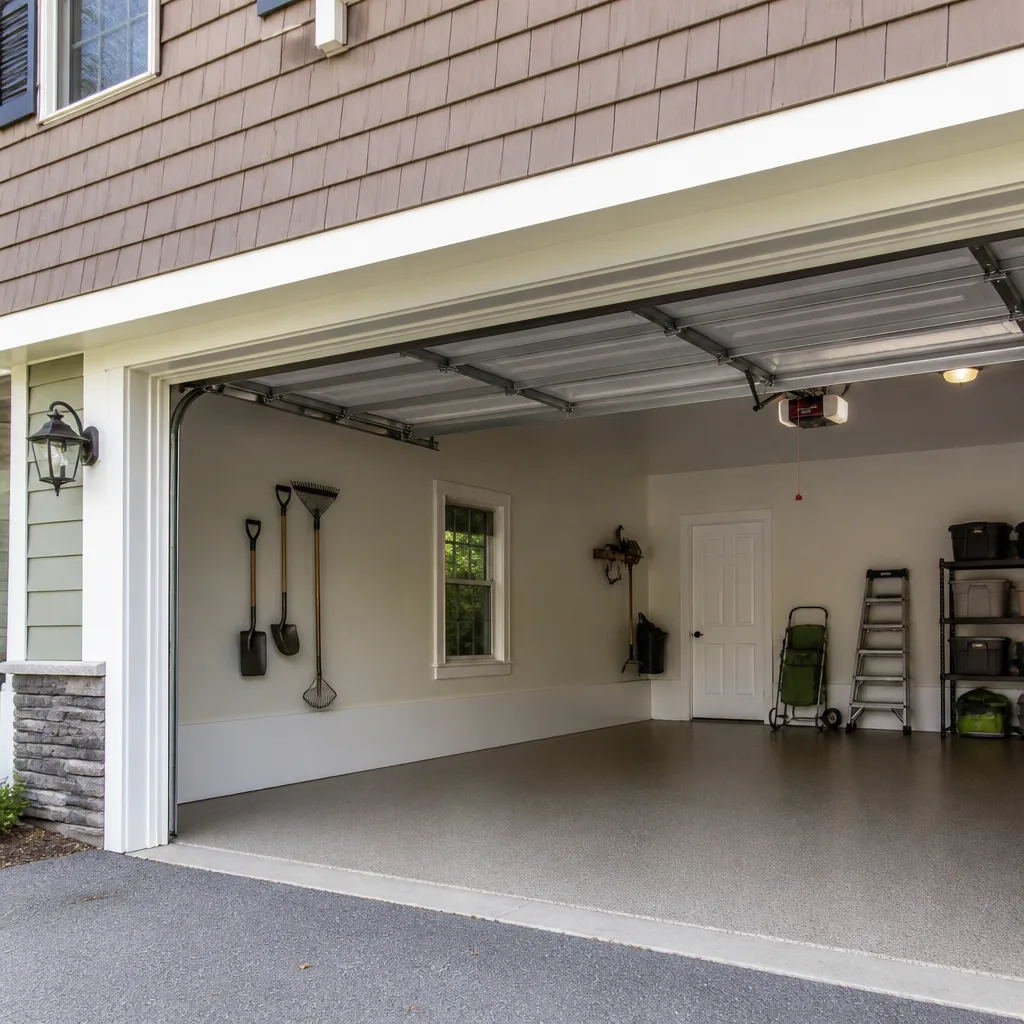 LiftMaster openers
 Chamberlain openers
Full 25-point door and opener safety check with every visit - springs, cables, rollers, tracks, and your LiftMaster or Chamberlain opener included
You get a price before we start. It does not change when the pro arrives.
Get your free estimateGarage Door Repair Maintenance Schedule: What to Do and When
Most garage door maintenance advice is built around a calendar, and that’s the problem. A door in South Bend doesn’t wear out on a schedule; it wears out on cycles, on temperature swings, and on the specific months when northern Indiana decides to test every moving part at once. The average door runs through roughly 1,500 open-and-close cycles a year, and most manufacturers build their service intervals around quarterly attention. In practice, most homeowners give it none until something breaks. What follows is a maintenance schedule organized around the seasons that actually stress your door, the parts that fail in a predictable order, and the small records that save you real trouble later. You’ll learn what to check in October before the freeze, what to look at in April after the thaw, and why the lubricant you grab in July matters more than you’d think.
Quick Answer
A garage door maintenance schedule should follow the seasons, not the calendar: inspect and lubricate in October before the first freeze, check for rust and alignment in April after the thaw, and address lubricant viscosity in July’s heat. Any door should also get a professional inspection once a year, because spring tension and cable drum wear are things a homeowner can’t safely measure. In South Bend’s climate, the October and April checkpoints matter more than any other two weeks on the schedule.
Styles & brands we work with
- Raised-panel steel
- Carriage house
- Modern flush
- Full-view glass
- LiftMaster openers
- Chamberlain openers
Table of Contents
- Why a Seasonal Schedule Beats a Calendar Schedule
- October: The Pre-Freeze Inspection
- April: The Post-Thaw Check
- July: Heat, Humidity, and Lubricant Viscosity
- The Five Parts That Wear in a Predictable Sequence
- The Right Lubricants for Indiana Winters
- Keeping a Maintenance Log That Actually Helps
- The Annual Professional Inspection Checklist
Why a Seasonal Schedule Beats a Calendar Schedule
Manufacturers publish maintenance intervals in months. That works fine in a climate that stays roughly the same all year. South Bend doesn’t. A door here goes from humid summer heat to hard freeze to a spring thaw that pulls moisture into every seam, and each of those transitions loads different components. A calendar says “check the door in March.” A seasonal schedule says “check the door in March because the thaw is about to expose what winter did to your bottom section.” The second version catches problems earlier.
There’s a mechanical reason too. Metal expands and contracts with temperature, and so does the lubricant sitting on your rollers and hinges. Grease that flows nicely at 75 degrees gets stiff at 15 degrees, which means the opener works harder in January than it does in September. That extra load shows up as strain on the motor, the springs, and the hinges all at once. If you’ve serviced the door in October with the cold in mind, that load is manageable. If you haven’t, January is when things let go.
We work on garage doors across South Bend and the surrounding towns, and the pattern is consistent: the calls spike after the first hard freeze and again after the first warm week in spring. A seasonal schedule is how you get ahead of both spikes instead of joining them. Cycle count still matters, of course. A household that opens the door eight times a day will wear components faster than one that opens it twice, no matter what month it is. But the seasons decide which part complains first.
October: The Pre-Freeze Inspection
October is the most important month on the schedule. Everything you do before the first hard freeze either protects the door through winter or leaves it exposed. The goal is to find and fix what the cold will make worse, and to make sure every moving part is protected before temperatures drop.
- Listen before you look. Open and close the door once with the opener disconnected, or with the motor off, and listen. A door that runs quietly on the manual release is telling you the door itself is fine and any noise is coming from the opener or the hardware. A door that grinds or pops on manual release has a mechanical issue the cold will aggravate.
- Lubricate hinges, rollers, and the torsion bar bearings. Use a lithium-based or silicone grease on hinges, and a light oil on roller bearings. This is the single highest-value task of the year, and it takes about fifteen minutes.
- Check the weather seal along the bottom. A cracked or flattened bottom seal lets cold air and moisture into the garage all winter. Run your hand along the seal and look for gaps when the door is closed.
- Test the balance of the door. With the opener disconnected, lift the door halfway and let go. A properly balanced door stays put. One that sags or drops needs a professional look, because balance issues trace back to spring tension.
- Check the safety reverse. Put a small block of wood under the door and close it. The door should reverse on contact. On older openers, test the photo-eye sensors by passing an object through the beam while the door is closing.
Do not adjust springs yourself. Torsion springs hold enormous stored energy, and the hardware that controls them can release that energy in an instant if handled wrong. Balance testing is safe; tension adjustment is not. When the balance test fails in October, that’s a call to a specialist, not a weekend project. If you’re in South Bend and the door is already binding, garage door repair is the right call before the freeze arrives.
April: The Post-Thaw Check
April is about finding what winter did. Northern Indiana freezes push moisture into every seam and crevice on a garage door, and the thaw reveals the results: rust on hinges, swollen wood on older doors, panels that have shifted slightly out of alignment, and seals that took a beating from ice. This is also the month to look at the door structure itself, not just the mechanical parts.
- Look for rust on hinges, rollers, and the bottom bracket. Surface rust on a hinge is worth cleaning and re-lubricating now, before it pits the metal. Rust on the bottom bracket or the cable is a professional concern.
- Check the bottom section for water damage. On wood doors especially, look for soft spots, bubbling paint, or a section that has started to warp. Steel doors can hold water inside the bottom rail after ice dams up against the seal.
- Inspect the tracks for alignment. Freeze-thaw cycles can shift a track slightly, and a track that’s off by a quarter inch will wear rollers fast. Run a level along the vertical track, or just watch the door travel: a door that shimmies side to side has an alignment problem.
- Check the seal again. The bottom seal that looked fine in October may be split or compressed after a winter of ice. Replace it before the summer heat bakes it into place.
- Clean and re-lubricate everything. Winter grit collects in grease. Wipe down hinges and rollers and apply fresh lubricant.
April is also the month homeowners in South Bend start thinking about a full inspection, especially if the door is more than a decade old. If the panels are showing their age or the door has been repaired more than once, an honest conversation about Harmon Garage Door Repair capabilities for a replacement versus a repair is worth having.
July: Heat, Humidity, and Lubricant Viscosity
July gets overlooked, and that’s a mistake. Heat and humidity stress a garage door in ways cold doesn’t. Grease that was the right choice in October thins out in July and can migrate off the hinges. Humidity rusts bare metal faster than most homeowners expect. And the motor in your opener works harder in a hot garage than in a cool one, which is one reason opener failures often show up in summer.
Lubricant viscosity is the key concept here, and it’s worth understanding. Viscosity is how thick a lubricant is, and it changes with temperature. In October you want a grease that stays put in the cold, which means a thicker base. In July that same grease may thin enough to run. The practical answer is to use a lubricant rated for a wide temperature range and to reapply a light coat in mid-summer rather than assume the October application is still doing its job.
- Re-check hinges and rollers. Wipe off any grease that’s migrated onto the door panels, then apply a fresh light coat. Grease on a panel attracts dust and grit, which wears the hinge faster than dry metal.
- Look for humidity rust. Steel doors and bare hardware pick up rust in a humid garage. A quick wipe-down with a rust inhibitor on exposed metal is worth the ten minutes.
- Test the opener’s force settings. In heat, a door can bind slightly and the opener’s force setting has to work harder. If the door reverses on its own or the motor strains, the opener needs attention.
- Check the door’s balance again. Heat warps wood and expands steel, and a door that was balanced in April may not be balanced in July.
If your opener is straining or the remote has become unreliable in the summer heat, garage door opener repair covers the motor and drive components that seasonal temperature swings wear down. We work on LiftMaster, Chamberlain, Genie, and Craftsman openers, among others, so we’re familiar with what tends to fail on the opener you already own.
The Five Parts That Wear in a Predictable Sequence
Garage door components fail in an order, and knowing that order lets you catch a problem before it cascades. A worn roller starts a chain reaction: it misaligns the door slightly, which puts strain on a hinge, which loosens a bracket, which stresses the spring. Checking the parts in this order catches the failing component in its early stage instead of after it’s taken something else with it.
- Rollers. The most common wear point, and the cheapest to replace. Nylon rollers last longer than steel; steel rollers wear faster and can be noisy. When a roller’s bearing seizes, the roller skids instead of rolls, and the door gets loud and slightly misaligned.
- Hinges. Hinges take the load the rollers pass along. They loosen, wear at the pivot, and eventually fail at the point where the door curves from vertical to horizontal. The bottom hinge and the hinge in the middle of the door curve wear first because they see the most stress.
- Cables. Cables lift the door and hold it level. They fray at the drum or at the bottom bracket. A single frayed strand is a warning; a broken cable can drop the door suddenly. This is a professional repair, not a homeowner one.
- Springs. Torsion or extension springs carry the door’s weight. A spring near end of life often shows it as a door that feels heavier, a door that doesn’t stay at half-open, or a door that thumps at the end of its travel. Springs are rated in cycles, not years, so a door used ten times a day wears its springs out faster than one used twice.
- Opener. Last in the sequence, because the opener only wears out when it’s compensating for something else. A motor that’s been fighting a dragging door or a misaligned track will eventually give out. Replacing the opener without fixing what’s straining it just wears out the new one faster.
This is the sequence we follow on every service call, and it’s why a technician who knows the order often finds the small fix before the big one. Diagnosing a door in order is what “diagnosed right, fixed once” means in practice.
The Right Lubricants for Indiana Winters
The most common garage door mistake we see is the wrong lubricant, usually WD-40. WD-40 is a great solvent and a decent light penetrant, but it is not a lasting lubricant. It evaporates off the moving parts within a few weeks, and it can actually wash away the grease that was protecting the hinge. On a door in northern Indiana, that leaves the metal dry right when winter makes it stiff and dry metal is at its most vulnerable.
Here’s what to use instead, by component:
- Hinges and pivot points: lithium grease or a white lithium spray. It stays put, it doesn’t thin out badly in cold, and it doesn’t attract grit the way oil does.
- Roller bearings: a light, clean oil applied to the bearing, not the roller surface. The bearing is what needs lubricant; the roller should roll, not skid.
- Springs: a dedicated spring lubricant or a light oil, applied sparingly. Do not use heavy grease on springs; it collects grit and can hide a crack that you’d want to see.
- Torsion bar and bearings: the same light oil as the roller bearings. A few drops at each bearing is enough; more is not better.
- Tracks: none. Do not lubricate your tracks. Track surfaces should be clean and dry. Grease on a track collects grit and causes the rollers to stick.
The cold-weather test is simple. If your grease is too stiff to spread in 20-degree weather, it’s the wrong grease for October. Look for a product rated for cold temperatures, and apply it in October when you can still work in the garage without freezing.
Keeping a Maintenance Log That Actually Helps
A maintenance log sounds like busywork until you need it. Then it becomes the most useful piece of paper in the house. Two situations make it valuable: a warranty claim, and an insurance claim. In both cases, the question is what the door’s condition was before something went wrong, and a simple log answers that question in a way memory can’t.
The log doesn’t need to be complicated. A notebook in the garage or a note on your phone is fine, as long as it captures the right things:
- Date and task. Every lubrication, every adjustment, every visual inspection. “October 12 – lubricated hinges and rollers, checked balance, seal intact.”
- What you noticed. Any noise, any binding, any rust, any change in how the door feels. This is the most important column, because it documents pre-existing condition.
- What was repaired and by whom. Include the part replaced and the brand. If a technician from Harmon replaced a hinge, note the date and the specific part.
- Photos. A photo of the door’s condition each spring, from the same angle, is worth a thousand words if you ever need to show a before-and-after.
- Professional inspection records. Any annual inspection, with the date and what was found, should go in the log too.
For warranty purposes, the log shows regular maintenance was performed. For insurance purposes, it shows the door’s condition before a storm or accident. And for you, it’s a reminder of what’s due next. If you can’t remember when you last lubricated the door, that’s the answer: it’s due now. A South Bend homeowner who keeps a simple log over a few seasons will notice patterns, like the fact that their door gets noisy every January and quiet again in May, and can act on them earlier.
The Annual Professional Inspection Checklist
Some maintenance is homeowner work, and some isn’t. The reason is not that homeowners can’t do it. It’s that certain checks require training, tools, and the ability to recognize a dangerous condition. Spring tension calibration and cable drum wear are the two big ones, and they’re worth understanding because they’re the checks that catch failures before they happen.
A professional annual inspection should cover at least these items:
- Spring tension calibration. A technician measures the door’s lift force and compares it to the spring rating. Springs lose tension gradually, and a door that feels normal to a homeowner can be running on springs that are close to failure.
- Cable drum wear. The drums at the top of a torsion system guide the cables. A worn drum can let a cable slip, and that’s a sudden failure. A technician checks the drum surface and the cable seating.
- Track alignment to tolerance. The homeowner check catches obvious misalignment. A professional check measures it precisely.
- Roller and hinge wear. A technician can feel the difference between a roller with a few seasons left and one that’s done. That judgment saves you from replacing parts twice.
- Opener force settings and safety reverse. The manufacturer sets these, and they drift over time. A professional resets them to spec.
- Balance test and travel limits. The door should close evenly and reverse on command. Limits drift and need adjustment.
An annual inspection is also the right time to have a conversation about the door’s remaining life. If the panels are showing their age or the door has been repaired repeatedly, it may be time to think about South Bend garage door installation. New doors from makers like Clopay, Amarr, and Wayne Dalton come in a range of insulation and style options, and a specialist can tell you honestly whether repair or replacement makes more sense for your situation.
Common Mistakes to Avoid
- Using WD-40 as a lubricant. WD-40 is a solvent, not a lasting grease. It evaporates within weeks and can wash away the grease that was doing the actual work. Use lithium grease on hinges and a light oil on bearings.
- Lubricating the tracks. This is the mistake that causes the most trouble in a cold climate. Grease on a track collects grit and makes rollers skid. Tracks should be clean and dry.
- Adjusting the springs yourself. Torsion springs store enough energy to cause serious injury. Balance testing is safe; tension adjustment is not. This is a professional job.
- Skipping the October check. In South Bend, the October inspection is the one that pays for itself. A door that’s lubricated and checked before the first freeze avoids the January breakdown that everyone else is having.
- Ignoring a new noise. A door that’s started to rattle, thump, or grind is telling you something. The noise usually traces to the wear sequence above. Catching it at the roller stage is a small fix; catching it at the opener stage is a larger one.
- Replacing the opener without fixing the door. If the door is heavy, binding, or misaligned, a new opener will wear out faster than the old one. Fix the door first, then the opener.
- Forgetting the safety reverse test. This is the most important safety check on the door, and it’s easy to skip. Test it every few months, not just once a year.
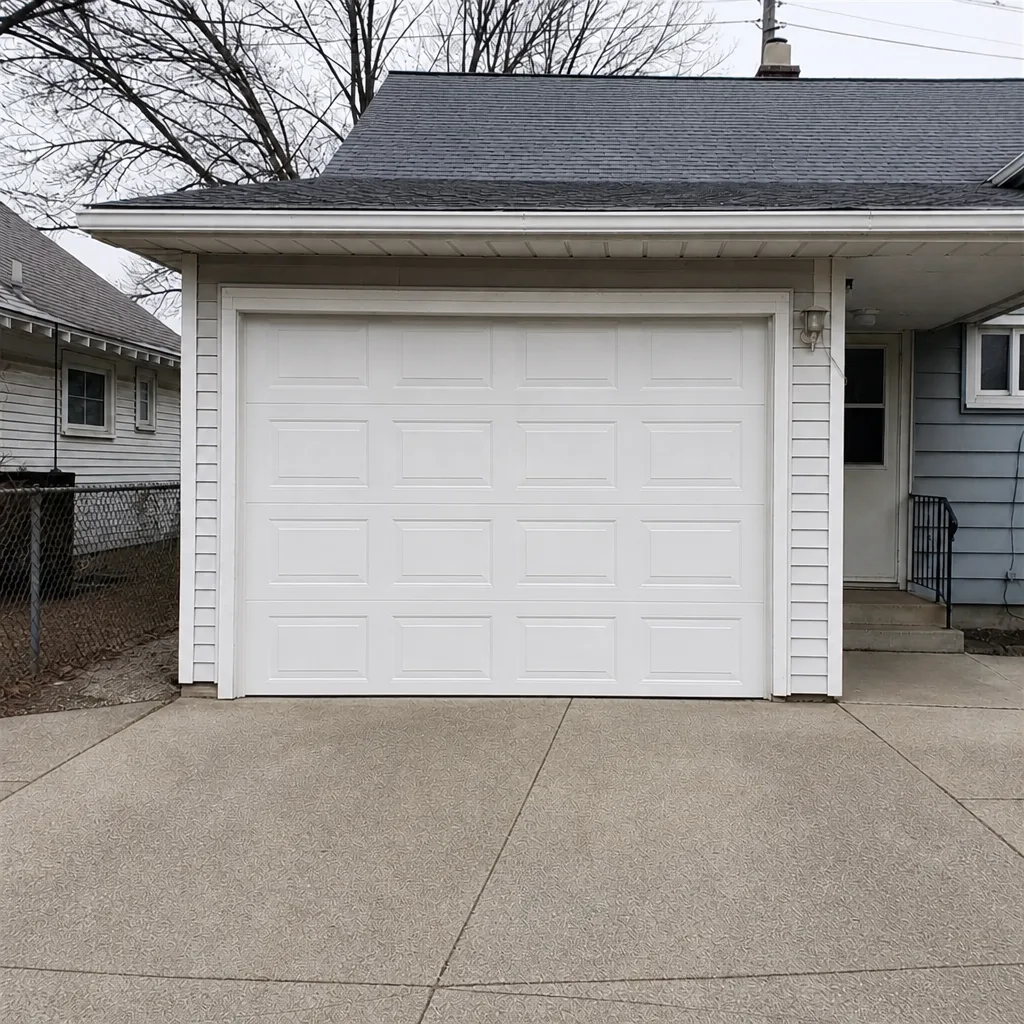
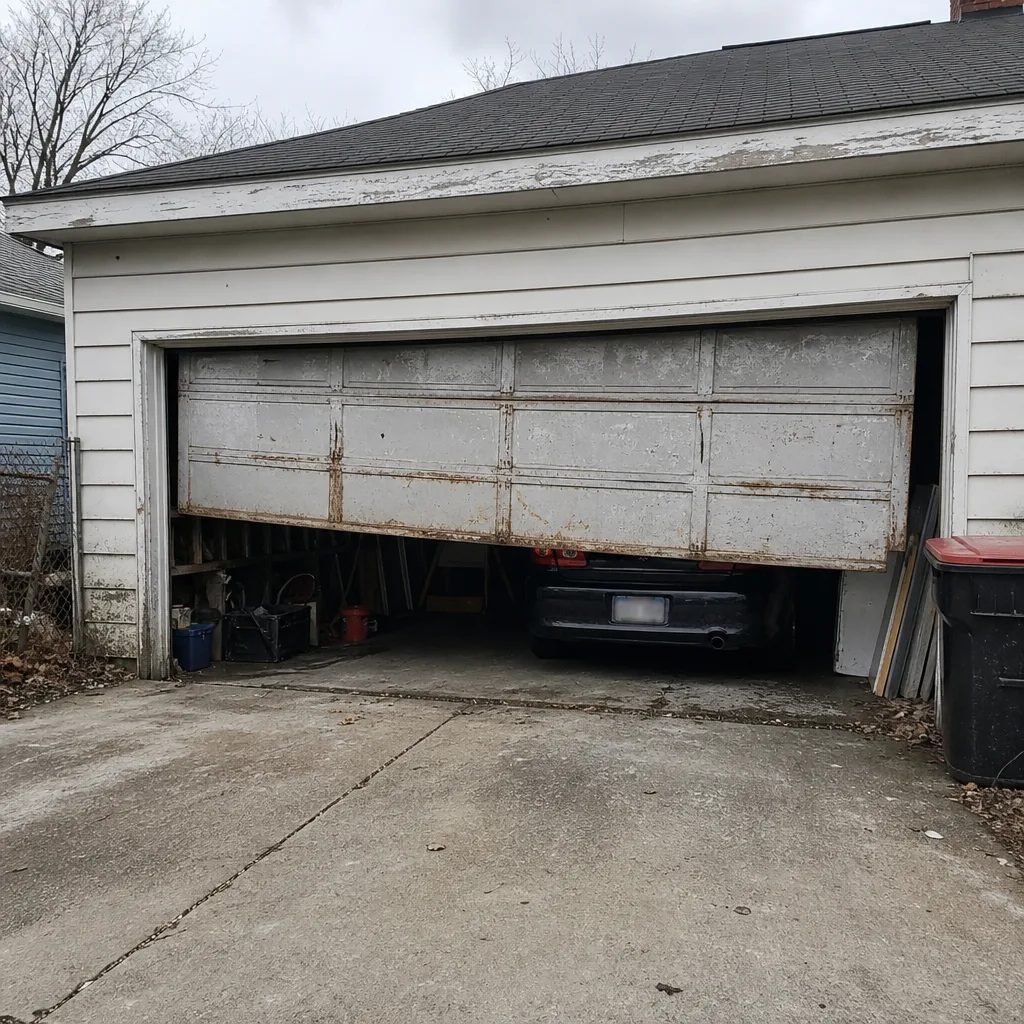
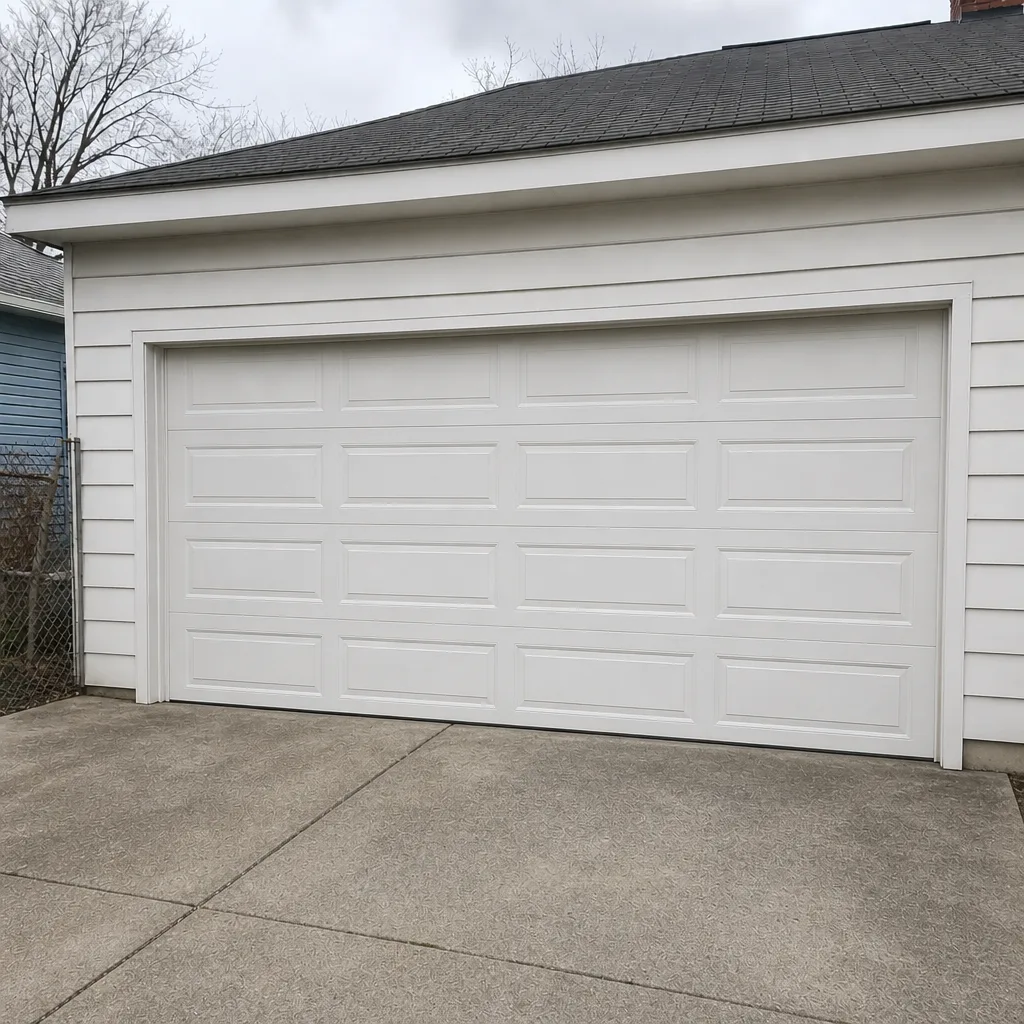
See the difference
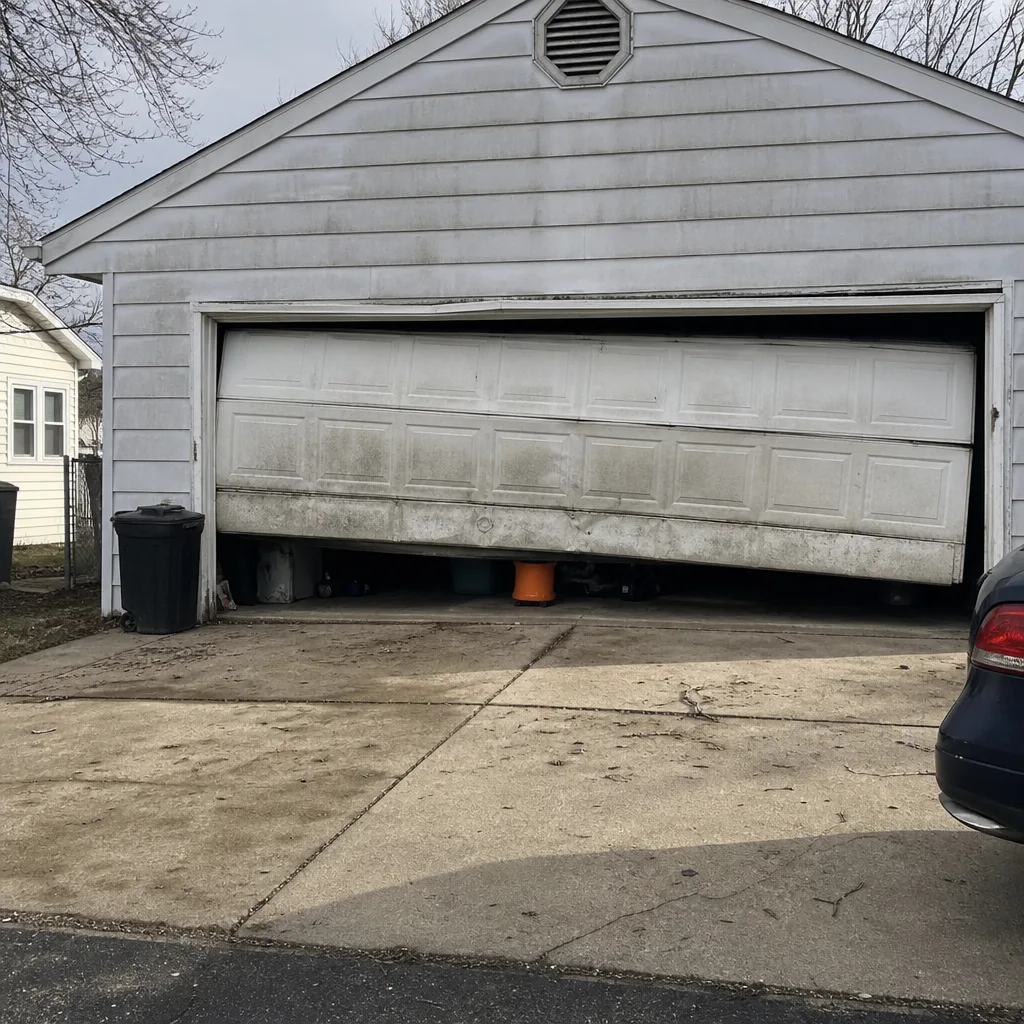 Before
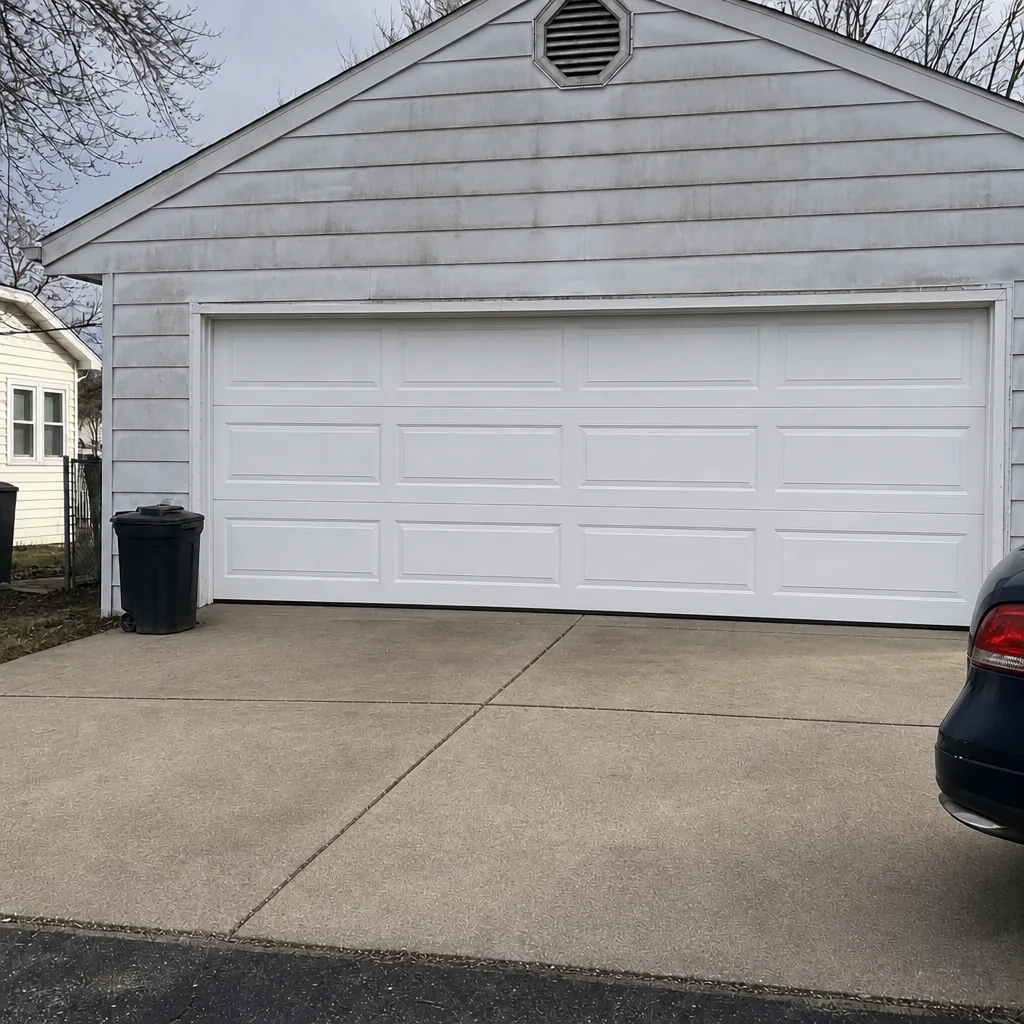 After
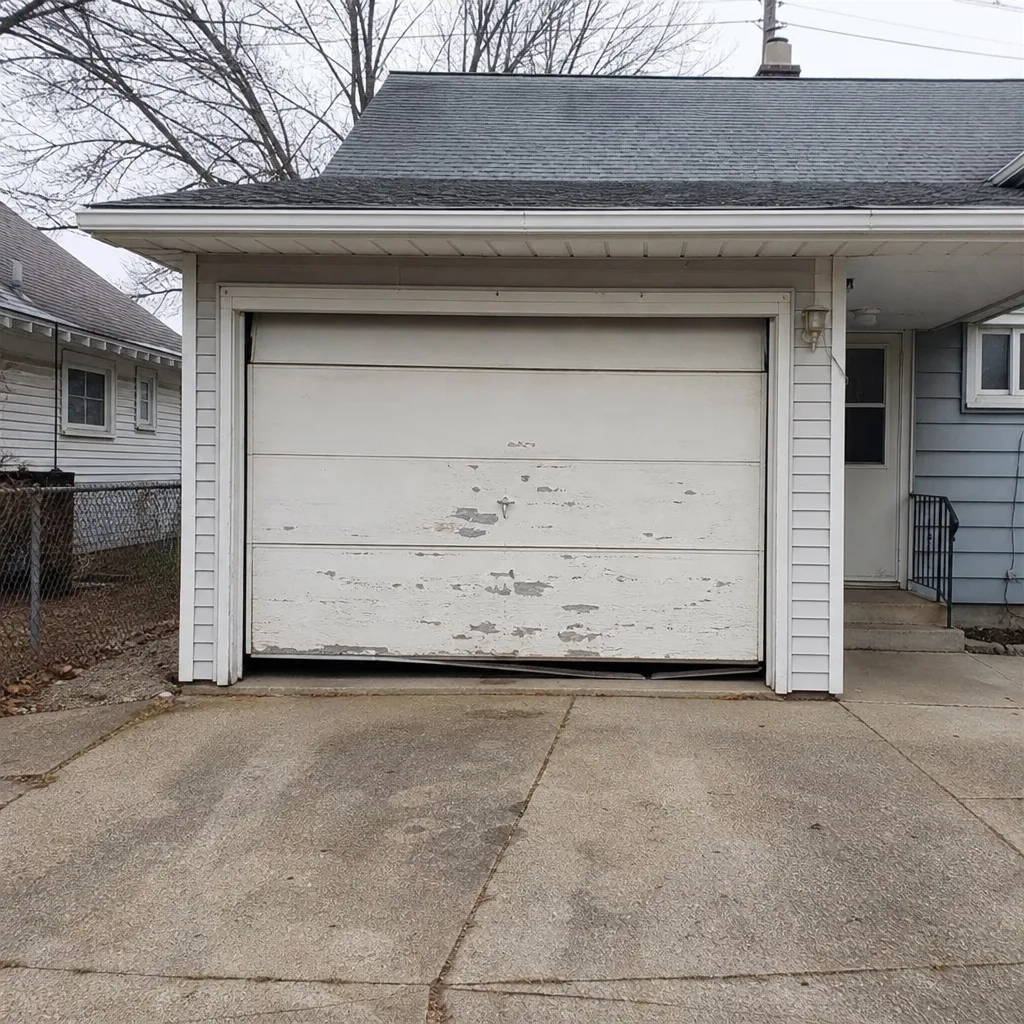 Before
 After
 Before
 After
When to Call a Professional
Some garage door problems are worth a professional look right away, and knowing which ones saves you trouble. Call a specialist when the door won’t balance at the halfway point, when a spring has visibly broken or the door won’t lift at all, when a cable is frayed or hanging loose, when the door has come off its track, or when the opener reverses on its own or runs but doesn’t move the door. Also call if the door has been hit by a vehicle or has a panel that’s cracked or bent, since structural damage changes how the door loads its springs. Harmonic Garage Door Repair offers free estimates in South Bend, and our technicians have up to 15 years of experience. Call (844) 834-4569 to schedule a look.
Frequently Asked Questions
Once a year for a professional inspection, and roughly quarterly for homeowner tasks like lubrication and a visual check. A door that runs more than six cycles a day, or a door that lives in a hard climate like South Bend’s, benefits from checking the balance and lubrication more often, especially in October and April when the seasons change.
Yes, and you should. Lubricating hinges, rollers, and the torsion bearings is safe homeowner work, and it’s the highest-value thing you can do for the door. Use lithium grease on hinges and a light oil on bearings, avoid the tracks, and never adjust the springs. Call (844) 834-4569 if you’re not sure whether a part needs grease or a repair.
A lithium-based grease on hinges and a light oil on roller bearings and torsion bar bearings. The key is a product rated for cold temperatures, because grease that’s too thick at 15 degrees makes the door work harder. Skip WD-40 as a long-term lubricant; it evaporates and doesn’t protect the metal through a winter.
Yes. A log that shows dates, tasks, and the door’s condition gives you documentation a warranty claim or an insurance claim will ask for. The two things that matter most are the dates of maintenance and any record of pre-existing condition, which is why a photo each spring is worth keeping. Call (844) 834-4569 if you need a record of a professional inspection added to it.
Yes, once a year. Spring tension and cable drum wear are the two checks a homeowner can’t do safely or accurately, and both fail gradually before they fail suddenly. A door that feels fine can be running on springs that are close to their cycle limit. An annual inspection catches that in September rather than in a January breakdown.
Cold thickens the lubricant on the hinges and rollers, and metal contracts slightly, so the door works harder and the hardware complains. If the door was properly lubricated in October, January noise is usually mild. If it’s grinding or thumping, the wear sequence has advanced and it’s worth having a specialist look before something fails.
The Bottom Line
A garage door maintenance schedule isn’t a list of tasks assigned to months; it’s a seasonal plan matched to the parts that fail in a predictable order. In South Bend, the October pre-freeze check and the April post-thaw check matter most, with July’s heat and humidity deserving more attention than most homeowners give it. Lubricate with the right product for the temperature, avoid the tracks, never adjust the springs, and keep a simple log that records what was done and what was noticed. Check the wear sequence in order, from rollers to opener, and a small fix stays a small fix. When something’s beyond homeowner work, that’s what we’re here for.
If your door is due for its annual inspection or you’ve noticed a new noise, call Harmon Garage Door Repair at (844) 834-4569 for a free estimate. We answer 24/7. Fast dispatch from 7am to 7pm, Sunday through Friday.
Written by the team at Harmon Garage Door Repair.