
Last updated November 15, 2026
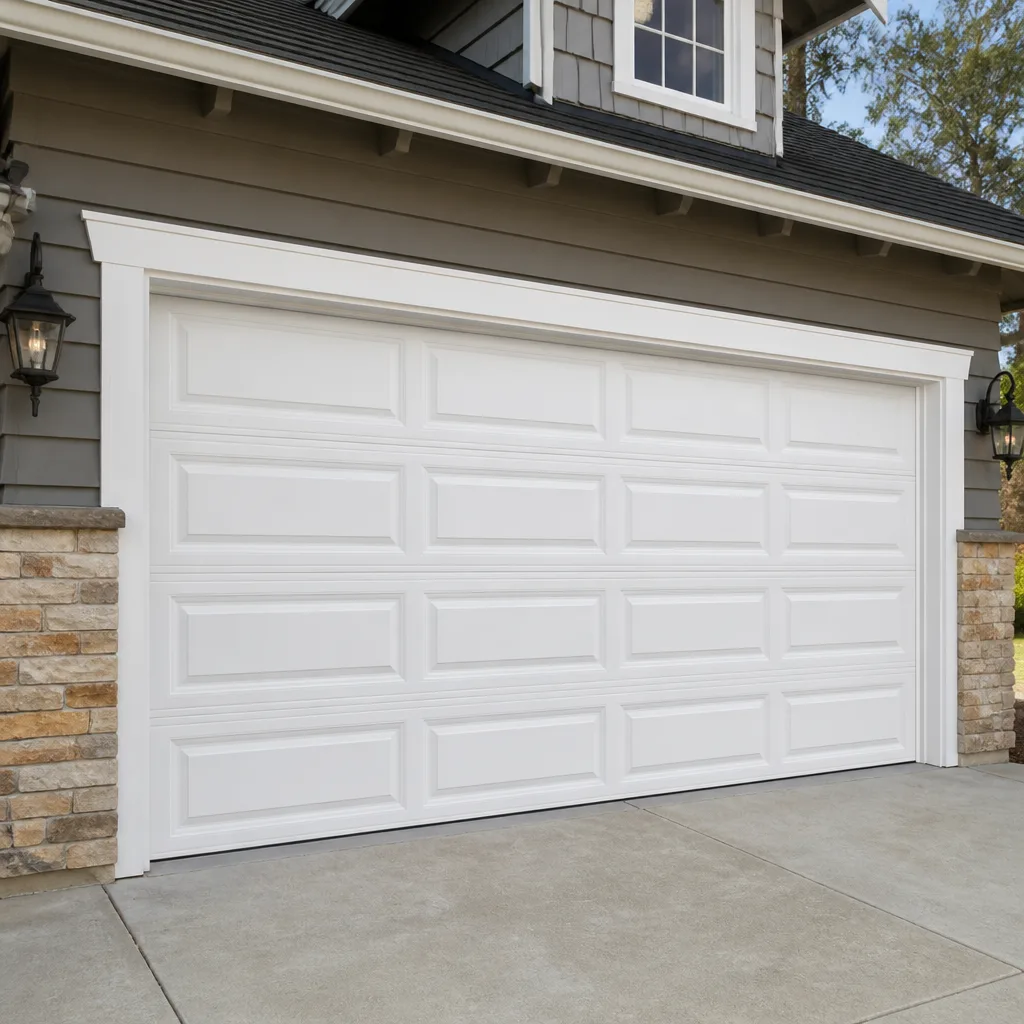 Raised-panel steel
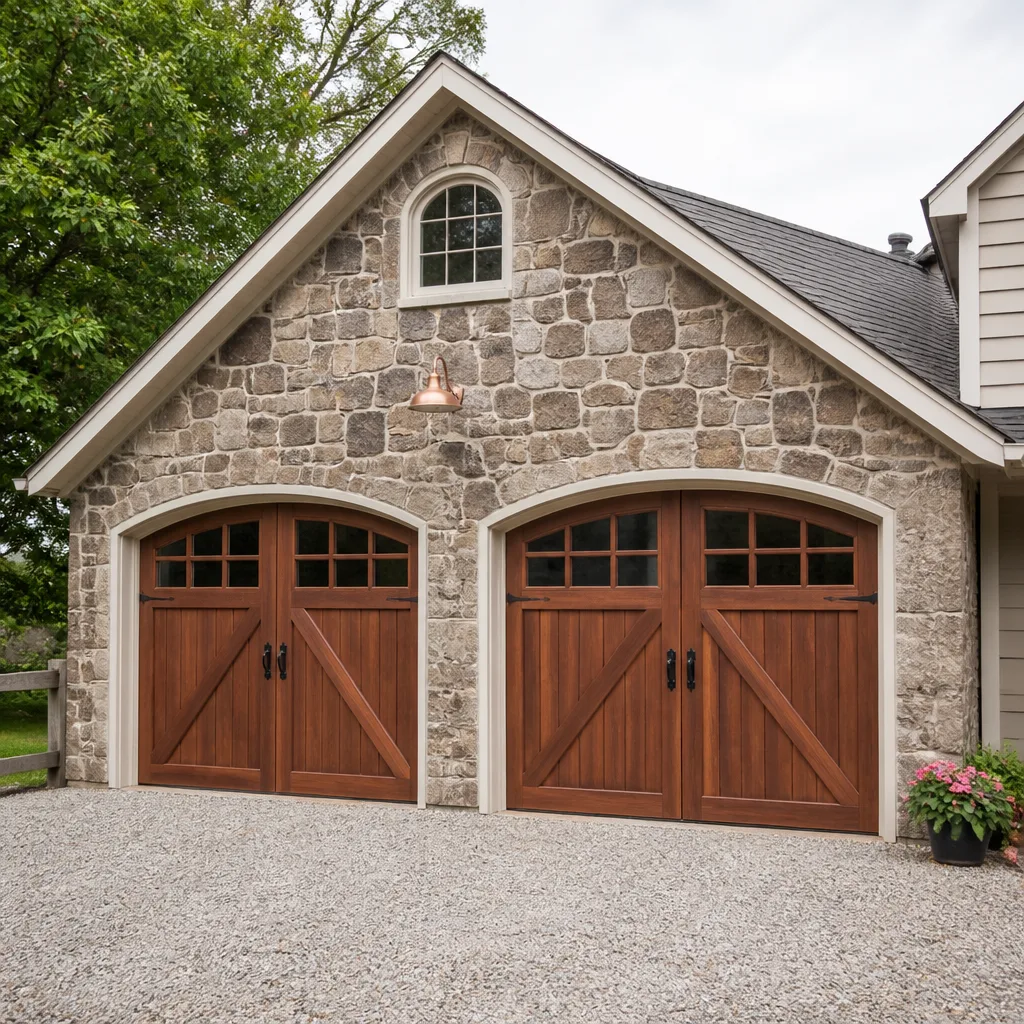 Carriage house
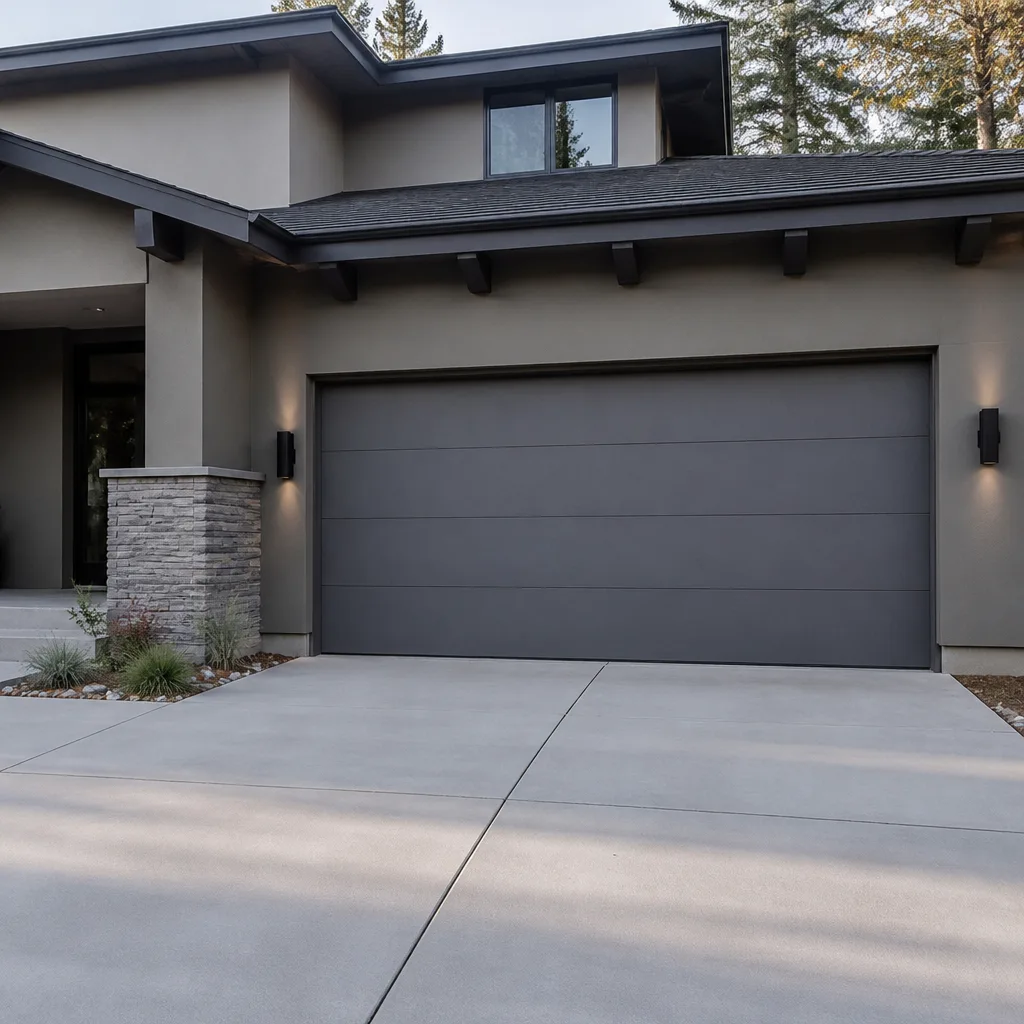 Modern flush
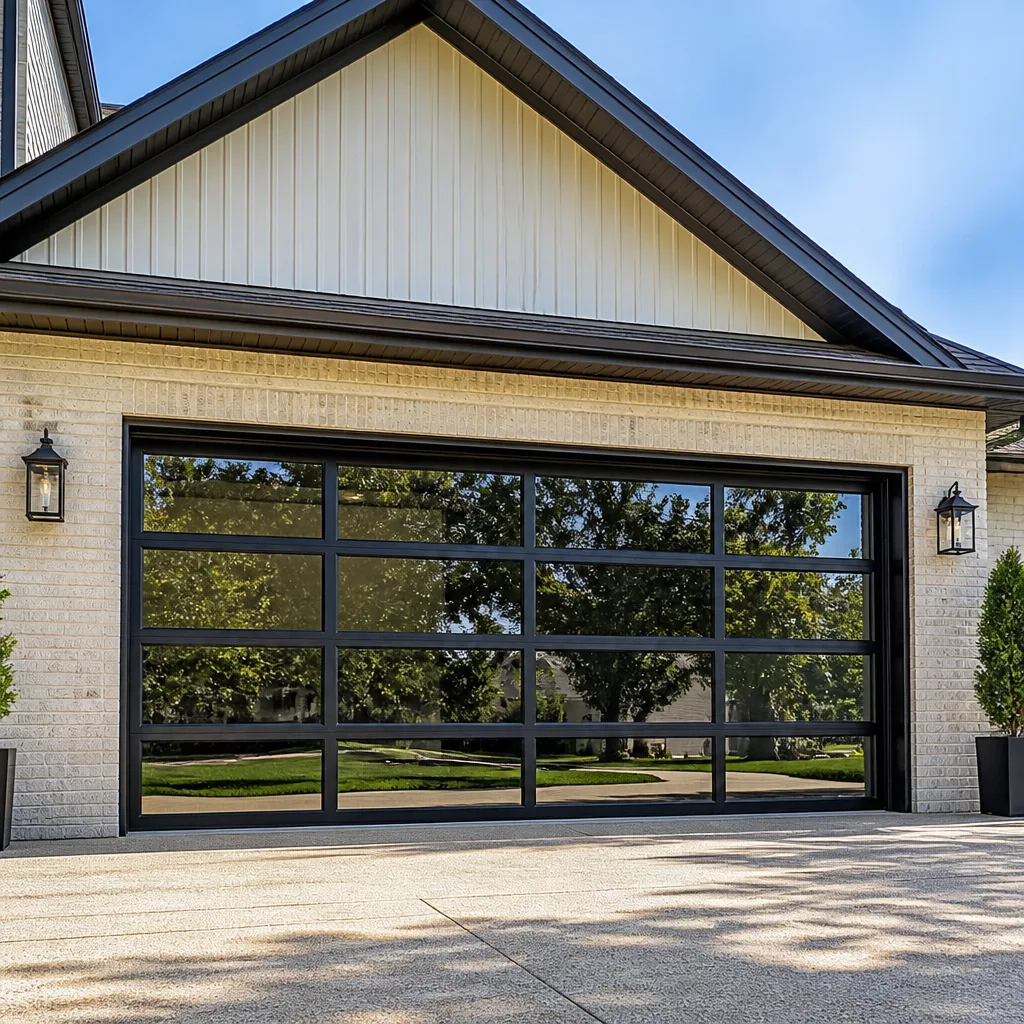 Full-view glass
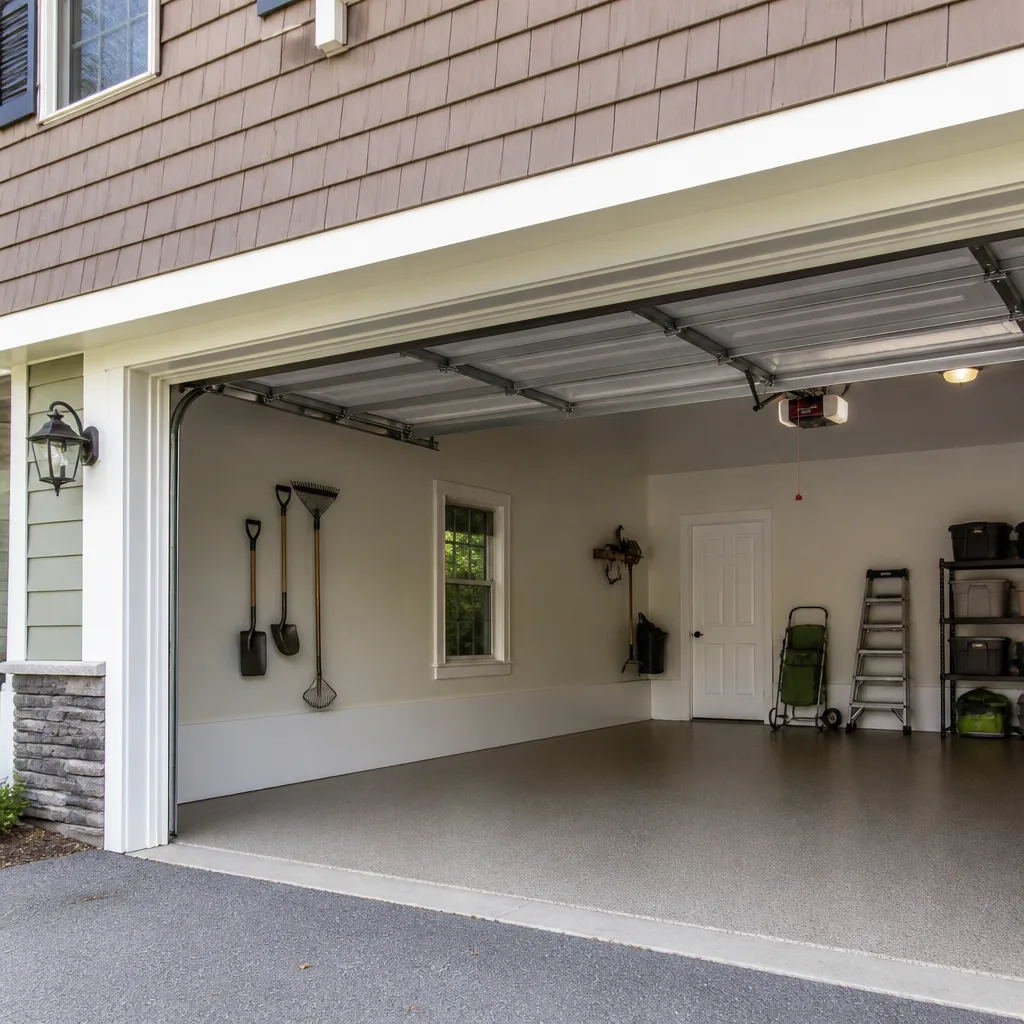 LiftMaster openers
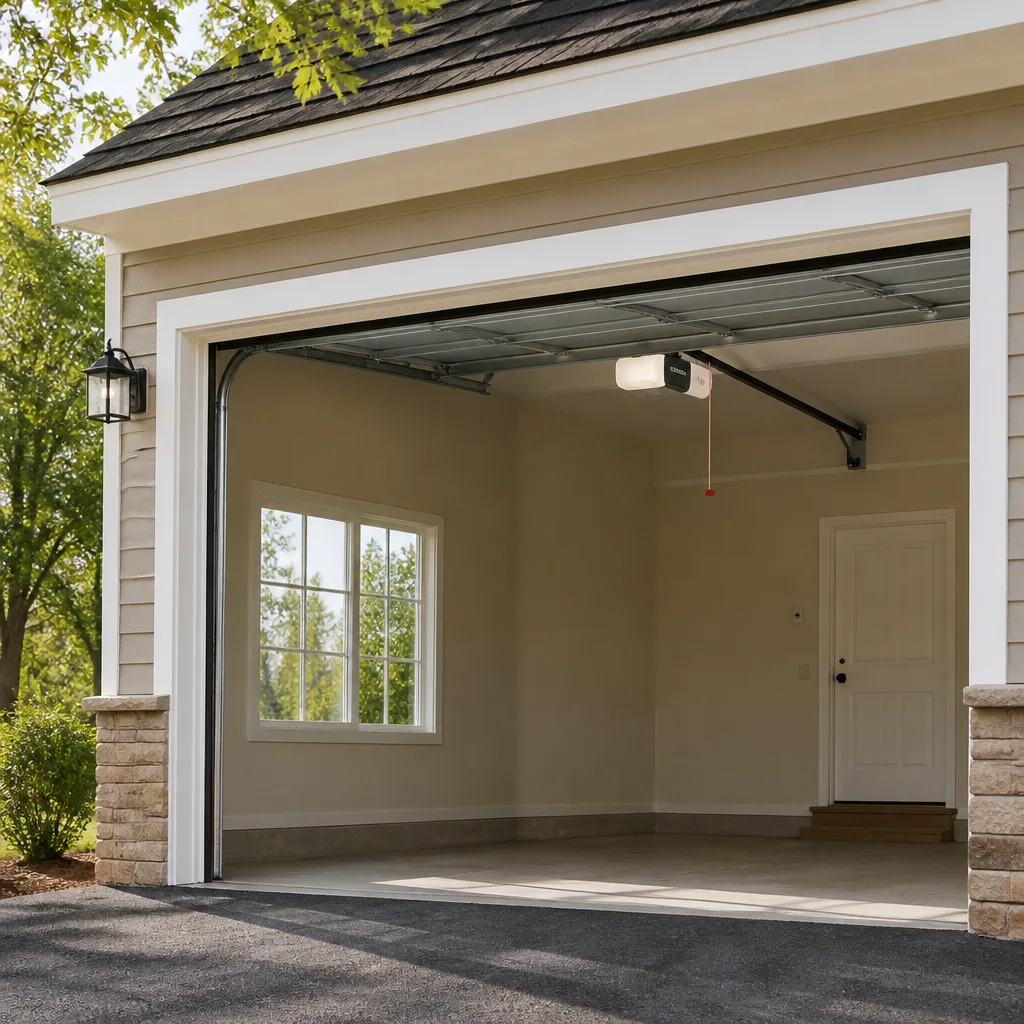 Chamberlain openers
Full 25-point door and opener safety check with every visit - springs, cables, rollers, tracks, and your LiftMaster or Chamberlain opener included
You get a price before we start. It does not change when the pro arrives.
Get your free estimateThe Complete Guide to Garage Doors in South Bend
The most common mistake we see with garage doors in South Bend isn’t a cheap door or a bad brand. It’s assuming a door that survived an Ohio or Tennessee winter will do fine here. It won’t. South Bend throws over 60 inches of snowfall, sub-zero wind chills, and repeated freeze-thaw cycles at every door in the city, and that combination attacks a garage door system in ways a mild-climate guide never covers. Bottom seals tear. Springs fatigue early. Tracks bend at the frost line. This guide explains what South Bend doors actually face, how the local housing stock shapes the problem, and how to tell a repair from a replacement before you call anyone.
Quick Answer
A garage door in South Bend needs a system built for hard winters: a properly sealed bottom, springs sized for a door that gets stiff in the cold, and an opener that isn’t straining against frozen hardware. Most of the problems South Bend homeowners call about start with cold-weather stress on seals, springs, and tracks, not with the door panel itself. Getting the diagnosis right the first time is what keeps a door working through another Indiana winter.
Styles & brands we work with
- Raised-panel steel
- Carriage house
- Modern flush
- Full-view glass
- LiftMaster openers
- Chamberlain openers
Table of Contents
- How Freeze-Thaw Cycles Stress South Bend Garage Doors
- What South Bend’s Housing Age Means for Your Door
- Which Door Materials Actually Matter for Indiana Winters
- When a Repair Becomes a Replacement (and a Permit)
- Springs, Cables, and the Repairs You Should Never DIY
- Openers in Cold Weather: What Fails and Why
- How to Choose a South Bend Specialist vs. a Rotating Tech
- A Seasonal Checklist for South Bend Doors
How Freeze-Thaw Cycles Stress South Bend Garage Doors
South Bend doesn’t just get cold. It gets cold, then warm enough to melt, then cold again, often within the same week. That cycle is harder on a garage door than a steady deep freeze, because water works its way into places it shouldn’t and then expands when it refreezes. Every winter component on a door takes that pressure repeatedly.
The bottom seal is the first casualty. A rubber or vinyl seal that stays pliable in a warm climate gets brittle here, then gets torn up by ice that forms at the threshold. Once the seal goes, cold air pours under the door, water gets in behind it, and the bottom section of the panel starts to rust from the inside out. If you’ve noticed a draft at the floor or ice forming just inside the door, the seal is already failing.
Tracks are the second weak point. Metal tracks expand and contract with temperature swings, and where a bottom bracket is anchored gets pushed by frost in the ground. A track that’s out of plumb by a quarter inch is enough to make a door bind, and a binding door strains the opener and the springs every time it cycles.
Springs feel the cold too. Cold steel is stiffer, so the door resists the opener’s push more on a January morning than it does in June, and that extra resistance shows up as fatigue in the torsion or extension springs over time. A door that sounds labored in winter is telling you something.
What this means in practice:
- Check the bottom seal each fall, before the first hard freeze.
- Watch for drafts, daylight, or ice at the threshold, all signs the seal has failed.
- Listen for a change in the sound the door makes in cold weather.
- Have tracks checked for plumb and tightness if the door starts to bind.
What South Bend’s Housing Age Means for Your Door
Most homes in South Bend were built before 1980. That one fact explains a lot of the calls we get. Those older doors and openers were installed decades ago with systems that have been superseded, and many are running original single-spring setups that are either hard to source parts for or already discontinued.
A single-spring extension system on an older door is a maintenance risk in any climate. Here it’s worse, because those springs work harder the colder it gets. When one lets go, the door drops hard, and on a door that’s already carrying some rust and fatigue, that’s the moment a repair becomes a bigger job.
Openers are the other aging element. Many pre-1980 homes still have an opener from the 1990s or early 2000s, and the safety reverse systems on those older units don’t meet today’s standards. That matters. An opener that doesn’t reliably reverse when it meets an obstruction is a genuine safety problem, and modern units have force and travel adjustments that older models simply didn’t have.
If you live in a neighborhood like River Park or the older blocks of Mishawaka, there’s a decent chance your door predates everything else on the house. It’s worth having the whole system looked at rather than swapping one part and waiting for the next to fail:
- Have the spring setup identified. Single-spring systems are the ones to watch.
- Check the opener’s age and whether it has a working safety reverse.
- Look at the bottom section for rust, which on an old panel often runs further than it looks.
- Ask whether parts for that specific model are still available before assuming a repair will last.
This is why we work on the brand you already have. We’re familiar with the product lines that built up South Bend’s neighborhoods, including Clopay and Wayne Dalton, and we can usually tell you on the first visit whether a repair makes sense or a replacement does.
Which Door Materials Actually Matter for Indiana Winters
The specs on a new door’s brochure are written for a national audience, so half of them don’t tell you much about how the door will behave in a South Bend February. What actually matters here comes down to three things: steel gauge, insulation, and how well the door seals at the floor and edges.
Steel gauge is the first thing to get right. A thicker gauge holds up better to freeze-thaw stress and ice impact, and it doesn’t dent as easily when a snow shovel or a chunk of ice hits it. A very thin steel door can look fine at the showroom and feel flimsy after two winters. Ask about the gauge before you compare prices.
Insulation gets oversold with R-value numbers, but the number still tells you something real. An insulated door with a solid core holds heat in the garage and reduces the condensation that breeds rust in a damp cold climate. It also cuts noise, which matters if there’s a bedroom above the garage. A non-insulated door on a heated or living-adjacent garage is where you’ll feel the difference first.
Sealing is the part marketing tends to skip. The best-insulated door in the world loses it all if the bottom seal and perimeter weatherstripping don’t close properly. In South Bend, that’s the difference between a garage that stays dry and one that collects ice at the threshold all winter.
- Steel gauge: thicker is more durable in ice and freeze-thaw; ask for it.
- Insulation: worth it on any attached or heated garage; less critical on a detached unheated one.
- Bottom seal and weatherstripping: the cheapest upgrade with the biggest winter payoff.
- Hardware: hinges, rollers, and brackets take more stress in cold weather, so heavier-duty hardware pays off.
We work with Clopay, Amarr, Wayne Dalton and other major brands, so we can talk through the actual specs on a specific model rather than a category. Installation is scheduled work, not a same-day job, and the written estimate sets the price before anything is ordered.
When a Repair Becomes a Replacement (and a Permit)
There’s a line in garage door work between a repair and a replacement, and crossing it can pull in a permit. A repair fixes a component: a spring, a hinge, a roller, a section. A replacement swaps the door itself, and depending on the scope, that’s the point where the city’s building department may want to see it permitted.
For homeowners, the practical question is how to know which one you’re facing. These are the signs a repair is still the right call:
- The door is structurally sound and only one or two components have failed.
- The panel is intact, with no widespread rust or damage across multiple sections.
- Parts for the door’s make and model are still available.
- The door isn’t at the end of its useful life already.
And these are the signs a replacement makes more sense:
- Multiple sections are damaged or rusted through.
- The springs or hardware are discontinued and sourcing parts is a struggle.
- The door is old enough that the whole system is failing together.
- The safety hardware doesn’t meet current standards.
When a job crosses into a full replacement, permit requirements depend on the scope and what the City of South Bend’s building department requires for that work. That’s a local fact worth confirming rather than assuming, so the first step is to call the city’s building department and ask what your specific project needs. We come out, measure, and give you a written estimate that covers the work, and we can point you toward the right department to ask about permits. Same-day service doesn’t apply to a replacement, since it’s measured, ordered, and scheduled. For an urgent garage door repair on a door that’s still structurally fine, a technician can often be out the same day.
Springs, Cables, and the Repairs You Should Never DIY
Springs and cables are the parts of a garage door that hold the whole weight of it, and they’re under real tension even when the door is closed. That tension is the reason this work is not a homeowner job, no matter how many videos are online. A torsion spring can cause serious injury in an instant, and a cable under load can snap back. We don’t hand out step-by-step instructions for this work, and we’d rather you didn’t try. It’s not worth the risk.
What you can do is understand what’s happening, so you can describe it accurately and decide how fast to call. A broken spring usually makes a loud bang, and afterward the door won’t lift, or it lifts a few inches and stops. A cable that’s coming loose makes the door feel crooked or off-balance. A worn roller or hinge produces a grinding or squeaking sound that gets worse as the weather gets colder.
Here’s what a trained technician checks for on a spring or cable job:
- The spring’s size, wire gauge, and wind count, matched to the door’s actual weight.
- Whether it’s a torsion or extension system, and whether it’s a single-spring setup that should be replaced as a pair.
- Cable tension, drum condition, and whether anything is frayed.
- Rollers, hinges, and bearings for wear that would stress a new spring.
One pricing point worth knowing: a spring quote is for one spring. Doors often use a matched pair, and replacing both together costs about twice a single spring. On a South Bend door that’s been through many freeze-thaw winters, replacing a pair together is usually the more sensible call, since the second spring is often as tired as the first.
Our technicians have up to 15 years of experience with spring, cable, and track work, and diagnosis is what we focus on. Diagnosed right, fixed once is the goal. We answer 24/7 at (844) 834-4569, with fast dispatch from 7am to 7pm, Sunday through Friday.
Openers in Cold Weather: What Fails and Why
An opener that works fine in July and struggles in January usually isn’t failing. It’s fighting cold-stiffened hardware. Cold steel resists the door’s movement, grease thickens, and the opener needs more force to lift the same door. On an aging unit, that extra demand is often what tips it into failing.
When an opener genuinely needs repair, the symptoms tend to sort into a few groups. The door doesn’t move at all, the light comes on but nothing happens, the door opens partway and stops, or the door reverses when it shouldn’t. Each points to a different part of the system. Force and travel settings, limit switches, the gear and sprocket assembly, the safety reverse sensors, and the drive system are all common sources.
This is where a specialist matters. garage door opener repair is a service we treat as its own specialty, not an afterthought to door work. The mechanical systems inside openers are specific, and the smart-drive models in particular have their own quirks. We’re familiar with the major brands, including LiftMaster, Chamberlain, Genie, and Craftsman, so if you already own one of those openers, we can usually diagnose and source parts without bouncing you to another vendor.
If the opener is very old and the issue is a worn-out drive, a repair might not be the best money. Here it’s worth knowing the difference:
- Repair makes sense when the unit is sound and one part has failed.
- Replacement makes sense when the unit is old enough that a safety reverse can’t be trusted, or multiple parts are failing together.
- Either way, the written estimate comes before any work starts, so the cost is agreed up front.
How to Choose a South Bend Specialist vs. a Rotating Tech
The garage door market has two kinds of operators, and the difference shows up a year later. One is a specialist who lives in the South Bend area and works on doors here winter after winter. The other is a rotating technician who comes through on a schedule, does the work, and isn’t around when a problem returns.
Here’s how to tell them apart when you’re deciding who to call:
- Ask about brand familiarity. A specialist knows the major brands and can source parts for the door you have. A tech who claims to work on everything is often working on very little confidently.
- Ask what they specialize in. If door work is a side service of a general contractor, it’s not their focus. Garage doors only means the person in front of you does this every day.
- Ask who does the install and who does the repair. Single-source capability means repair, opener repair, and installation are handled by the same people, so you’re not bounced between vendors when something goes wrong.
- Ask about the diagnosis. A specialist explains what failed and why, and gives you a written price before starting. A quote-and-upsell shop starts selling before diagnosing.
- Ask about local winter experience. Someone who works in South Bend knows freeze-thaw damage, old single-spring systems, and the local housing stock. That knowledge shows up in the diagnosis.
We’re a garage door specialty company, and that’s the whole of what we do. The name is on every job, and the same people who handle a spring repair handle a full installation. That’s the level of accountability a rotating tech can’t offer, because they won’t be here when the warranty question comes up. If you want to see how we work before you call, the Harmon Garage Door Repair page is a good place to start. If you’re in South Bend, we’re here for both the emergency and the planned work.
A Seasonal Checklist for South Bend Doors
A garage door doesn’t fail all at once. It fails after a season of small stresses that went unnoticed. A few minutes of checking each fall and spring catches most of what South Bend winters throw at a door, and it costs nothing but time.
Before the first hard freeze (fall):
- Look at the bottom seal for cracks, tears, or daylight showing through.
- Test the safety reverse by placing an object in the door’s path, and confirm it reverses.
- Listen for new sounds: grinding, squeaking, or a rougher ride than last season.
- Clear ice and debris from the threshold so the door can close fully.
- Check the tracks for dents, looseness, or anything out of plumb.
After the thaw (spring):
- Look for rust on the bottom section and around the hinges, a sign water got in over winter.
- Have the springs inspected if the door felt heavy or labored in cold weather.
- Check the opener for force and travel settings that may need adjustment after a hard winter.
- Look at the weatherstripping around the edges for gaps.
If any of those checks turns up something, it’s worth getting it looked at before the next cold snap rather than after. A repair in mild weather is generally a simpler job than one that waits for the door to stop working on a January morning.
Common Mistakes to Avoid
- Treating a South Bend door like a mild-climate door. Skipping the bottom-seal check before winter is the most common cause of ice damage and a rusted bottom section.
- Replacing one spring on a matched pair. If the second spring is as old as the first, replacing one and waiting is usually a false economy, especially on an old single-spring system.
- Relying on a national guide for a local problem. Most garage door advice online assumes mild winters and newer homes. Neither describes South Bend.
- Ignoring an old opener’s safety reverse. On a 1990s-era unit, a safety reverse that doesn’t work is a real hazard, not a minor quirk.
- Assuming a repair will cover a failed old door. On a pre-1980 door with a discontinued spring system, a repair can buy time, but it doesn’t fix the underlying age.
- Choosing a rotating tech for a warranty-prone job. If the person who did the work won’t be around for the next issue, the savings aren’t what they look like.
- Skipping the permit question on a replacement. When a job crosses into a full replacement, confirming requirements with the city’s building department is the homeowner’s job, and it’s worth asking before the work is scheduled.
See the difference
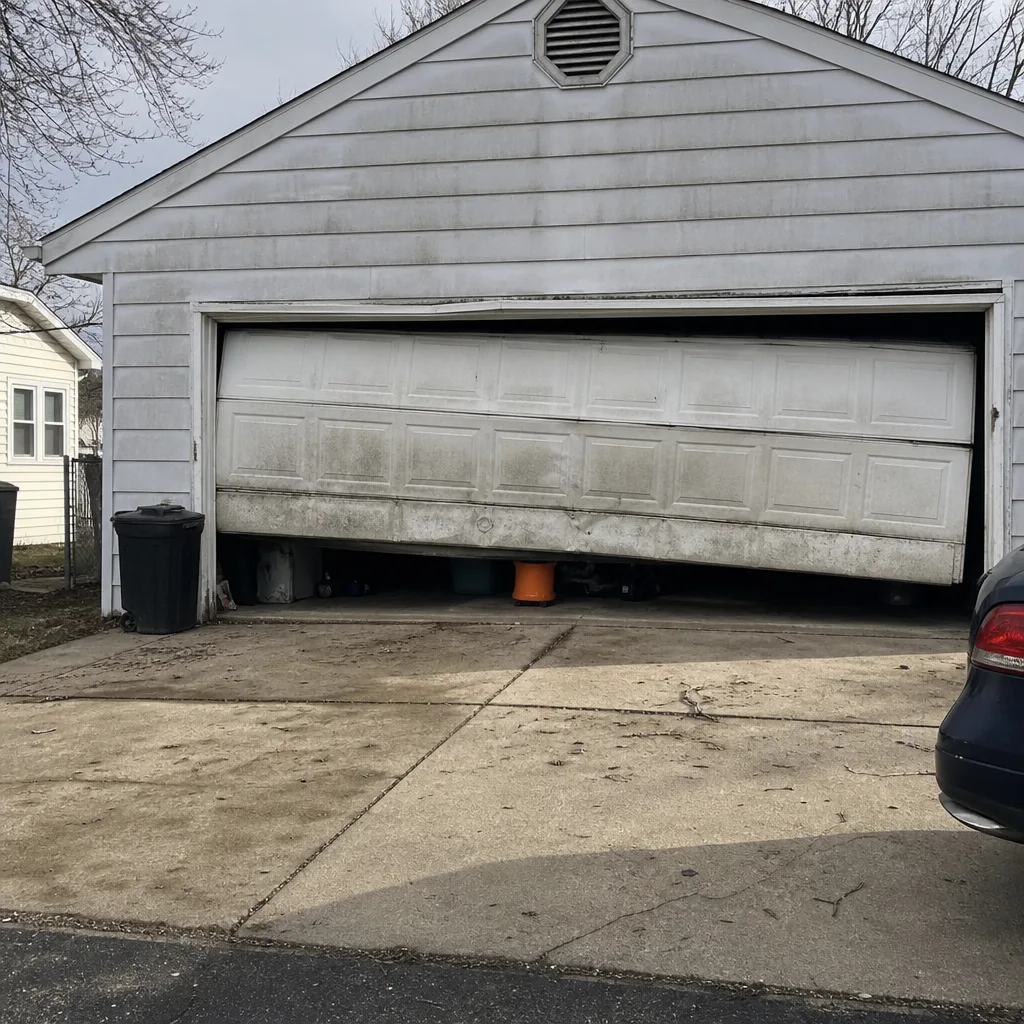 Before
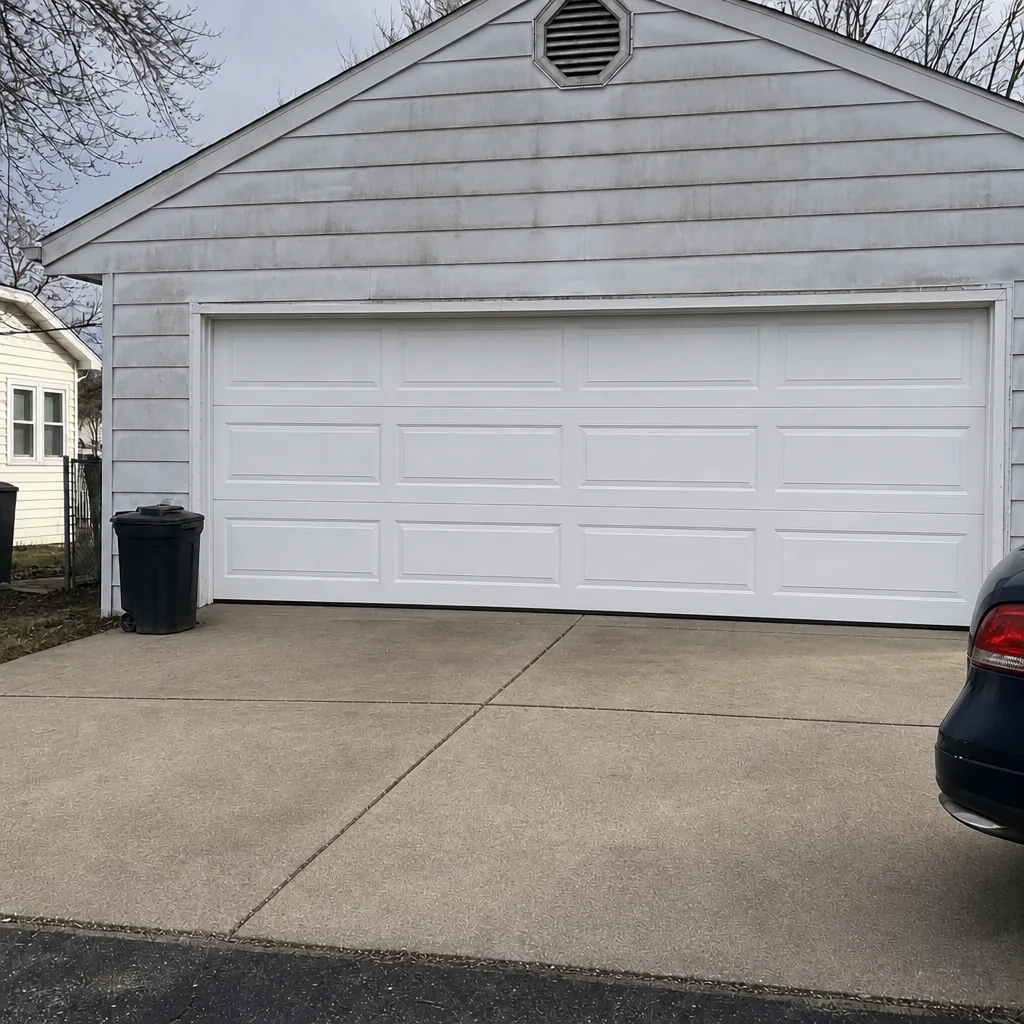 After
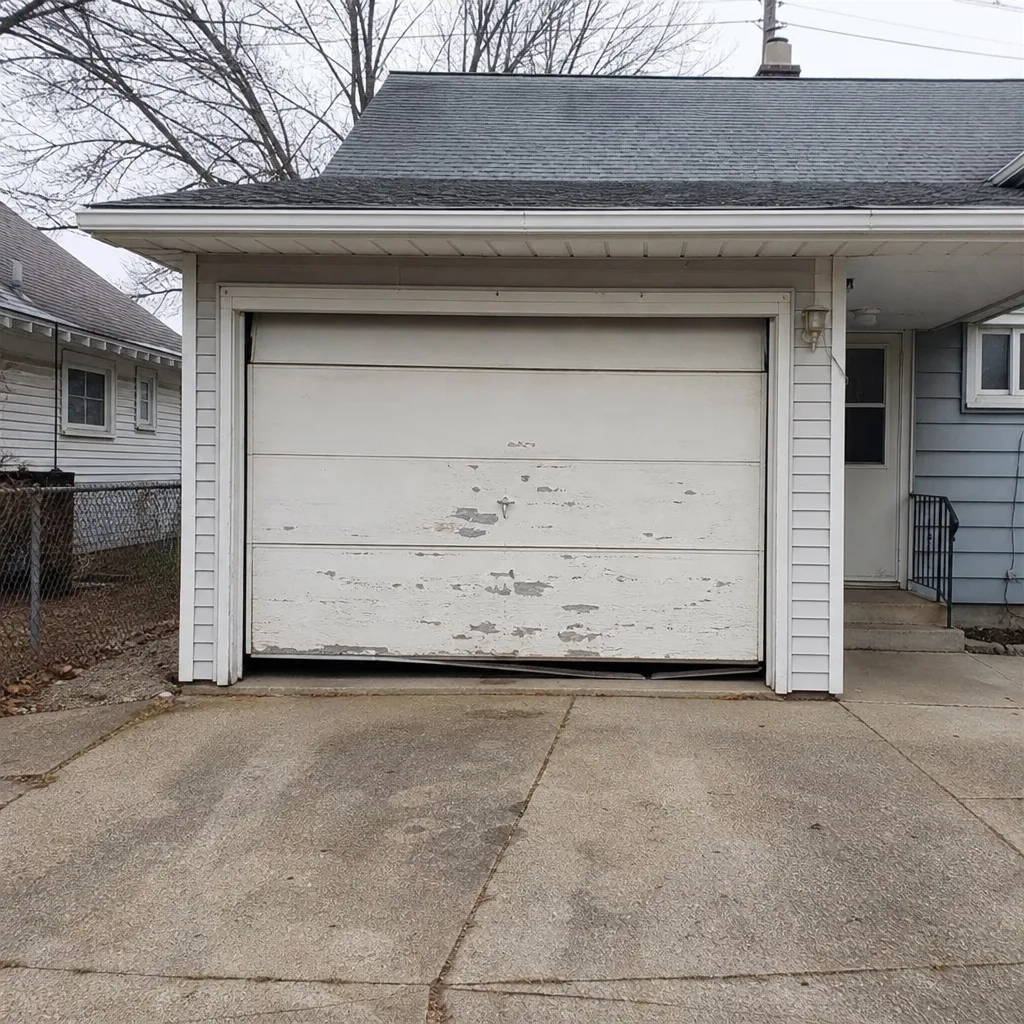 Before
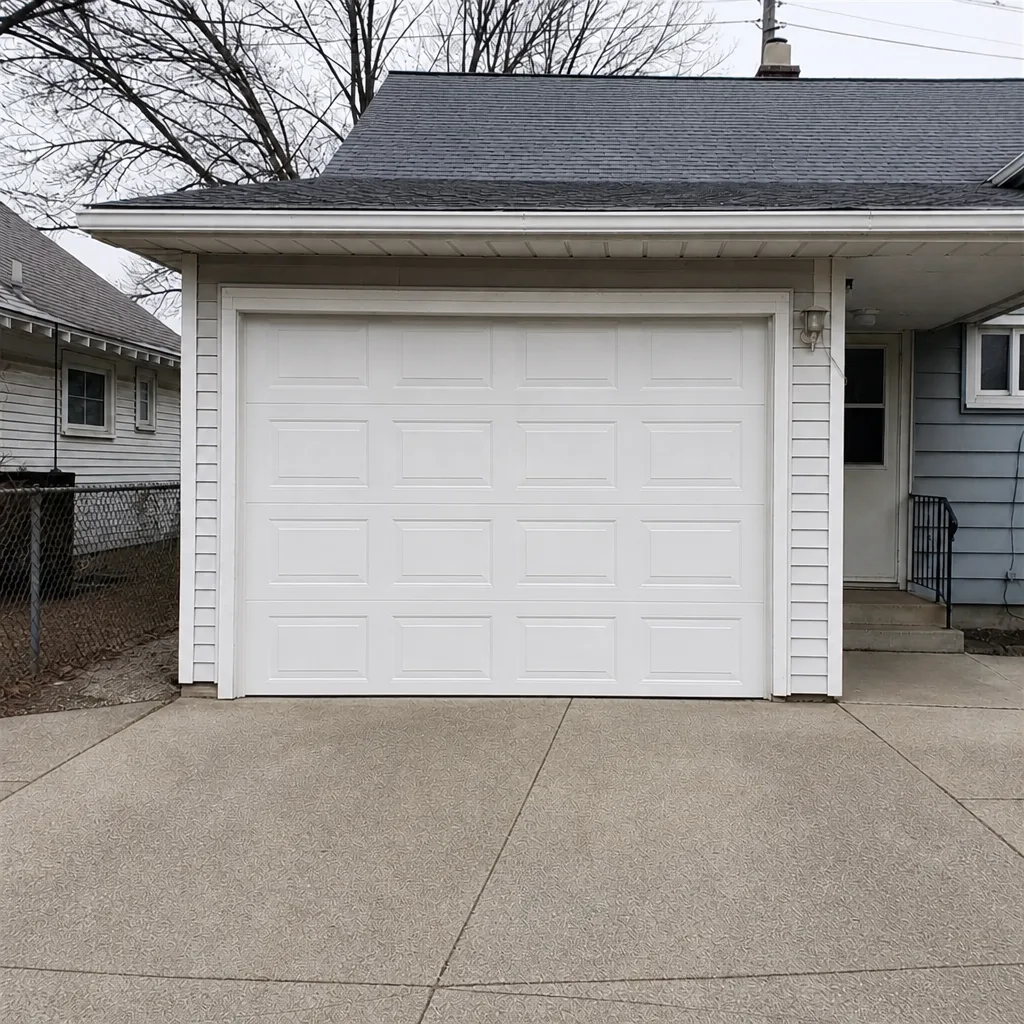 After
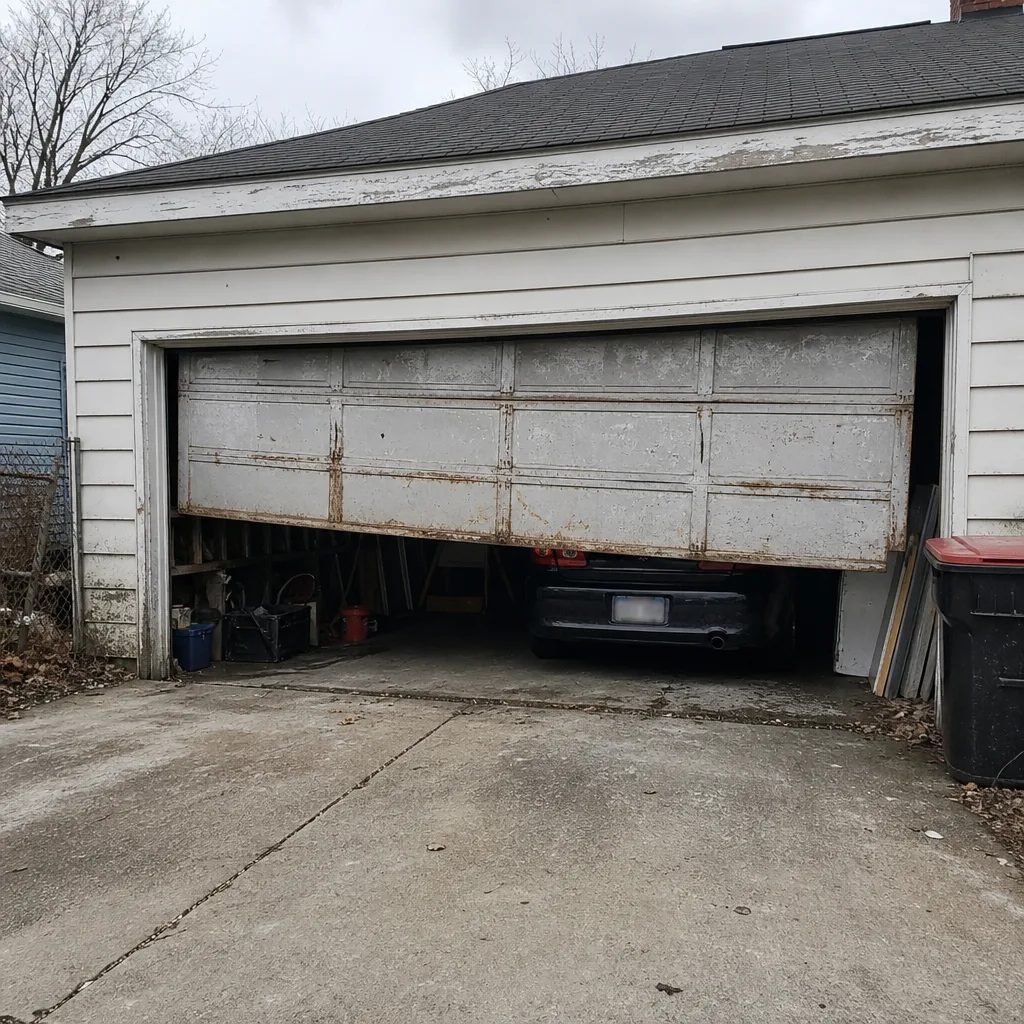 Before
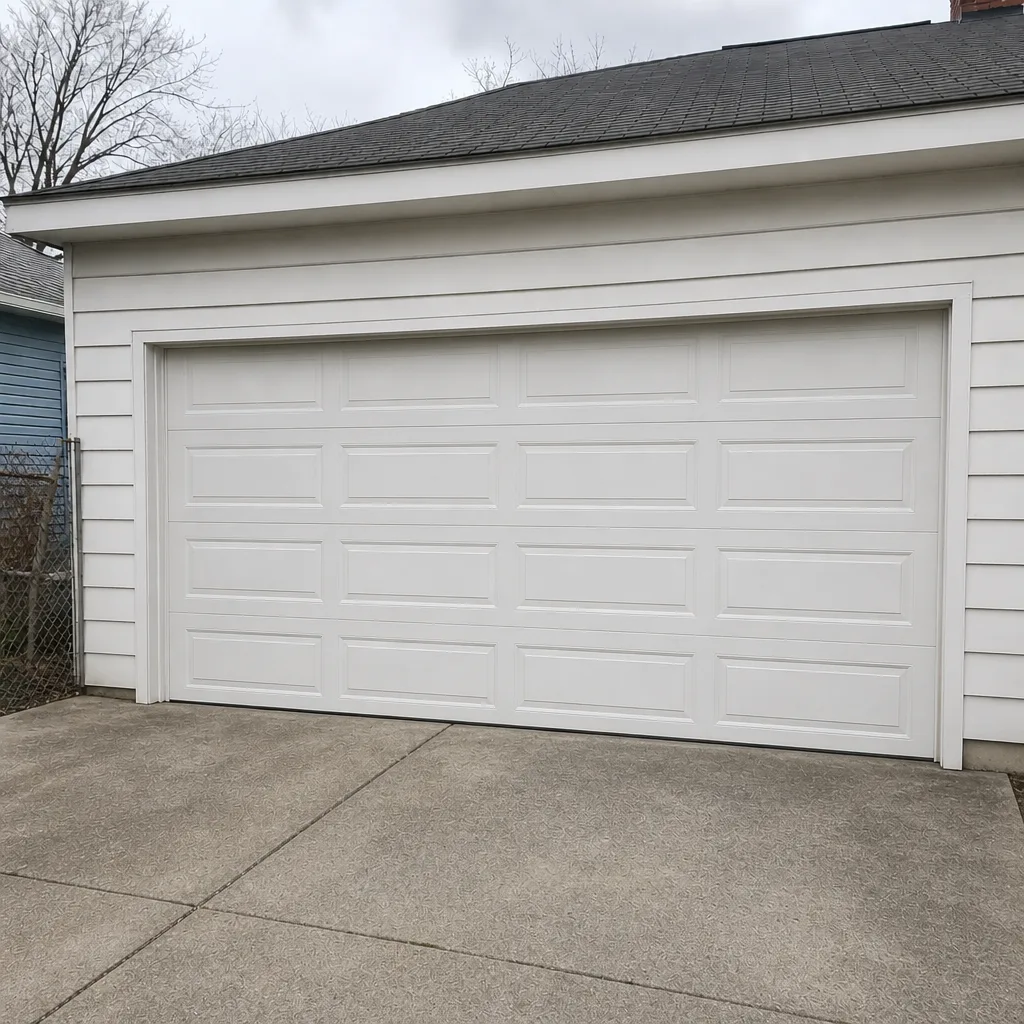 After
When to Call a Professional
Some garage door issues are worth a look today, not next month. Call a professional if a spring has snapped, if the door won’t open or close, if the door is hanging crooked or one side is off its track, if a cable is loose or frayed, or if the opener reverses on its own with nothing in the way. Those are the situations where waiting makes the problem worse, and in the case of a broken spring or a loose cable, where a homeowner shouldn’t touch it. South Bend winters add urgency to all of it, since a door that fails in cold weather also loses the seal that keeps the garage dry. Harmon Garage Door Repair offers free estimates in South Bend. Call (844) 834-4569. We answer 24/7, with fast dispatch from 7am to 7pm, Sunday through Friday, and the price is quoted and agreed before any work starts.
Frequently Asked Questions
Most South Bend doors need a repair or adjustment every few years, and the freeze-thaw cycle here tends to push that a bit faster than in milder climates. Bottom seals and springs are the parts that go first. If your door is older than the neighborhood average, an annual inspection is a reasonable habit.
Cold steel is stiffer, grease thickens, and the door resists the opener more than it does in summer. That extra resistance makes a tired spring or a weakening opener show its age. If the struggle started with the cold, it usually eases when the weather warms, but it’s worth getting checked before next winter. Call (844) 834-4569 for an exact quote on the repair. Estimates are free.
The requirement depends on the scope of the work, so it’s worth asking the City of South Bend’s building department directly what your project needs. A repair usually doesn’t trigger a permit, while a full replacement may. Confirming before the work is scheduled is the safe approach.
Replace both when they’re a matched pair of the same age. A pair costs about twice a single spring, and the second spring is usually as worn as the first, so replacing one often means returning for the other soon after. On an old single-spring system, the better answer may be converting to a modern setup.
Often, yes. We work on the major brands, including LiftMaster, Chamberlain, Genie, and Craftsman, and we can usually source parts for older models. If the unit is old enough that its safety reverse can’t be trusted, we’ll tell you that straight and lay out the cost of a repair vs. a replacement in the written estimate.
Yes, our technicians are licensed and insured, and they specialize in garage door work only. Our technicians have up to 15 years of experience with repairs, openers, and installation. Call (844) 834-4569 for an exact quote; estimates are free.
The Bottom Line
South Bend garage doors face a harder winter than most national guides assume: 60-plus inches of snow, sub-zero wind chills, and freeze-thaw cycles that wear on seals, tracks, and springs. Most homes here were built before 1980, which means old single-spring systems and aging openers are common. The right approach is to match the door to the climate, keep up with seasonal checks, know when a repair has become a replacement, and choose a specialist who knows the brands you already own and will still be here when the warranty question comes up. That’s what we do, and it’s all we do.
Written by the team at Harmon Garage Door Repair.