
Last updated November 15, 2026
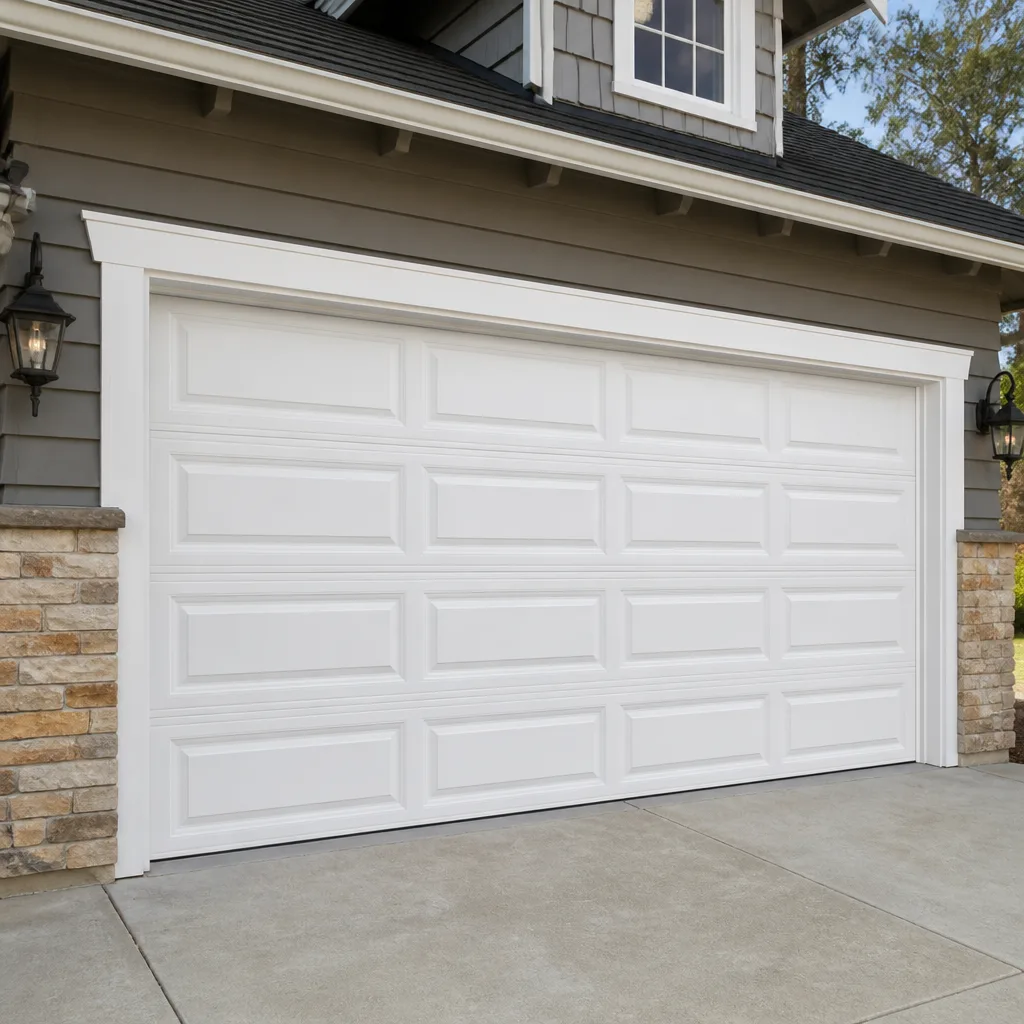 Raised-panel steel
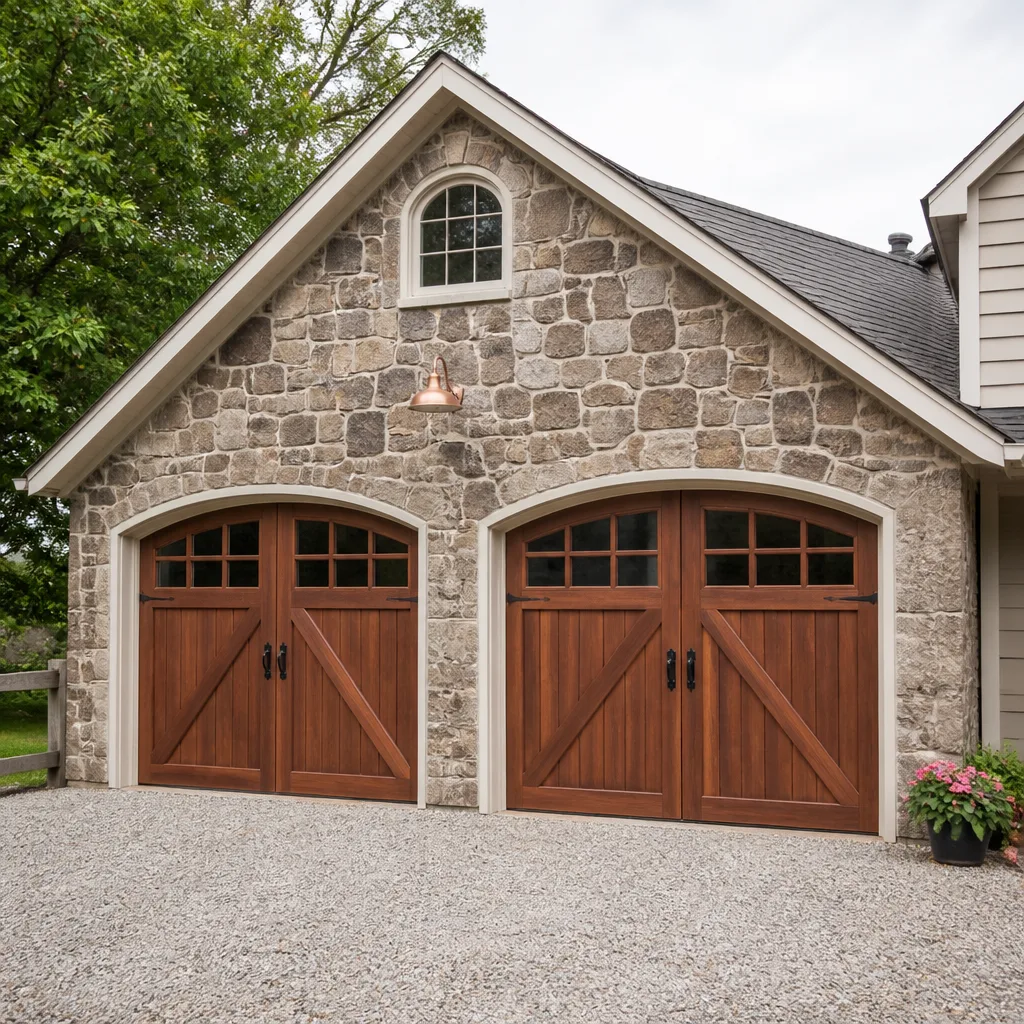 Carriage house
 Modern flush
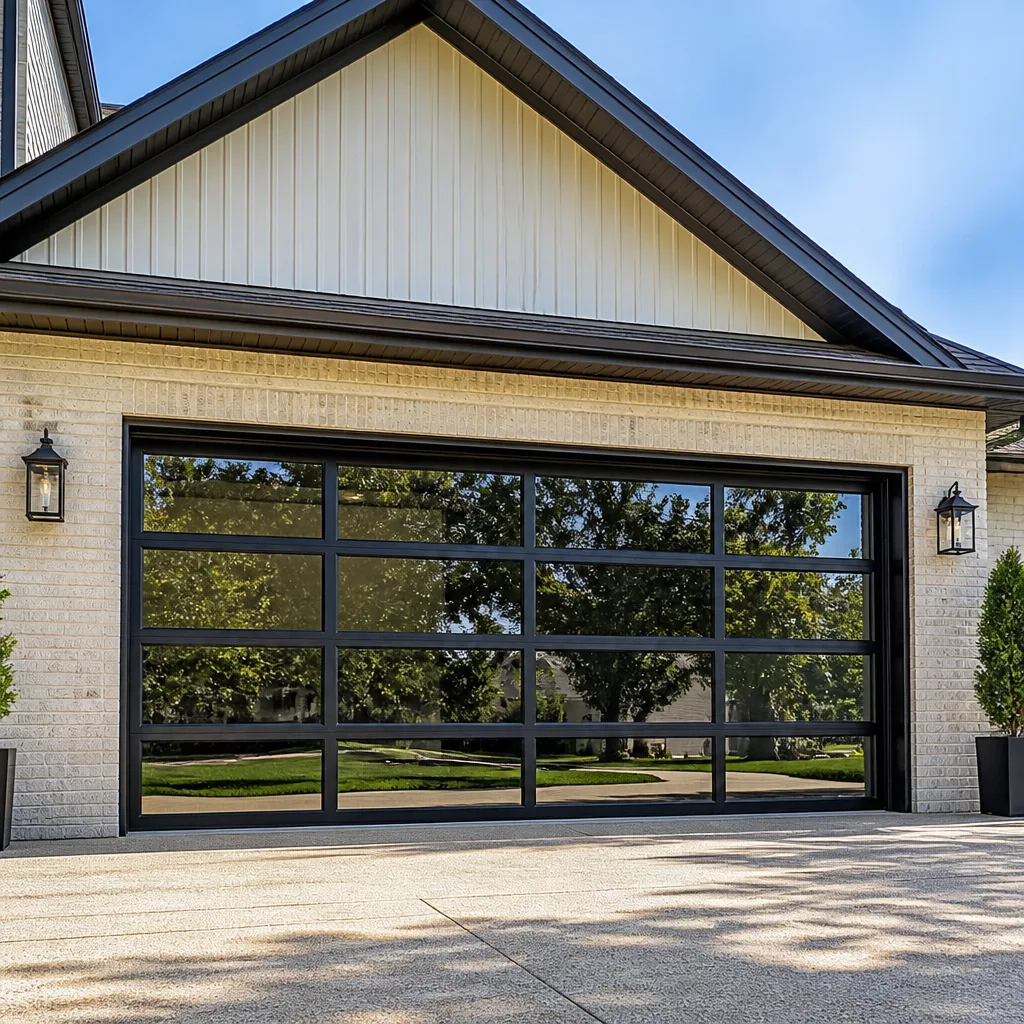 Full-view glass
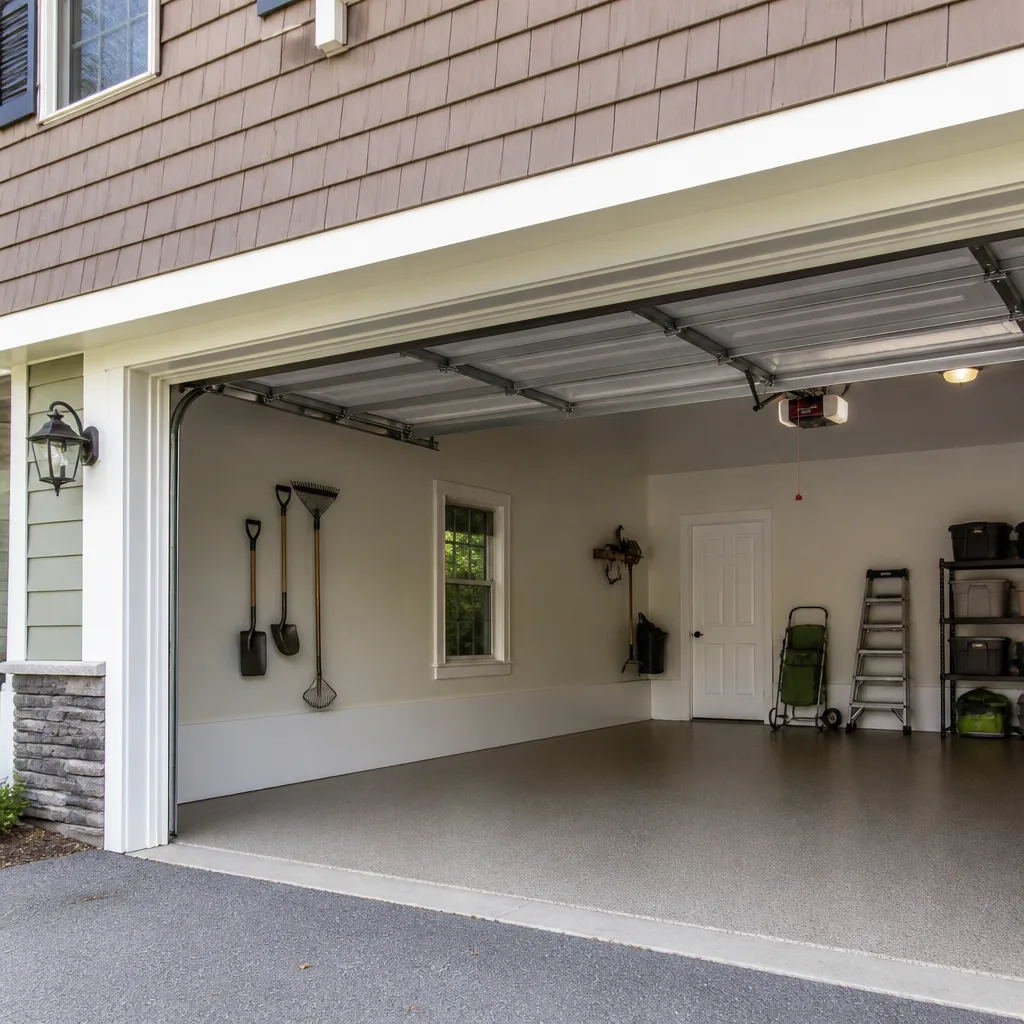 LiftMaster openers
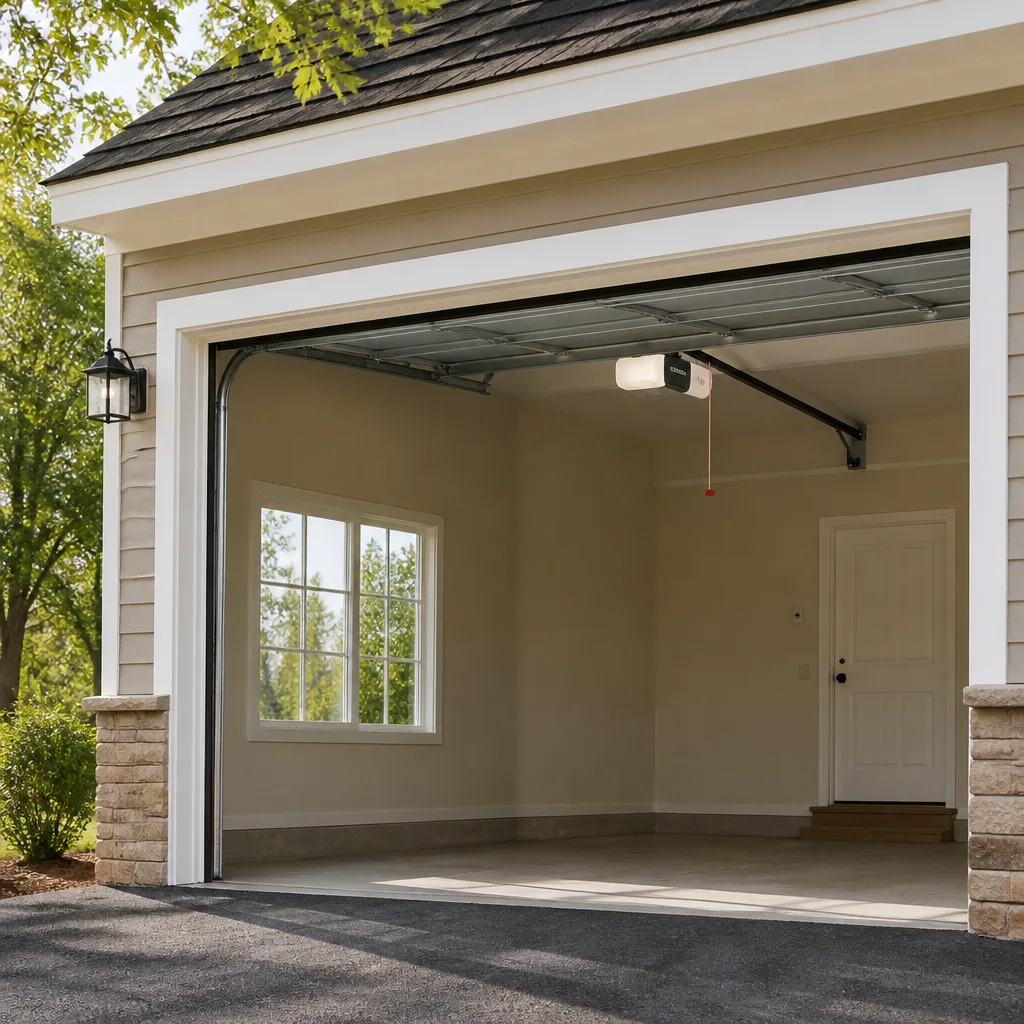 Chamberlain openers
Full 25-point door and opener safety check with every visit - springs, cables, rollers, tracks, and your LiftMaster or Chamberlain opener included
You get a price before we start. It does not change when the pro arrives.
Get your free estimateGarage Door Emergency Preparedness Guide for South Bend Homes
Most garage door failures don’t announce themselves with a bang. They start as a small noise, a door that hesitates two inches from the floor, or a remote that takes an extra press. By the time the spring lets go on a January morning, the car is trapped inside and the clock is already running. South Bend winters add another layer: doors frozen to the ground, power that flickers out in an ice storm, and cold that makes tired springs fail without warning. This guide covers what to do in those moments, what to leave alone, and what to prepare before the season turns.
Quick Answer
If your garage door fails in South Bend, the safest first move is almost always to leave the door closed and call for service rather than force it open. Never pull the manual release cord if you can see a broken spring, and never keep cycling a door that’s frozen to the ground. Everything else in this guide amounts to preparing before winter so the crisis is short when it arrives.
Styles & brands we work with
- Raised-panel steel
- Carriage house
- Modern flush
- Full-view glass
- LiftMaster openers
- Chamberlain openers
Table of Contents
- What Counts as a Garage Door Emergency?
- Using the Manual Release Cord Safely During a Power Outage
- When the Door Is Frozen to the Ground
- Broken Spring? Here’s How to Tell Whether Manual Operation Is Safe
- How to Describe Your Problem When You Call
- Pre-Season Prep: The October Window
- What Not to Do in a Garage Door Emergency
What Counts as a Garage Door Emergency?
A true emergency is a door in a position that could hurt someone or let the door fall. A broken torsion spring, a door off its track, or a door stuck open with no way to secure it all qualify. A noisy opener, a remote that works from the driveway but not the kitchen, or a door that reverses before closing are urgent problems, not dangerous ones.
Why the distinction matters: it changes who can help and how fast. If a car is stuck inside and the door can’t lift, that’s an access problem rather than an injury risk, and it’s the kind of job most South Bend homeowners want handled the same day. If a door is hanging crooked off the track with one roller popped out, that’s a physical hazard and worth stopping on the spot.
A safe way to sort it: ask whether the door could move unexpectedly or fall. If yes, treat it as an emergency. If no, it’s urgent but manageable. Most garages door problems fall into this second group and can be scheduled rather than rushed. Call (844) 834-4569. We answer 24/7. Fast dispatch from 7am to 7pm, Sunday through Friday. When you describe the problem, say plainly whether the door is closed, how it’s positioned, and whether anyone or any vehicle is stuck.
If in doubt, over-describe rather than under. A technician on the phone can tell whether you’re looking at a track issue or a spring issue from your description. That saves time and avoids an unnecessary trip. It also matters when the door is partway open and the weather is turning. A South Bend cold snap with a door stuck open is a burst-pipe risk in the same garage, not just a door problem.
Using the Manual Release Cord Safely During a Power Outage
Every automatic opener has a manual release cord, usually hanging from the carriage on the rail above the door. Pulling it disconnects the door from the opener so you can raise it by hand. Simple in the manual. Less simple in practice, because the mistake most people make is pulling the cord while the door is in the wrong position, or after a spring has already failed.
Here’s what to know before you reach for that cord:
- Check the spring condition first. Look at the torsion bar above the door or the extension springs along the horizontal tracks. If you see a gap in a coiled spring or a stretched, dangling spring, do not pull the release. The spring is the counterbalance. Without it, the door weighs far more than you can control, and it may come down fast.
- If the door is down and the springs look intact, you can try manual operation. Pull the cord down and back toward the door, then lift slowly. The door should feel reasonably light. If it feels like it’s fighting you, stop and lower it.
- Don’t pull the cord with the door partly open. The carriage can slide up or down the rail unexpectedly when the trolley disengages, and the door can drop. If you need power restored, wait or call for service rather than disengaging a half-open door.
One specific mistake causes real problems: pulling the release cord on a door that’s already been opened electrically, then trying to re-engage the opener without resetting the trolley. The opener runs, but the door doesn’t move, and the homeowner assumes the motor is dead. It’s not. The trolley is just disconnected and needs to be re-engaged, which usually means running the opener until the carriage meets the trolley and clicks. If you don’t know how to do that, don’t guess. That’s a what’s-wrong call, and it’s a short conversation.
For homeowners with LiftMaster or Genie openers on a battery-backup system, the door may operate normally for a few cycles after power drops. If it does, use the time to get cars out and park inside the garage, not on the street for a South Bend plow to find.
When the Door Is Frozen to the Ground
South Bend gets freeze-thaw cycles that leave a thin sheet of ice under the bottom seal. The door comes up with a rip of rubber, or it doesn’t come up at all. Forcing it is the wrong move. Forcing a frozen door pulls the bottom seal away from the panel, bends the bottom bracket, and can twist the door enough to stress the tracks. Fixing that costs more than preventing it.
What to do instead:
- Break the bond gently with a plastic scraper or a wooden wedge under the bottom edge. Work along the width, not just at one corner. Warm water or a warm, damp towel along the seal can help loosen the ice. Do not pour hot water directly on the seal in freezing temperatures; it refreezes into an even harder bond.
- Do not use a shovel, a screwdriver, or a hammer. These damage the seal, the bottom panel, and the torsion bar springs in ways that aren’t obvious until the door starts to bind.
- Never use road salt or rock salt directly against the seal. It accelerates corrosion on the brackets and tracks. Keep salt on the driveway and walkway, not the garage threshold.
- After freeing the door, cycle it twice manually to make sure the seal isn’t caught on a frame. Then test the opener from inside with the door down, and watch it travel all the way up. A door that fights the spring on the first cycle is telling you something.
If the door is frozen solid and the car needs to be out now, the manual release with intact springs is the safer option. If the spring has already failed, the door stays closed until service. That’s a scheduling call, not a do-it-yourself job.
Broken Spring? Here’s How to Tell Whether Manual Operation Is Safe
A torsion spring runs above the door on a horizontal bar; extension springs run along the sides on the horizontal tracks. The two look different and fail differently. With torsion, a broken spring usually leaves a visible gap in the coil. With extension springs, one may have come off its track or be lying loose beside the door.
Here’s the rule: a door with a broken torsion spring cannot be safely operated by hand. The spring holds most of the door’s weight, and without it the door is heavier than it looks. A garage door can weigh a few hundred pounds. Don’t test the theory.
Extension springs are a different calculation, but not a simpler one. The door can usually be opened manually for egress in this case, but you need two people to manage the weight and to keep it from dropping. Even then, the open door needs to be propped or blocked. Do not rely on the opener. Do not leave the door half up where a child or pet could get under it.
So the safe default on a broken spring is: leave the door closed, call for service, and don’t run the opener again. Running the motor against a door it can’t lift strains the opener gears and can strip the drive. We see that secondary damage on plenty of garage door repair calls, and it’s avoidable. A technician can usually tell you on the phone whether the door is safe to raise by hand while you wait.
How to Describe Your Problem When You Call
The most useful thing you can do on a service call is describe the door’s position, not its history. Emergency dispatchers in any trade work better with facts than with narrative. Here’s what a technician actually needs to know in the first 30 seconds:
- Where is the door right now? Fully closed, partway open, hanging crooked, or off the track.
- Is a car stuck inside or outside? This changes the urgency and the plan.
- What do you see above the door? A visible gap in the torsion spring, a loose extension spring, or nothing obviously broken.
- Does the opener run but the door doesn’t move? That’s usually a trolley or gear issue, not a spring.
- What brand and approximate model is the opener? If you can see the label on the back panel, read it. A Craftsman, a Raynor, or a Genie each has its own common failure points.
If the answer to any of these is “I don’t know”, say so. That’s fine. What you don’t want is to describe a broken spring as “just a stuck door” and find out at the door that the technician needs a different setup. Harmon Garage Door Repair works on Amarr, Wayne Dalton, Craftsman, Raynor, LiftMaster, Chamberlain, Genie, and Clopay equipment. If you can name the brand, the technician can walk in with the right parts on the call. If you can’t, a photo of the opener label and the spring is worth ten seconds and a text.
Pre-Season Prep: The October Window
The best South Bend garage door emergency is the one that never happens. The window to prevent winter failures is narrow: roughly the month before the first hard freeze, when the days are still mild enough to work outside and the parts supply isn’t moving at holiday pace. October is the practical deadline.
What to check before the season:
- Test the door balance. Disconnect the opener with the release cord, then lift the door by hand to about waist height and let go. A properly balanced door holds its position. If it drops, the springs are tired or worn and should be adjusted or replaced before the cold.
- Lubricate the moving parts. Rollers, hinges, and tracks benefit from a garage door lubricant, not WD-40 or grease. A dry, quiet door puts less strain on the springs.
- Inspect the weather seal along the bottom edge. A cracked seal lets water in and freezes to the floor. That’s where a lot of frozen-door calls come from.
- Check the opener’s force setting and safety reverse. Place a small object – a roll of tape works – in the door’s path and close it. The door should reverse on contact. If it doesn’t, the opener needs adjustment, and that’s a garage door opener repair call, not something to leave until the first freeze.
- Clear the threshold and drains. Snow melt pooling at the garage lip refreezes overnight. Shovel and clear the drainage before it becomes ice.
If any of this feels outside your scope, that’s expected. Annual adjustment is the kind of work a trained technician handles in a short visit. “Diagnosed right, fixed once” is the goal, and a pre-season check is the cheapest version of that.
What Not to Do in a Garage Door Emergency
Don’t try to replace the spring yourself
Torsion springs are under significant tension and a DIY attempt can cause serious injury. The same applies to the cables that wind around the drums. Call a trained technician for spring and cable work every time.
Don’t run the opener on a door that won’t lift
If the motor runs and the door stays put, stop cycling it. The gear inside the opener can strip, and that converts a spring replacement into a spring plus opener replacement. It’s a common way a manageable repair grows.
Don’t prop a door open with a piece of wood or a chair
This is the single most common cause of a door coming down on a person. The only safe support for an open door is a properly functioning spring system or a mechanical brace designed for the purpose.
Don’t yank the manual release cord to force the door past a jam
The cord releases the door from the opener. It doesn’t fix a bind. Pulling it on a jammed or off-track door can drop the door straight down.
Don’t ignore a new noise
Grinding, popping, or a single loud bang from the garage is worth investigating before the door fails entirely. In a South Bend cold snap, a worn spring that survives a mild week can let go on the first subzero morning.
Don’t assume the door is fine because it closes
A door can close and still be unsafe. If the safety reverse doesn’t work, the door is a hazard to anyone in its path, including pets and children. Test it monthly.
Common Mistakes to Avoid
- Waiting for the first freeze to schedule a tune-up. South Bend spring failures cluster in the first two hard-cold weeks. Book the check in October, not January.
- Using de-icer or salt directly on the garage threshold. It speeds corrosion on the bottom brackets and tracks. Keep the treatment on the walkway.
- Running a door with a broken spring to “get it out of the way.” Every cycle strains the opener and can drop the door. One run is too many.
- Pulling the manual release on a door with a torsion spring break. The door can fall with full weight. Leave it closed and call.
- Assuming the opener is dead when the door just won’t move. The trolley is often disconnected. It’s a five-minute reset, not a new motor.
- Ignoring a door that reverses before closing. That’s usually an obstruction or a misaligned safety sensor, and it’s a warning that the door’s logic is compromised.
- Hiring a general handyman for spring or opener work. A specialist diagnoses the whole system – panels, springs, tracks, and the opener – so the door is fixed once, not twice.
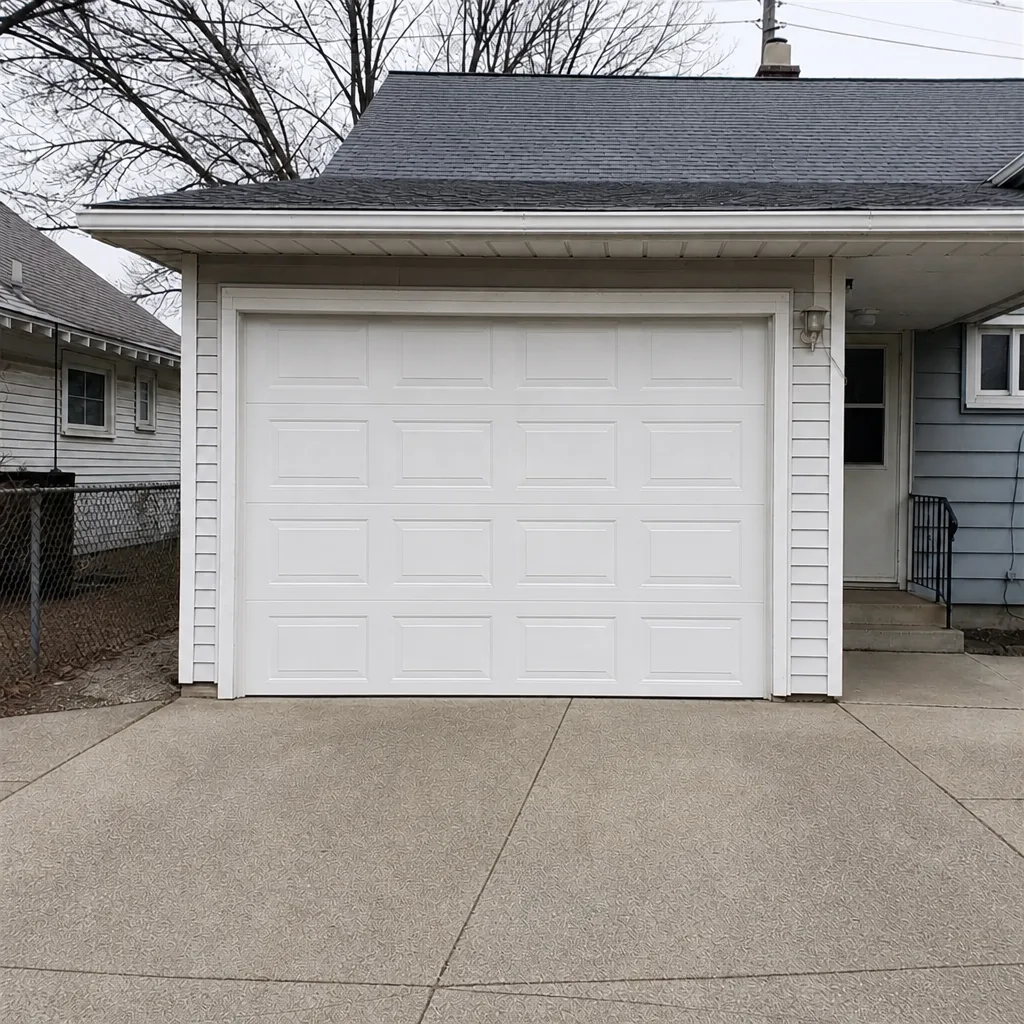
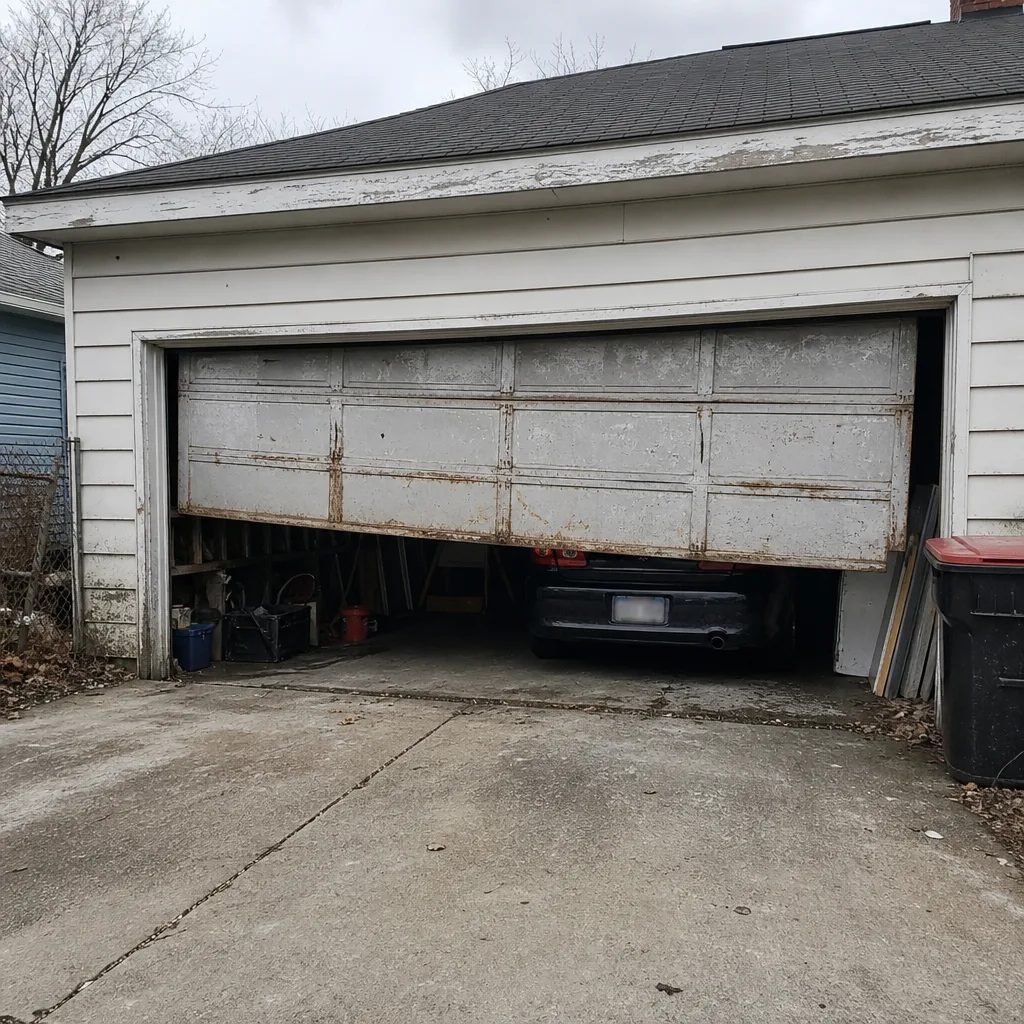
See the difference
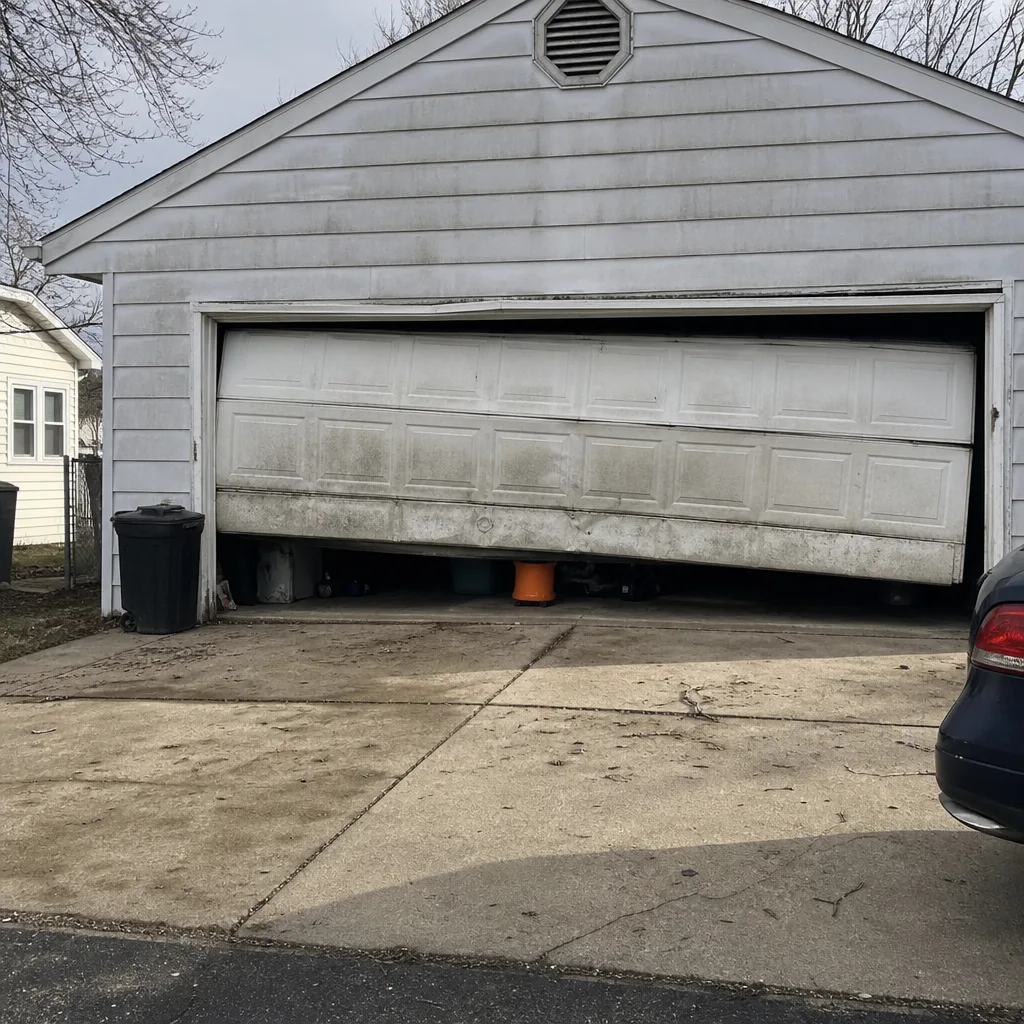 Before
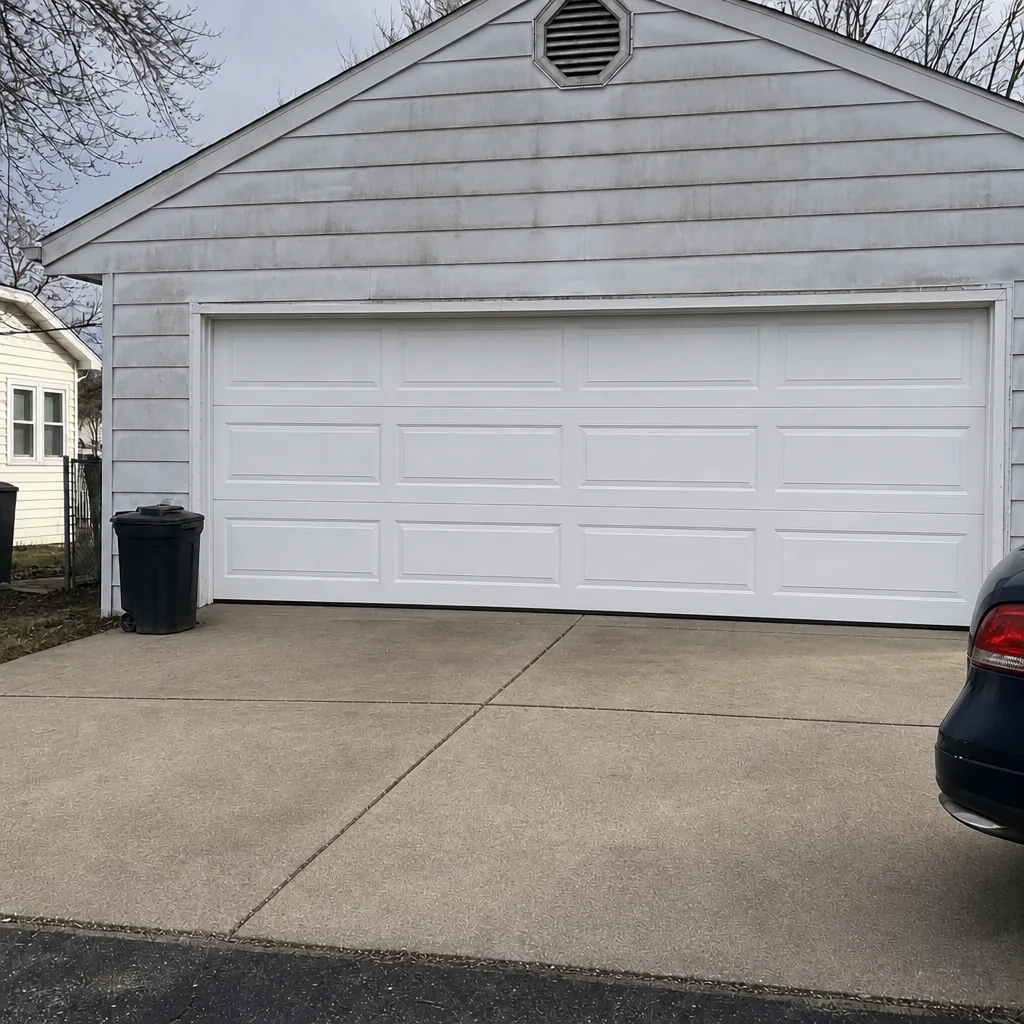 After
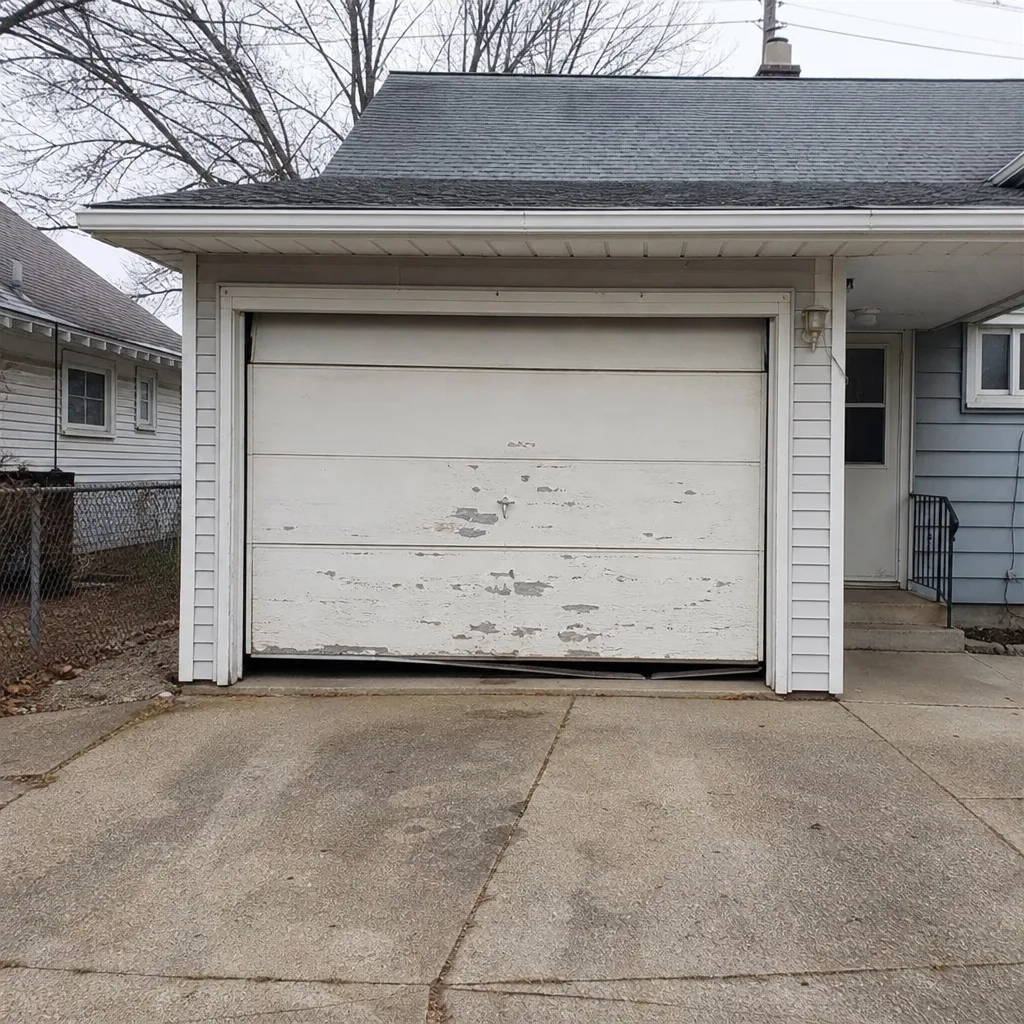 Before
 After
 Before
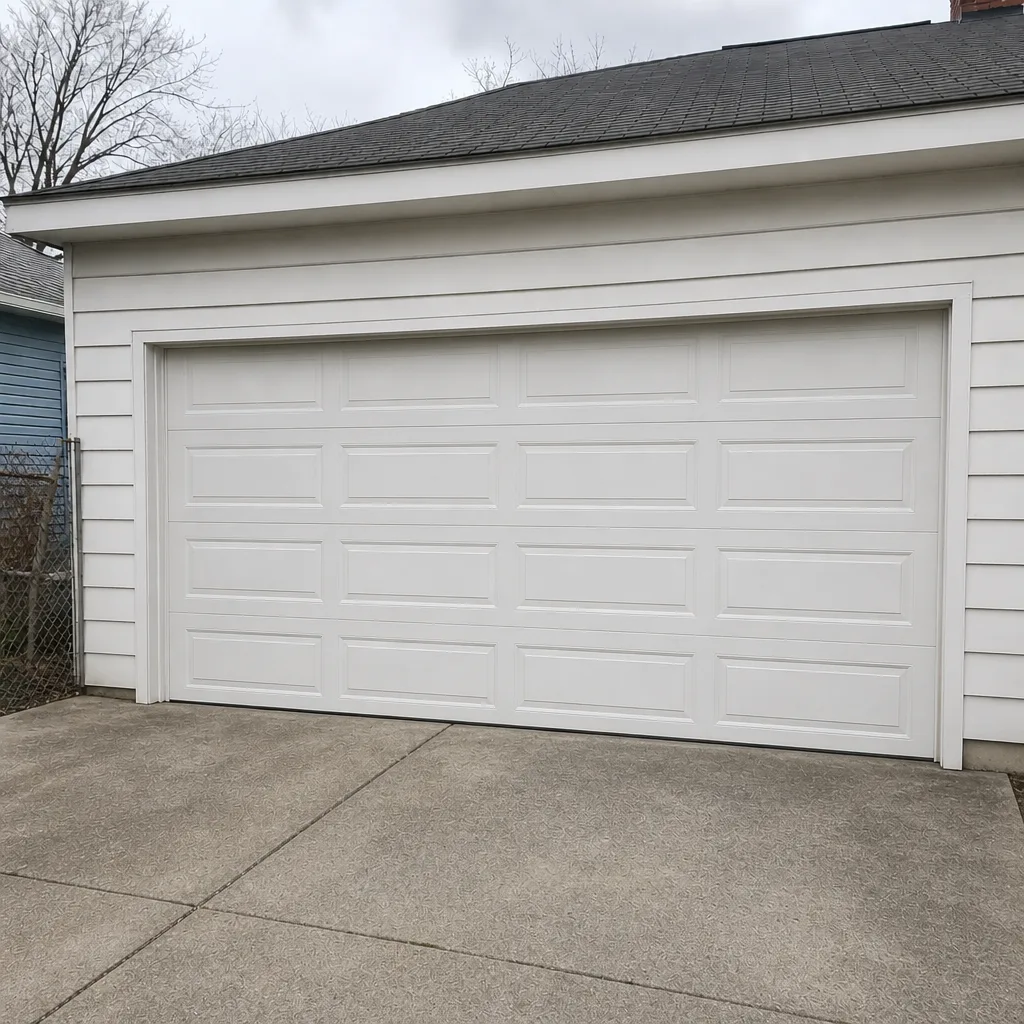 After
When to Call a Professional
Call a technician for anything involving the spring system, the cables, the torsion bar, or an off-track door. Call also if the opener runs but the door doesn’t move, if the door reverses on its own, if you see a gap in the coil above the door, or if the door has come apart from the track on one side. If you’re not sure whether your situation qualifies, the safe answer is to call. Harmon Garage Door Repair offers free estimates in South Bend – call (844) 834-4569. We answer 24/7. Fast dispatch from 7am to 7pm, Sunday through Friday. Our technicians have up to 15 years of experience and know the brand you already have, including Amarr, Wayne Dalton, Craftsman, and Raynor equipment.
Frequently Asked Questions
Yes, if the springs are intact. Pull the manual release cord, raise the door slowly, and stop if it feels heavy. If you see a broken spring or the door won’t lift with reasonable force, leave it closed and call for service.
Free it gently from the bottom edge with a plastic scraper or a wooden wedge and warm water along the seal. Never force the door up or strike the seal with a shovel. Once free, cycle it manually twice before using the opener.
It’s a hazard, not an access issue. The door can’t be safely lifted by hand with a broken torsion spring, and running the opener can cause secondary damage. Leave the door closed and schedule service. If a car is trapped inside, that’s an urgent call.
Most emergency repair jobs fall in a moderate range depending on the part and the door type, and the exact figure is set by a written estimate before any work begins. There’s no separate surcharge for same-day or urgent work. Call (844) 834-4569 for a free estimate.
In most cases, yes. Harmon Garage Door Repair is factory-familiar with eight major brands: LiftMaster, Chamberlain, Genie, Clopay, Amarr, Wayne Dalton, Craftsman, and Raynor. The technician diagnoses and sources parts for the equipment you already own rather than pushing a replacement.
October, before the first hard freeze. That’s when balance checks, lubrication, and seal inspection are easiest and when a worn spring can be replaced before subzero cold makes it fail. Waiting until January often means scheduling around weather.
The Bottom Line
Garage door emergencies in South Bend follow a pattern: they happen at the worst time, on the coldest morning, with a car on the wrong side of a closed door. The preparation that prevents most of them is simple and seasonal. Check the balance, lubricate the moving parts, test the safety reverse, and replace tired springs before freeze-up. When a failure does happen, the safe default is the same every time: leave the door closed, don’t force it, don’t pull the release on a door with a broken spring, and call a specialist who knows your brand. Whether it’s a spring, a track, or a smart opener, our technicians handle Harmon Garage Door Repair across the full range of South Bend homes.
Call (844) 834-4569 for a free estimate. We answer 24/7. Fast dispatch from 7am to 7pm, Sunday through Friday. The price is quoted and agreed before any work starts, so you know the figure before the first bolt turns. Whether you’re facing a garage door repair or a garage door opener repair, the goal is the same: diagnosed right, fixed once, with the Harmon name on the job.
Written by the team at Harmon Garage Door Repair.